Uncharted waters of poetry-based learning

franBG

Arts-based learning is a different way of acquiring new knowledge about non-art topics like leadership, innovation and management in business. It can include any type of art form such as painting, performance, storytelling, music or poetry.

Art is that invisible force that inspires us to pause, to slow down racing thoughts and explore other sources of information. By putting a side our rational thinking we open doors for higher realms of awareness and wisdom, giving us insights we couldn’t recognize earlier.

One of the most beneficial attributes of arts-based learning is that it fosters co-creative spirit, where with joined strengths is much easier to find a solution or accept change in responsive way. This type of activities can accelerate the process of finding shared values and creating trust among co-workers. Arts-based learning has been also seen as a vehicle for enhancing intercultural communication, with more than 400 of America’s Fortune 500 companies using artistic skills, processes and experiences to foster creative thinking and strengthen innovation processes.

If you approach life like an artist you are developing skills:

to observe the world in different light; to better use available resources;to follow your instincts; to pursue your passion; to explore your own innovative thinking; to find connections among unrelated events and elements;to take risks and become more empathetic and understanding.

In my previous posts I gave a glimpse on how poetry can help us in strategic thinking, storytelling, intercultural communication, building business ethics, decision making, advertising and how it fosters innovation, leadership and creativity. But there are ohter ways how poetry can enhance our learning abilities. Monika Kostera in her paper “Performatives: Collecting Poetical Definitions of Management’, Organization, 4(3), p. 343, 1997, examines the relationship between feelings and organizational skills through the lens of poetry. She argues that we can use poetry to learn more about the subversive and subjective experience of talking about management topics. In her opinion, poetry is particularly powerful in that it does not avoid passion and it is disruptive because it is inconclusive.

In another very interesting paper, “Voice, Verse and Va va voom: Illuminating Management processes through Poetry”, Grisoni and Kirk (2006) explored the power of using poetry as a critical analytical tool. Two members of organization have written poems about their experiences in relation to decision-making critical incidents within the life of organization. They reported that writing in the form of poetry enabled them to find a voice, increased personal learning, and new insights in relation to roles, management processes of decision-making, and interpersonal dynamics in the organisation.

But this is not where the power of poetry-based learning ends: it can help us further in learning about:

  • Systems thinking;
  • Values creation and contribution;
  • Managing change;
  • New product development;
  • Branding;
  • Acquiring tacit knowledge;
  • Improving collaboration and teamwork;
  • Role-playing and improving communications,

which all these topics will be further explored in the posts to come.

For now I will live with some thoughts by Jose Rizal:

Education Gives Luster To Motherland (an excerpt)

Where wise education raises a throne
Sprightly youth are invigorated,
Who with firm stand error they subdue
And with noble ideas are exalted;
It breaks immortality’s neck,
Contemptible crime before it is halted:
It humbles barbarous nations
And it makes of savages champions.
And like the spring that nourishes
The plants, the bushes of the meads,
She goes on spilling her placid wealth,
And with kind eagerness she constantly feeds,
The river banks through which she slips,
And to beautiful nature all she concedes,
So whoever procures education wise
Until the height of honor may rise.


Raise your emotional inteligence for a creative entrepreneurial leadership – part II

In the first part of this blog post I shared a poem of a young entrepreneur where he reveals his emotions, struggles and needs when it comes to entrepreneurship and for every wannabe entrepreneur out there, was a quiet a taste for “try walking in my shoes”.

But what about the feelings and emotions when our environment expects us to be or do something that is not our ambition, our passion? How to deal with difficult situations that arise when we cannot follow someone else’s dreams; when we need to tell our story, follow our own path? interpersonalThe poem “To my Father’s business” by Kenneth Koch reflects that type of struggle:

Leo bends over his desk   
Gazing at a memorandum   
While Stuart stands beside him   
With a smile, saying,   
“Leo, the order for those desks   
Came in today   
From Youngstown Needle and Thread!”   
C. Loth Inc., there you are   
Like Balboa the conqueror   
Of those who want to buy office furniture   
Or bar fixtures   
In nineteen forty in Cincinnati, Ohio!   
Secretaries pound out   
Invoices on antique typewriters—   
Dactyllographs   
And fingernail biters.   
I am sitting on a desk   
Looking at my daddy   
Who is proud of but feels unsure about   
Some aspects of his little laddie.   
I will go on to explore   
Deep and/or nonsensical themes   
While my father’s on the dark hardwood floor   
Hit by a couple of Ohio sunbeams.   
Kenny, he says, some day you’ll work in the store.   
But I felt “never more” or “never ever”   
Harvard was far away   
World War Two was distant   
Psychoanalysis was extremely expensive   
All of these saved me from you.   
C. Loth you made my father happy   
I saw his face shining   
He laughed a lot, working in you   
He said to Miss Ritter   
His secretary   
“Ritt, this is my boy, Kenny!”   
“Hello there Kenny,” she said   
My heart in an uproar   
I loved you but couldn’t think   
Of staying with you   
I can see the virtues now   
That could come from being in you   
A sense of balance   
Compromise and acceptance—   
Not isolated moments of brilliance   
Like a girl without a shoe,   
But someone that you   
Care for every day—   
Need for customers and the economy   
Don’t go away.   
There were little pamphlets   
Distributed in you   
About success in business   
Each about eight to twelve pages long   
One whole series of them   
All ended with the words   
“P.S. He got the job”   
One a story about a boy who said,   
“I swept up the street, Sir,   
Before you got up.” Or   
“There were five hundred extra    catalogues   
So I took them to people in the city who have a dog”—   
P.S. He got the job.   
I didn’t get the job   
I didn’t think that I could do the job   
I thought I might go crazy in the job   
Staying in you   
You whom I could love   
But not be part of   
The secretaries clicked   
Their Smith Coronas closed at five p.m.   
And took the streetcars to Kentucky then   
And I left too.
Being honest to yourself, yet still honoring someone else’s dream (like your father’s business) is a representation of emotional intelligence and this type of poetry is a true source of knowledge; to help us grow, get mature, responsible and more decisive about our own lives.

Raise your emotional intelligence for creative entrepreneurial leadership- part I

It is very important to understand that emotional intelligence is not the opposite of intelligence, it is not the triumph of heart over head — it is the unique intersection of both.”

              ~ David Caruso

While doing research for my next blog post I came across very interesting article “Poetry as a way of knowing” which was actually an introduction to a podcasts at Philosopher’s corner.

In this article Laura Maguire, proposes 3 types of knowledge: having practical knowledge which is “roughly defined as knowledge that does and shall (from a normative, prudential or moral, point of view) motivate to act in a certain way” (as described in paper What is Practical Knowledge?), and mostly is reflected in skills we have to do certain things; then, there is propositional knowledge which is a form of descriptive knowledge and mostly reflected in scientific approach where we collect facts to describe and explain the world around us (where in my previous post I went in depth what are the similarities and differences between science and poetry).

But before going to elaborate the third type of knowledge, not everything is black and white when it comes to first two types. As author Laura Maguire argues:

When you study poetry. presumably you develop many skills, like learning how to interpret a poem, which involves other skills, like how to identify and understand metaphor, how to measure meter, and so on.And maybe if you read a lot of poetry you also develop another skill, namely how to write poetry. So, in that sense, it’s easy to see how poetry could be a way of knowing.

And also through series of my posts I tried to elaborate the benefits of writing and reading poetry for the sake of developing other practical skills – crucial for our self-development. But today I would like to talk more about phenomenal type of knowledge as author Laura Maguire described it and how is that beneficial for our business undertakings.

Phenomenal knowledge is mostly related to knowledge of what is like to have a particular kind of experience. Can we learn form that? In other words, when it comes to business, can we get an insight what it’s like to be an entrepreneur, being self-reliant and building good communication with customers, for example? Can it really enhance our emotional intelligence, in general?mind clip art, intelligence, emotinal intelligence

A poem “Love My Startup More Than You” by Rizwan Virk I found on the zenentreprenur blog and goes like this:

Cindy Lu, Cindy Lu
You know that my heart is true

But my Idea is very new
And we’ll make a million dollars
If only I can prove
That the market is true!

Cindy Lu Cindy Lu
Soon I’ll be home
And put my arms around you
….
But first
I’m being shown
Design specs I must review!

The beta downloads are a jumping
But so are the bugs that need a thumping!

Please let me know
When the baby is asleep
Then I can show
You how we’ll avoid feature creep!

Towards you my sweetheart I’ll always feel
A never ending attraction
But right now what I really need to show
Is more customer traction!

Cindy Lu, Cindy Lu
Don’t look at me that way,
You’ll worry yourself blue!

Once we raise our series A
Our mortgage will be easy to pay!

And if the company gets in a bind,
My investors will help me find
Some folks that are keen
To assemble a management team
And we’ll be on our way
To making lots of green!

So please don’t think that I’m mean
When I say:

Cindy Lu, Cindy Lu
You know my heart is true,
But just right now, 
I love my startup
More than you!

This poem is a sort of an ode to all young and ambitional entrepreneurs in the Sillicon Valey. Virk firmly believes that poetry is a great medium for expression of entrepreneurial ideas, ups and downs that entrepreneurship brings and how it changes life. A poem is instinct with love, confusion, desire for stability and how someone is ready to “put on hold” all of his relationships- because business is the only thing that matter.

I would say that poetry is a source of knowledge and as we can learn a lot about love, death and sorrow in poetry as emotions we can learn a lot about entrepreneurial emotions too: get that practical insight of what it means to be an entrepreneur, along with all victories and sacrifices it requires.

It can help us with our doubts, fears, uncertain decision making, but most importantly it can open new windows of creative sources that are aligned with our values – making us emotionally mature and persistent in our endeavors.


Lean leader is a poetry reader

Whenever you read a good book, somewhere in the world a door opens to allow in more light.

               ~ Vera Nazarian

It’s interesting to note that many of the great contemporary 20th century poets were business professionals,. For example T.S. Eliot worked for Lloyds of London, and Wallace Stevens was a vice president at an insurance company.

Also, James Dickey that worked in advertising,  left his mark in the corporate world. So, it’s evident that business somehow has shaped and influenced last century poetry. What we often forget is how reading the verse of aforementioned professionals can enhance our own business qualities and can contribute to our well-being and self-development.kids on books

In one article of New York Times, C.E.O. Libraries Reveal Keys to Success

Sidney Harman, founder of Harman Industries says:

I used to tell my senior staff to get me poets as managers. Poets are our original systems thinkers. They look at our most complex environments and they reduce the complexity to something they begin to understand.

Unfortunately, business people are reading nowadays far more less. Life is running at such pace that reading material unrelated to business is almost impossible. The digital world is shortening our attention span and our patience to read and contemplate some abstract thought is almost nonexistent. But wide scope of reading is often a remarkable characteristic of many leaders and can initiate innovation, empathy, deeper understanding.

And how that relates to lean leadership?

An “old school” of leadership promotes the form of leadership where the notion is that leader holds the key of every knowledge and “his way of doing things” is the only way.

On the other hand, “empowering leadership” follows the crowd, doesn’t pay much attention to the rules and implies “let’s do it your way”. It’s true it can generate many innovative ideas, yet sometimes it leads to chaos and lack of responsibility.

And “lean leadership” allows for spontaneous solution to appear while focus is not that much on the leader as much on “let’s figure this out – together”.

For a successful lean leader is important to develop social skills, foster encouragement and compassion. Lean leader is able to seize the meaning and purpose  in dynamic and at surface unrelated events.

Research findings, published in the paper Does reading make you smarter? Literacy and the development of verbal intelligence, suggest that reading makes you smarter through

a larger vocabulary and more world knowledge in addition to the abstract reasoning skills.

It can enhance leader’s efficacy through improved vocabulary intelligence that comes from reading more abstract topics and genres.

So, every day try to incorporate reading some poetry in your hectic schedule, join a reading club or attend some poetry evenings – and watch your business skills improve for the better.

Tenacious Persistence by Orison Swett Marden

The force that is going to carry you to your goal,
Is coiled up inside of you , in your energy, your pluck, your grit,
Your originality, your character, and your possession of a strong,
Persistent, tenacious purpose.
Whatever you do in life, keep in an ambition –
Arousing atmosphere.
Keep close to those who are dead in earnest,
Who are anxious to do something in the world.
You will catch the spirit of your environment.


Removing your biggest obstacle towards success: fear of failure

Take up one idea. Make that one idea your life–think of it, dream of it, live on that idea. Let the brain, muscles, nerves, every part of your body, be full of that idea, and just leave every other idea alone. This is the way to success.

              ~Swami Vivekananda

We’ve all been there and done that. Fear of failure. It’s a cold, paralyzing emotion that simply stops you from being what you want to be, do what you want to do – simply live your life openly, freely, without judgment and regret. So what can we do about it?

Well the truth is, WE ARE the only ones who can do something about it. Nobody can do it for us, as well as nobody can succeed except us. It’s our hard work, devotion and commitment.

And I would say that we all have to invest time and work when we want to get rid of that fear: an obstacle that can make our life miserable, sometimes making us feel even sorry for ourselves while watching other people having fun and enjoying life.

Illustration of a cloud and a ladder

It’s interesting that only one change in my daily routine gave me so many different perspectives on various aspects of my life – including success and fear of failure. When I started regularly writing poetry it opened my mind to so many possibilities and different ways of thinking that every part of my life improved for the better. At the beginning I was so happy that I just, you know, began to write. With time, somehow, doubt began to creep in and  I started to look for flaws: Could I’ve written something better? Could I’ve express myself more precise? Why didn’t I come up with that word (while reading the work of other aspiring authors)? But then, I tried to cheer myself: “I can write another poem, and another poem. The previous one is nor bad nor good. It’s just a reflection of one moment of my life, my thoughts…it doesn’t define me. Tomorrow I can do it better”.

And these thoughts made me look more deeply at the essence of our fear of failure. The truth is: you cannot fail. These are also the words of my favorite teacher dr Wayne Dyer, that passed away recently. You cannot fail. You can only produce certain result. In one particular moment of time it reflects your efforts, mistakes, fears and joys. But it is not who you are. There is always another try, another poem to write, another story to tell, another project to start, another person to meet, another vacation to travel. You are never late. It’s just one moment in time, not a failure.

In this whole process I would also suggest that we should revisit our beliefs about success and failure. When I look back 20 years ago, I was very ambitious, eager. I had a lot of energy and motivation – simply I could “conquer” the world. And my notion of success in that time and now differ a lot. Now, I would do many things differently. In the first place, take care more of my health. And sometimes I wonder: “Did I really follow my goals under my terms, or somebody else’s? Because, many times society implies what is success. Yet, is that success for me? What’s expected from me – is that what I really want”?

So next time you hesitate to try something new, look at things from different perspective and ask yourself: “What is my definition of success? Am I living under my terms? Am I giving my best? What would’ve happen if I only try – without getting attached to the outcome”?

Success is counted sweetest by Emily Dickinson

Success is counted sweetest
By those who ne’er succeed.
To comprehend a nectar
Requires sorest need.

Not one of all the purple Host
Who took the Flag today
Can tell the definition
So clear of Victory

As he defeated-dying
On whose forbidden ear
The distant strains of triumph
Burst agonized and clear!


An invitation to participate

As an attempt to make this blog even more dynamic, beside my regular posts on the benefits of poetry for life and business, I’m launching new category “Daily verse with purpose” that will feature exciting, motivational and inspirational verses from various poets. This is also invitation to all interested readers, poets and writers to submit their favorite rhymes, verses from different poets that they would like to see featured as “Daily verse with purpose”. Depending on the response I will try to include all your favorite poets – as we all need some additional encouragement with incoming rainy and cold days 🙂 Your suggestions you can submit to businessinrhyme at gmail dot com.

Hopefully, this will be a growing community for all of us where we could submit our own inspirational quotes, poems, verses and ext.

For starters, I’ve chosen “Climb ‘Til Your Dream Comes True” by Helen Steiner Rice.

HS Rice

Are you living your fullest potential?

It doesn’t interest me what you do for a living. I want to know what you ache for, and if you dream of meeting your heart’s longing.

~Oriah

I must admit, this question bothers me from time to time. Am I giving my best? Would I like to spend my time differently? Is this all there is? Am I truly pursuing my purpose and passion?

life-purposeThe list can go own and unfortunately we all have that little worm of doubt that likes to dig around our consciousness and play with our thoughts. One thing I know for sure: that kind of thinking will not take us anywhere. Yesterday doesn’t exist and tomorrow is too much elusive. So instead, I try to ask my self: “Am I giving my best in this situation, in this particular moment? Am I present enough in what’s going on around me? What would make me feel better – right now?” And when you rearrange things like that – are you your best version from moment to moment, with little effort put on improving yourself  – I think we are living our purpose and giving our best. Just as long we are honest about who we are.

Often, we tend to be too judgmental towards others and ourselves as well. Instead, try to be more empathetic towards your mistakes, wrong decisions, poorly made choices…with everything that you think is wrong with your life. It’s so easy to be a critique, but about being your greatest supporter and fan?

The cumulative effect of feeling good as frequent and long as we can is what actually counts; how much we are satisfied with ourselves. The poem bellow so perfectly captures the importance of those valuable moments and I’m certain it will give you courage to improve “your bits and pieces”, from moment to moment, to your full life.

Compensation by Edgar Albert Guest

I’d like to think when life is done
That I had filled a needed post.
That here and there I’d paid my fare
With more than idle talk and boast;
That I had taken gifts divine.
The breath of life and manhood fine,
And tried to use them now and then
In service for my fellow men.

I’d hate to think when life is through
That I had lived my round of years
A useless kind, that leaves behind
No record in this vale of tears;
That I had wasted all my days
By treading only selfish ways,
And that this world would be the same
If it had never known my name.

I’d like to think that here and there,
When I am gone, there shall remain
A happier spot that might have not
Existed had I toiled for gain;
That someone’s cheery voice and smile
Shall prove that I had been worth while;
That I had paid with something fine
My debt to God for life divine.


3 tips to get your creative leadership to the next level

In the simplest terms, a leader is one who knows where he wants to go, and gets up and goes.

              – John Erskine, author 

When my mother taught me how to cook, she used to say that I should always think from the end: “prepare every pot you are going to use, preheat the oven,  go wash and cut your groceries” –  so I wouldn’t mess the kitchen cabinets with my oily, floury hands. And she was right: it shortens the time of cooking, cleaning and the stress that arise from hurry and clumsiness.

Pretty much the same is with business. Whenever we are able to envision where we want take our project or business, it’s much easier to plan the steps along the way. But in certain times, we don’t have that clarity in which way to turn, what is the desired outcome.

That process of breakthrough ideas – “envisioning” is a rocky journey, full of ups and downs, sometimes with obstacles and sometimes is a smooth sailing across the quiet sea.

Creative leadership can benefit from those bursts of innovative thinking and

Leadership concept on white background. Isolated 3D image

for the sake of project/business idea, the focus should be to emulate, produce and sustain those conditions as much as possible. Poetry as a tool can help us a lot:

  1. Follow the hunch

When the idea is still vague, undeveloped, but you have a hunch, a feeling – write a poem about it. Write about your successful project, the benefits it will bring, how you would feel after accomplishing desired results. This type of writing can stimulate positive mood and enhances your creative abilities.

  1. Combine and play

Creating something new can mean rearranging the existing parts into something different – with different order, structure, introducing new elements. To connect seemingly incompatible in new ways, we can produce something extraordinary and give answers to questions we have. Einstein called this Combinatorial Play.

You can summarize all of your ideas, mix them, connect in every impossible way – in poetry. There is no logic needed, there is no judgment, there is no need for “it doesn’t work” statements. Combine and Play:  you might be surprised with the innovative solutions you come up.

  1. Look at the big picture from a detail perspective

Creative leadership is able to recognize unexpected perspectives, keeping in mind the “big picture” – end result it wants to achieve, but pays attentions to detail, and how the change in tiny, almost invisible parts can make the whole difference.

One useful example is the story of Velcro:

In 1948, de Mestral happened upon his most enduring discovery while hiking. He and his dog returned from a hike covered in burrs from the plants along the trail. De Mestral examined the burrs under a microscope, studying their structure. He began working to develop a synthetic fastening system that mimicked the hooks and loops of the burrs.

The fabric went through a number of phases before it was finalized. De Mestral worked with a weaver in France to create hooks and loops strong and durable enough to cling together as he intended. Originally crafted from cotton, the fabric ultimately proved more successful when made out of nylon. In 1955, de Mestral unveiled his innovative new material: Velcro®. The name is a combination of the French words “velours” and “crochet,” translated to English as “velvet” and “hooks.”

source: biography.com

How poetry relates to this? While examining the world around us, analyzing ideas, exploring available resources – especially in poetry where no rational and logical thinking is required, we can accelerate our ability to see through things, how they work, connect, respond, to understand their background. It’s an unleashed creativity that process of focused logical elimination can jump-start our innovative process.

The idea by Mark Strand

For us, too, there was a wish to possess
Something beyond the world we knew, beyond ourselves,
Beyond our power to imagine, something nevertheless
In which we might see ourselves; and this desire
Came always in passing, in waning light, and in such cold
That ice on the valley’s lakes cracked and rolled,
And blowing snow covered what earth we saw,
And scenes from the past, when they surfaced again,
Looked not as they had, but ghostly and white
Among false curves and hidden erasures;
And never once did we feel we were close
Until the night wind said, “Why do this,
Especially now? Go back to the place you belong;”
And there appeared , with its windows glowing, small,
In the distance, in the frozen reaches, a cabin;
And we stood before it, amazed at its being there,
And would have gone forward and opened the door,
And stepped into the glow and warmed ourselves there,
But that it was ours by not being ours,
And should remain empty. That was the idea.


Are poets born, taught or both?

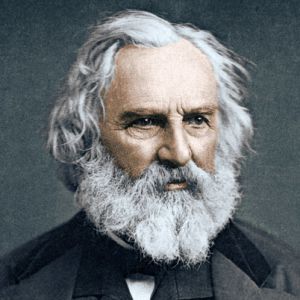
This post is inspired by the poem “The Poet And His Songs” written by Henry Wadsworth Longfellow and it goes like this:MTE5NDg0MDU1MDQ0NTg5MDcx

As the birds come in the Spring,
We know not from where;
As the stars come at evening
From depths of the air;

As the rain comes from the cloud,
And the brook from the ground;
As suddenly, low or loud,
Out of silence a sound;

As the grape comes to the vine,
The fruit to the tree;
As the wind comes to the pine,
And the tide to the sea;

As come the white sails of ships
O’er the ocean’s verge;
As comes the smile to the lips;
The foam to the surge;

So comes to the Poet his songs,
All hitherward blown
From the misty land, that belongs
To the vast Unknown.

His, and not his, are the lays
He sings; – and their fame
Is his, and not his; – and the praise
And the pride of a name.

For voices pursue him by day,
And haunt him by night,
And he listens, and needs must obey,
When the Angel says: Write!

and it left me wondering: are we born writers and poets with innately need to write and create or is it something we discover with time and then put effort and energy into it in order to develop better writing skills? I mean, we all can work to improve our abilities in any area, but are we born with notion that writing is supposed to be our life calling (or any other profession, for that matter)? Do you simply “know” that you must write in order to be yourself, to express your true nature? As Longfellow says “so comes to the Poet his songs…from the misty land…to the vast Unknown”.

For me, some sort of writing was always present. During my career it evolved into scientific writing, yet the most natural way for me to write is in the form of poem – and it showed early in my childhood.

As Marina Abramovic likes to say:

 For me, art is like breathing. You don’t question if you breathe, you have to breathe. So if you wake up in the morning and you have to realize an idea, and there’s another idea, and another, maybe you are really an artist. It doesn’t make you a great artist, it just makes you an artist. To become a great artist is a huge undertaking! So it’s really important, that instinct. You need the instinct to do it”.

There is no doubt that further developing skills requiers hard work – to move from ordinary to extraordinary. But do we need that “special thing” to carry inside in order to go beyond the average crowd? What are your thoughts, please share in the comments bellow.