
Need some more poetic inspiration? Sign up for a free bimonthly newsletter.

Need some more poetic inspiration? Sign up for a free bimonthly newsletter.

Need some more poetic inspiration? Sign up for a free bimonthly newsletter.

Need some more poetic inspiration? Sign up for a free bimonthly newsletter.
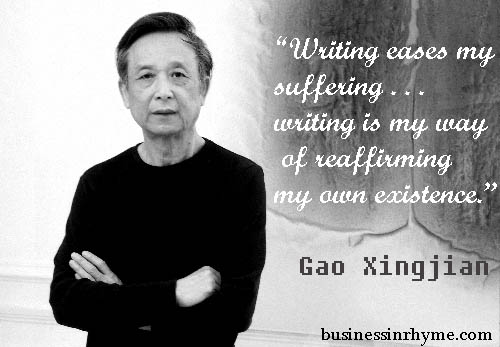
Many of us, engaged in reading and writing are aware of transformative power of poetry, healing power and artistic value it brings to our lives. But how far does that really goes? Can you be saved by a poem?
In this enlightening interview, poet an writer Kim Rosen loudly answers, yes:
In the aha! moment that occurs when the mind bursts open—at a breathtaking metaphor or an insight or a chiming among the words—all levels of being human come into alignment. You feel a sudden integration of body, mind, heart and soul. The fragmentation that many experience in the multitasking onrush of modern life cannot withstand a good poem.
For many years she even feared poetry, thinking it was some kind of elite club, secluded for some ‘special’ and very important people. But on the verge of suicidal depression, poetry came when she most needed and literary saved her life:
In the midst of a suicidal depression, poetry poured back into my life, touching me in a way no spiritual or psychological teaching had been able to—literally saving me. The healing did not come through writing poems or even through reading them. It came when I discovered that taking a poem I loved deeply into my life and speaking it aloud caused a profound integration of every aspect of me—physical, emotional, mental and spiritual. I felt a wholeness I had never before experienced.
Further, she proposes we find a poem that really speaks to us and learn it by heart: read it loud as often as we can until it engraves somewhere deep in our soul and help flourish some better and more supportive thoughts. It can help you establish better relationship with yourself and explore sides of your being you didn’t even knew existed before. That’s what poetry does.
But what about writing your own poetry?
Dr. James W. Pennebaker, one of the most widely published researchers on the benefits of writing, says in his book, “Opening Up: The Healing Power of Expressing Emotions”, that writing about emotional topics improves the immune system by reducing
stress, anxiety and depression, improves motivation and aids people in securing new jobs.
About my own personal experience, I wrote in this post how poetry came back into my life. And it happened to be that sacred, little place I was looking for to be only mine, that I could decorate, erase, fill, create or destroy the way I wanted. I didn’t have to offer any excuses, explanations or justifications for me being me.That kind of comfort is priceless. You learn to accept yourself just the way you are and you see that world isn’t some ugly place that want to make you miserable. It’s the way you see it and live it. That’s why I say: “Writing poetry helps me fall in love with the world, all over again!”
What are your reasons for having poetry in your life?
I didn’t trust it for a moment
but I drank it anyway,
the wine of my own poetry.
It gave me the daring to take hold
of the darkness and tear it down
and cut it into little pieces.
Lalla Ded. (Lalleshwari) (1320–1392)
Need some more poetic inspiration? Sign up for a free bimonthly newsletter.

Need some more poetic inspiration? Sign up for a free bimonthly newsletter.

Probably you can recall that there were moments in your life when time seemed to stop, everything around you just froze and you were riding this wave of creativity where everything was possible; you felt like you can accomplish anything, you were so immersed in what you were doing that all of your senses were focused and sharpened on that one particular activity, and your body excluded everything else? Fun and exciting in the same time, right?
And today it might seem harder to achieve that creative bliss we are all looking for, since we are so distracted and interrupted with everything going on around us. In this TED talk Dr. Csikszentmihalyi, explains that our nervous system is incapable of processing more than 110 bits of information per second. If you’re listening to someone talking, you need to process about 60 bits of information per second in order to understand what they’re saying.
He further points out that when you are doing something with high focus, your mind don’t have enough room to process other information concerning how you feel, bodily functions or other needs. Creative people often call this as the entering the state of flow and like nothing else except what they are creating exists.

“The flow” graph.
So how can you enter the ‘flow’? Can it be practiced? How can we use it to improve our creative skills?
As you can see on the above graph, the state of flow is dependable on the level of skills you use and the level of challenge you pursue. The higher the challenge and the more skills we need to engage, the better chance we have for entering the sate of flow.
During his research dr Dr. Csikszentmihalyi and his team have evaluated many people on this topic and they managed to derive few crucial points that describe how it feels to enter the state of flow:
It’s interesting to note that this research was performed on the topic of happiness and what makes people happy. Simple answer came out to be: being creative and enjoying it as much as possible.
So how can we use these key findings and apply them to our writing? How can we practice entering the state of flow?
Here are few suggestions:
Since we are talking about writing you can chose to write a poem that has certain amount of words, poetic form that is new to you, story on the topic you need to do further research and inquiries – something that goes beyond your ordinary writing practice. Remember that here you need to be fully engaged and use your skills. The challenge you pick can also help you enhance your capabilities, so don’t be afraid to go overboard of your usual writing. Play with words and dictionaries, learn foreign phrases – all that helps you become more creative and inventive in writing.
Once you enter that creative flow, if something interrupts you, the harder is to go back in and continue. So clear your desk, turn off your phone and concentrate on the task at hand.
Mastering that flow mindset takes time and practice so be gentle towards yourself and monitor your emotional response. You are in control of your attitudes so if you get too excited (angry, anxious, worried), calm down and try to regain your steady levels of energy: being sluggish and bored is also a sign that you fell of the ‘flow wagon’.
to work on a poem, a story, a chapter, an article in a continual interval – for example 30 minutes, and give all you’ve got. Focus on your writing and you’ll see how time will past in split second.
Getting into the flow and enjoying the activity that brings desired results takes practice, so make it a part of your daily routine. Schedule your ‘ time flow’ every day and commit to it. Not only are you working on your creativity and skills, but you are improving your mood and bringing more happiness into your life. After all, isn’t that what we all are looking for? It’s worth a try.
Need some more poetic inspiration? Sign up for a free bimonthly newsletter.

Need some more poetic inspiration? Sign up for a free bimonthly newsletter.

 Business in Rhyme