Why creativity ‘slips through your hands’ and what can you do about it

garrabrandt

Probably you do recognize yourself in those moments when you think “Oh, today, I’m just not in the mood for writing! I’ll do it some other time”. And it is no secret that many artists, including poets had that need to ‘induce’ their mood through drugs and alcoholism in order to create. For example:

Samuel Taylor Coleridge that it is regarded as one of the founder of  of the Romantic Movement in England was known for his opium addiction in later creative years;

It’s also widely accepted that Arthur Rimbaud’s long poem “A Season in Hell” was written under the influence of opium too;

French poet Charles Baudelaire declared that only when he’s drunk he is able to write. Similar happened to Dylan Thomas who also battled alcoholism for years.

So there is a globally accepted belief that great art can only be produced in moments of sadness, suffering, depression  or that we need some other consciousness altering stimulants to get us in the fruitful creative mood.

Now, we are all aware of the healing properties of art and  that they can provoke ‘creative miracles’. But I want to take your attention to the other side of creativity: being sad, depressed or even taking drugs and other stimulants is not going to boost your creativity.

Many  creative people do experience intervals of sadness, low self-esteem or self-pity, but most of them became their best creative version once they encountered something different, completely.

Most likely, when you didn’t feel like writing or doing anything else creatively you tried to drown your bad mood in endless cups of coffee and indulge with  too many sweet cookies.

Even if you did force yourself to do something, probably it was superficial, unsatisfactory according to your criteria which can only increase already existing bad emotions: you weren’t aligned with yourself, creating from your heart, with full desire and passion.

In order to access your full creative potential, you need to be satisfied with yourself. I’m not using word happiness on purpose, because in some cases it is seen as overrated and too elusive. But being satisfied with who you are, accepting and loving yourself in this very moment, in this very point of your life attracts your best ideas, it fuels your creative urge. And somehow the circumstances around you seem to align to assist you in your creative venture.

I know, as I speak from my own experience. Whenever I feel stress, anxiety and depression it drags me away from my goals, ideas, my focus and concentration. Then, I first try to check in with my self: why do I feel this way? How can I deal with this emotion? And sometimes I do write something just to expel that bad vibes out my system. But that is not my best creative moment. I see it more like a ‘reset button’, an entrance to my creative self: I’m able to keep my creativity firmly in my hands. it doesn’t slips through my fingers like sand.

You have that power always to access your best creative resources, to fabricate joy in what you do and don’t let outer circumstances influence your creative outlets. I know, it sounds easier said than done, but that can be also practiced. When you feel anxious, when something bothers you – go for a walk, do some exercises, talk to a friend, journal, do what ever you need for you to align with your own true, creative nature: where your values, purpose, passion and creativity become one. You have the ability to design your own happiness – you are in control of your emotions.

So, how do you feel at the pick of your creativity?


If you liked this post and you are interested in getting more inspiration for your creativity, sign up for our free bimonthly newsletter.


Why is poetry (and writing) so important – as seen through the words of writers

Here are three inspirational videos that I believe, if you ever doubted why should you write – will for ever clear up things for you. I hope you will enjoy them as much as I have 🙂

Scott Griffin is a Canadian businessman and philanthropist best known for founding the Griffin Poetry Prize, one of the world’s most generous poetry awards in 2000, and Poetry In Voice, a recitation competition for Canadian high schools. He is also the Chancellor of Bishop’s University. Chancellor Griffin sits on several NGO boards, as a director of Canadian Executive Services Overseas (CESO), a volunteer advisor to CESO, and a director of African Medical and Research Foundation (AMREF) Canada. In 2006, Chancellor Griffin published a memoir entitled My Heart is Africa that recounted his two-year aviation adventure starting in 1996, working for the Flying Doctors Service in Africa. He was appointed an officer of the Order of Canada in December, 2012. His talk explores the importance of poetry in society.

Daniel Tysdal has been a Senior Lecturer in the Department of English at UTSC since 2009. He is the author of three books of poetry and the poetry textbook, The Writing Moment: A Practical Guide to Creating Poems (Oxford University Press 2014). He is the recipient of multiple awards for his work and his research interests include creative writing and poetry. In his talk,  he is going to show you that you are the poet and will walk you through his writing process to showcase the Power of Poetry: to help us remember, grieve and celebrate.

Jarred McGinnis will share his passion for stories and demonstrate the power of words from Speech Act Theory to the genius that is the children’s book ‘That’s Not My Pirate’. Jarred is an American living in London, and the co-founder of the literary variety night, The Special Relationship. His fiction has been commissioned for BBC Radio 4, and appeared in journals in the UK, USA and Ireland. He is wickedtomocktheafflicted.com. In addition to writing fiction, he holds a PhD in Artificial Intelligence.


If you liked this post and you are interested in getting more inspiration for your creativity, sign up for our free bimonthly newsletter.
3 secrets to turn your fear of rejection into a mastery of productivity

plath

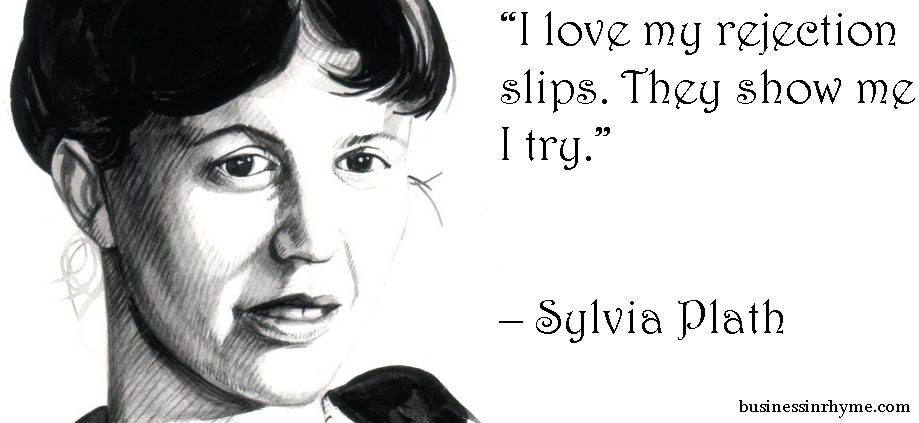
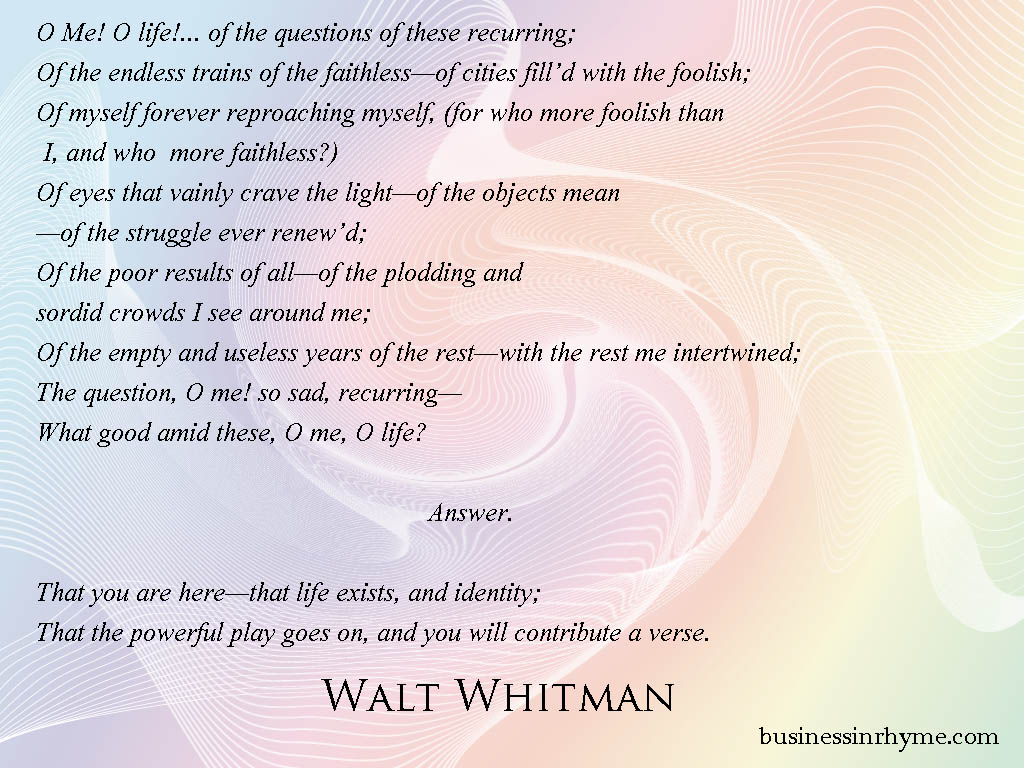
Work that is rejected: one of the writer’s worst nightmares. It simply happens that we sometimes put hours, weeks, months and even years into our writing, but it keeps being rejected all over again. And very soon there is a background ‘cheering’ voice: “I completely suck! I should quit writing, there is no use. I’m just losing my time!”

And what to do then? Should we quit writing all together? Just sit in the corner and complain over our bad luck? Or is there something we can do to turn that process and experience into something positive and productive? Looking from psychological point of you, expert John Amodeo, PhD claims:

On a cognitive level, we may be afraid that rejection confirms our worst fear — perhaps that we’re unlovable, or that we’re destined to be alone, or that we have little worth or value. When these fear-based thoughts keep spinning in our mind, we may become agitated, anxious, or depressed.

A big part of our fear of rejection may be our fear of experiencing hurt and pain. Our aversion to unpleasant experiences prompts behaviors that don’t serve us.

Being human, we long to be accepted and wanted. It hurts to be rejected and to experience loss”

Further more, accepting that feeling of failure that is true for us can have a completely counter effect on our whole being, driving us away from what we are passionate about, what keeps us alive. It negatively impacts our health, our relationships and our life in general. How to turn all that experience into an opportunity to grow?

  1. Acknowledge your fear of rejection

Once we acknowledge that there is a fear residing within us, that our work at this time maybe is not at its best-this is actually a first step to combat fear in positive way. By accepting that this fear doesn’t serve us, opens the door for us to move through that fear and explore what’s on the other side. By having that more gentle, kind and less criticizing relationship with our feelings that appear as a result of rejection,  we can “reset” our creative self more quickly and seize the opportunity hidden within our fear.

  1. It’s a part of the process that every writer has to go through.

Nobody is born as an excellent writer. Every writer has to work on their writing craft, refining their style, improving and editing every word they write. It takes time, courage and a lot of effort –  it’s simply a continuous work in progress.

Joshua F. Millburn in his essay How to improve your writing: 3 tips says that if your want to improve your writing: ”Sit in the chair.” Sounds to easy?

These four words changed my life. For a long time, I was an aspiring writer—which meant I didn’t write much. Sure, I aspired daily, but I didn’t make writing a priority. Instead, I spent time passively parked in front of glowing screens: watching TV, perusing Facebook, checking email. I didn’t become a writer until I developed a writing habit. People don’t learn how to write via osmosis; it takes work. So forget word count or page count—focus instead on sitting in the chair distraction-free, writing for at least an hour a day. Do this for a month and you will improve more than you thought possible.

  1. By embracing your rejection graciously, you are already improving your writing.

Once we become grateful for our experiences, we are more able to let go. It gives us clarity and our willingness to learn and put additional effort comes to forefront. Give back yourself permission to enjoy writing. It fuels our persistence to improve ourselves, not only in writing. No matter how many rejection letters pile up, you can use them to improve your skills. And not only will you improve skills, you readiness to write under certain conditions will improve: time you need to write something with a deadline; you get better acquainted with the writing market and that will shorten your time you need to do the research. You become familiar with your fear and with ease you recognize possible mistakes you can mitigate on time.

With each rejection you learn how to be better – as the quality of your writing improves, so does your efficiency.

How do you deal with rejection? Does it impact your writing? Please, share your experience in the comments below.


If you liked this post and you are interested in getting more inspiration for your creativity, sign up for our free bimonthly newsletter.