Let your senses guide your creative spirit

That is beautiful which is produced by the inner need, which springs from the soul.

                ~ Wassily Kandinsky

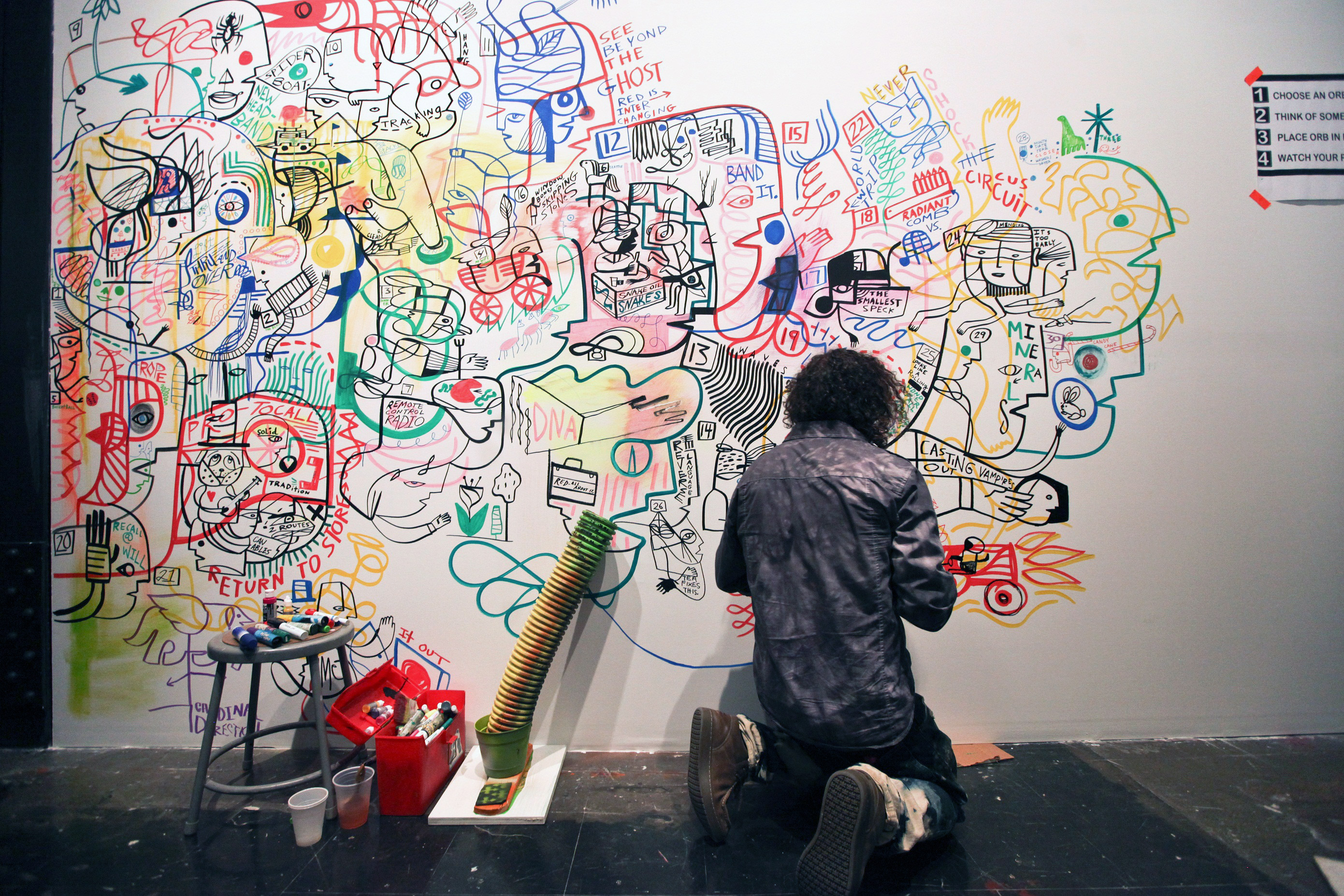
The idea for this creativity prompt was inspired by Wassily Kandinsky (1866-1944) a Russian painter. He is one of the founders of Expressionism movement and he became famous for his abstract art. Most of his paintings were influenced by the music he was listening to. Kandinsky was on quest to break the barriers between different arts and actually tried to connect them in his work. “Concerning the spiritual art” is the most influential piece that left its mark on the abstract art of the 20th century.

So, as Kandinsky was painting his music, you can go step further and write a poem influenced by the kand45music you hear. The idea is not to describe the music, but rather let yourself feel the music -take you to different place, different time. In this post, I in length elaborate the importance of finding time and place for your creative activities. Secure that peaceful moment when you are not disturbed and with calm and ease pursue your activity. Sit in a comfortable position, close your eyes and imagine what you hear, absorbs you like sponge and you are like water: liquid, flexible, traveling through different sounds, shapes, colors and words. Let music guide you and write without censoring, without limitation. Along the way you can sketch, you can develop your visual story…what ever feels right at that moment. There is no goal to achieve, except to escape the rational and let your inner creativity shine.

For this exercise I propose three classical pieces:

  1. Four seasons by A. Vivaldi
  2. Adagio by T. Albinoni
  3. Bolero by M. Ravel

Each piece will evoke different emotion. Don’t fight it, just let it be and surrender to it. Your creative spirit will find its way for most appropriate expression. I chose classical music with purpose, because it is believed that classical music makes you more honest with yourself, improves communication, memory and in general improves our stress levels, which is crucial for creative thinking.

You can choose other musical pieces according to your taste, as well. And please, share your experience in the comments below.

A Violin at Dusk by Lizette Woodworth Reese

Stumble to silence, all you uneasy things,
That pack the day with bluster and with fret.
For here is music at each window set;
Here is a cup which drips with all the springs
That ever bud a cowslip flower; a roof
To shelter till the argent weathers break;
A candle with enough of light to make
My courage bright against each dark reproof.
A hand’s width of clear gold, unraveled out
The rosy sky, the little moon appears;
As they were splashed upon the paling red,
Vast, blurred, the village poplars lift about.
I think of young, lost things: of lilacs; tears;
I think of an old neighbor, long since dead.
Can Art impact our health?

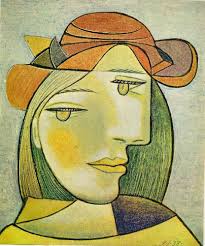
Art washes from the soul the dust of everyday life.

              ~ Pablo Picassopicasso

This is one very interesting and emerging topic. In the last decade, there has been done a lot of research with positive results on how arts can help us improve our health and help us in our healing journey – both mentally and physically.

The idea that creative expression can make a powerful contribution to the healing process has been embraced in many different cultures. Throughout recorded history, people have used pictures, stories, dances, and chants as healing rituals.

Each type of arts (visual, acoustic or verbal) has its own benefits.

In this post I will exclusively focus on writing and the power of language. The results of some researches are quite fascinating. For example, Dr. James W. Pennebaker of the University of Texas at Austin has designed several studies to show the links between writing and health:

Writing about emotional upheavals in our lives can improve physical and mental health. Although the scientific research surrounding the value of expressive writing is still in the early phases, there are some approaches to writing that have been found to be helpful.

In a series of exercises, healthy student volunteers who wrote about traumatic experiences had more positive moods, fewer illnesses and better measures of immune-system function than those who wrote about superficial experiences. Even 6 weeks later, the students who’d written about what upset them reported more positive moods and fewer illnesses than those who’d written about everyday experiences.

In another study of students vulnerable to depression, those who did expressive writing exercises showed significantly lower depression symptoms, even after 6 months, than those who had written about everyday matters.

There have been also developed a range of new therapies that use arts as basic methodology and approach with noticeable success. For the visual summary of how arts can beneficially impact our health you can look at the infographic given at this link that was developed by Art and Health Network Canada.

So, whenever you can, surround yourself with art or get involved in some artistic work: it’s fun, creative and most importantly is doing good for your health and wellbeing.

Health by Rafael Campo

While jogging on the treadmill at the gym,
that exercise in getting nowhere fast,
I realized we need a health pandemic.
Obesity writ large no more, Alzheimer’s
forgotten, we could live carefree again.
We’d chant the painted shaman’s sweaty oaths,
We’d kiss the awful relics of the saints,
we’d sip the bitter tea from twisted roots,
we’d listen to our grandmothers’ advice.
We’d understand the moonlight’s whispering.
We’d exercise by making love outside,
and afterwards, while thinking only of
how much we’d lived in just one moment’s time,
forgive ourselves for wanting something more:
to praise the memory of long-lost need,
or not to live forever in a world
made painless by our incurable joy.

Removing your biggest obstacle towards success: fear of failure

Take up one idea. Make that one idea your life–think of it, dream of it, live on that idea. Let the brain, muscles, nerves, every part of your body, be full of that idea, and just leave every other idea alone. This is the way to success.

              ~Swami Vivekananda

We’ve all been there and done that. Fear of failure. It’s a cold, paralyzing emotion that simply stops you from being what you want to be, do what you want to do – simply live your life openly, freely, without judgment and regret. So what can we do about it?

Well the truth is, WE ARE the only ones who can do something about it. Nobody can do it for us, as well as nobody can succeed except us. It’s our hard work, devotion and commitment.

And I would say that we all have to invest time and work when we want to get rid of that fear: an obstacle that can make our life miserable, sometimes making us feel even sorry for ourselves while watching other people having fun and enjoying life.

Illustration of a cloud and a ladder

It’s interesting that only one change in my daily routine gave me so many different perspectives on various aspects of my life – including success and fear of failure. When I started regularly writing poetry it opened my mind to so many possibilities and different ways of thinking that every part of my life improved for the better. At the beginning I was so happy that I just, you know, began to write. With time, somehow, doubt began to creep in and  I started to look for flaws: Could I’ve written something better? Could I’ve express myself more precise? Why didn’t I come up with that word (while reading the work of other aspiring authors)? But then, I tried to cheer myself: “I can write another poem, and another poem. The previous one is nor bad nor good. It’s just a reflection of one moment of my life, my thoughts…it doesn’t define me. Tomorrow I can do it better”.

And these thoughts made me look more deeply at the essence of our fear of failure. The truth is: you cannot fail. These are also the words of my favorite teacher dr Wayne Dyer, that passed away recently. You cannot fail. You can only produce certain result. In one particular moment of time it reflects your efforts, mistakes, fears and joys. But it is not who you are. There is always another try, another poem to write, another story to tell, another project to start, another person to meet, another vacation to travel. You are never late. It’s just one moment in time, not a failure.

In this whole process I would also suggest that we should revisit our beliefs about success and failure. When I look back 20 years ago, I was very ambitious, eager. I had a lot of energy and motivation – simply I could “conquer” the world. And my notion of success in that time and now differ a lot. Now, I would do many things differently. In the first place, take care more of my health. And sometimes I wonder: “Did I really follow my goals under my terms, or somebody else’s? Because, many times society implies what is success. Yet, is that success for me? What’s expected from me – is that what I really want”?

So next time you hesitate to try something new, look at things from different perspective and ask yourself: “What is my definition of success? Am I living under my terms? Am I giving my best? What would’ve happen if I only try – without getting attached to the outcome”?

Success is counted sweetest by Emily Dickinson

Success is counted sweetest
By those who ne’er succeed.
To comprehend a nectar
Requires sorest need.

Not one of all the purple Host
Who took the Flag today
Can tell the definition
So clear of Victory

As he defeated-dying
On whose forbidden ear
The distant strains of triumph
Burst agonized and clear!


An invitation to participate

As an attempt to make this blog even more dynamic, beside my regular posts on the benefits of poetry for life and business, I’m launching new category “Daily verse with purpose” that will feature exciting, motivational and inspirational verses from various poets. This is also invitation to all interested readers, poets and writers to submit their favorite rhymes, verses from different poets that they would like to see featured as “Daily verse with purpose”. Depending on the response I will try to include all your favorite poets – as we all need some additional encouragement with incoming rainy and cold days 🙂 Your suggestions you can submit to businessinrhyme at gmail dot com.

Hopefully, this will be a growing community for all of us where we could submit our own inspirational quotes, poems, verses and ext.

For starters, I’ve chosen “Climb ‘Til Your Dream Comes True” by Helen Steiner Rice.

HS Rice

3 tips to get your creative leadership to the next level

In the simplest terms, a leader is one who knows where he wants to go, and gets up and goes.

              – John Erskine, author 

When my mother taught me how to cook, she used to say that I should always think from the end: “prepare every pot you are going to use, preheat the oven,  go wash and cut your groceries” –  so I wouldn’t mess the kitchen cabinets with my oily, floury hands. And she was right: it shortens the time of cooking, cleaning and the stress that arise from hurry and clumsiness.

Pretty much the same is with business. Whenever we are able to envision where we want take our project or business, it’s much easier to plan the steps along the way. But in certain times, we don’t have that clarity in which way to turn, what is the desired outcome.

That process of breakthrough ideas – “envisioning” is a rocky journey, full of ups and downs, sometimes with obstacles and sometimes is a smooth sailing across the quiet sea.

Creative leadership can benefit from those bursts of innovative thinking and

Leadership concept on white background. Isolated 3D image

for the sake of project/business idea, the focus should be to emulate, produce and sustain those conditions as much as possible. Poetry as a tool can help us a lot:

  1. Follow the hunch

When the idea is still vague, undeveloped, but you have a hunch, a feeling – write a poem about it. Write about your successful project, the benefits it will bring, how you would feel after accomplishing desired results. This type of writing can stimulate positive mood and enhances your creative abilities.

  1. Combine and play

Creating something new can mean rearranging the existing parts into something different – with different order, structure, introducing new elements. To connect seemingly incompatible in new ways, we can produce something extraordinary and give answers to questions we have. Einstein called this Combinatorial Play.

You can summarize all of your ideas, mix them, connect in every impossible way – in poetry. There is no logic needed, there is no judgment, there is no need for “it doesn’t work” statements. Combine and Play:  you might be surprised with the innovative solutions you come up.

  1. Look at the big picture from a detail perspective

Creative leadership is able to recognize unexpected perspectives, keeping in mind the “big picture” – end result it wants to achieve, but pays attentions to detail, and how the change in tiny, almost invisible parts can make the whole difference.

One useful example is the story of Velcro:

In 1948, de Mestral happened upon his most enduring discovery while hiking. He and his dog returned from a hike covered in burrs from the plants along the trail. De Mestral examined the burrs under a microscope, studying their structure. He began working to develop a synthetic fastening system that mimicked the hooks and loops of the burrs.

The fabric went through a number of phases before it was finalized. De Mestral worked with a weaver in France to create hooks and loops strong and durable enough to cling together as he intended. Originally crafted from cotton, the fabric ultimately proved more successful when made out of nylon. In 1955, de Mestral unveiled his innovative new material: Velcro®. The name is a combination of the French words “velours” and “crochet,” translated to English as “velvet” and “hooks.”

source: biography.com

How poetry relates to this? While examining the world around us, analyzing ideas, exploring available resources – especially in poetry where no rational and logical thinking is required, we can accelerate our ability to see through things, how they work, connect, respond, to understand their background. It’s an unleashed creativity that process of focused logical elimination can jump-start our innovative process.

The idea by Mark Strand

For us, too, there was a wish to possess
Something beyond the world we knew, beyond ourselves,
Beyond our power to imagine, something nevertheless
In which we might see ourselves; and this desire
Came always in passing, in waning light, and in such cold
That ice on the valley’s lakes cracked and rolled,
And blowing snow covered what earth we saw,
And scenes from the past, when they surfaced again,
Looked not as they had, but ghostly and white
Among false curves and hidden erasures;
And never once did we feel we were close
Until the night wind said, “Why do this,
Especially now? Go back to the place you belong;”
And there appeared , with its windows glowing, small,
In the distance, in the frozen reaches, a cabin;
And we stood before it, amazed at its being there,
And would have gone forward and opened the door,
And stepped into the glow and warmed ourselves there,
But that it was ours by not being ours,
And should remain empty. That was the idea.


5 qualities of creative people

When we engage in what we are naturally suited to do, our work takes on the quality of play and it is play that stimulates creativity.

               — Linda Naiman

Many years spent in research and education helped me notice that:

  1. Creative people are not afraid to be childish.
  2. They tend to mix possible with impossible.Gabe-Felice-Psychic-Drawings
  3. They are curious and not afraid to go against the mainstream (follow “the rebel inside”).
  4. Often they are empathetic, emotionally challenged where through creativity they release the pain and initiate healing process.
  5. They embrace their introverted side.

Any of these traits we can emphasize and work on them. I believe we can be creative in whatever field we choose. For example, chefs are creative masters in the kitchen, and sales people or marketers are creative in coming up with strategies to build businesses. Poetry and writing in general can be a useful tool in helping us become more creative in other fields. One of the reasons I like poetry is that you don’t need anything beside paper, pencil and your willingness to commit to writing,

Poetry allows you to play with words – even invent new words which I adored to do when I was i child. I even invented a whole new language and was so proud when nobody could understand me except my best friend. By just playing with words, poetry awakens that forgotten child, loosens our rigid thinking and allows the impossible to become possible -which lead us to the second trait: in poetry we can mix and connect anything we like and you set your own rules for that. There’s no need for explanation, no judgment, just your free mind and spirit. There you can question everything, you can become or be anything you like and the thirst for excitement that comes from the feeling after you finish your little master-piece is what makes everything worthwhile. Being curios about your own capabilities is a sure thicket for more creative outlets.

And more then anything I appreciate my ME time. No in selfish way while neglecting others, but I think in order to develop better creative qualities we need to be alone with ourselves, listen what comes from inside and just let it go. All the pain, hurt, discomfort, disappointment, discontent.. just let it go. Pour your soul into your writing, without censuring anything – you’ll feel like clouds have disappeared and that you can see more clearly: who you are, what you want to accomplish and how.

When I was younger, I used to fear loneliness, why am I different, why I don’t fit in, why do I have different interests, why don’t I have more friends. But the truth is, I always appreciated more meaningful, deeper friendships, you know…people that support you, who are part of your experiences, who witnessed you growing in what you are today. And usually we have only few friends like that. And that’s Ok. It’s Ok to have a lot of superficial acquaintances as well. But being introverted and not easily fit in, can be a blessing in disguise. It can propel your work in the most exhilarating ways and let you experience the world from different perspectives – where by having to much useless encounters would make you too busy and diverted to see. So it’s Ok to be introverted – embrace it in your work and let your creative genius to shine!

Where the mind is without fear by Rabindranath Tagore

Where the mind is without fear and the head is held high
Where knowledge is free
Where the world has not been broken up into fragments
By narrow domestic walls
Where words come out from the depth of truth
Where tireless striving stretches its arms towards perfection
Where the clear stream of reason has not lost its way
Into the dreary desert sand of dead habit
Where the mind is led forward by thee
Into ever-widening thought and action
Into that heaven of freedom, my Father, let my country awake.

Are poets born, taught or both?

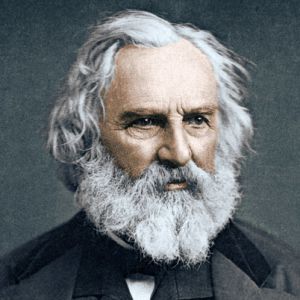
This post is inspired by the poem “The Poet And His Songs” written by Henry Wadsworth Longfellow and it goes like this:MTE5NDg0MDU1MDQ0NTg5MDcx

As the birds come in the Spring,
We know not from where;
As the stars come at evening
From depths of the air;

As the rain comes from the cloud,
And the brook from the ground;
As suddenly, low or loud,
Out of silence a sound;

As the grape comes to the vine,
The fruit to the tree;
As the wind comes to the pine,
And the tide to the sea;

As come the white sails of ships
O’er the ocean’s verge;
As comes the smile to the lips;
The foam to the surge;

So comes to the Poet his songs,
All hitherward blown
From the misty land, that belongs
To the vast Unknown.

His, and not his, are the lays
He sings; – and their fame
Is his, and not his; – and the praise
And the pride of a name.

For voices pursue him by day,
And haunt him by night,
And he listens, and needs must obey,
When the Angel says: Write!

and it left me wondering: are we born writers and poets with innately need to write and create or is it something we discover with time and then put effort and energy into it in order to develop better writing skills? I mean, we all can work to improve our abilities in any area, but are we born with notion that writing is supposed to be our life calling (or any other profession, for that matter)? Do you simply “know” that you must write in order to be yourself, to express your true nature? As Longfellow says “so comes to the Poet his songs…from the misty land…to the vast Unknown”.

For me, some sort of writing was always present. During my career it evolved into scientific writing, yet the most natural way for me to write is in the form of poem – and it showed early in my childhood.

As Marina Abramovic likes to say:

 For me, art is like breathing. You don’t question if you breathe, you have to breathe. So if you wake up in the morning and you have to realize an idea, and there’s another idea, and another, maybe you are really an artist. It doesn’t make you a great artist, it just makes you an artist. To become a great artist is a huge undertaking! So it’s really important, that instinct. You need the instinct to do it”.

There is no doubt that further developing skills requiers hard work – to move from ordinary to extraordinary. But do we need that “special thing” to carry inside in order to go beyond the average crowd? What are your thoughts, please share in the comments bellow.

3 creative ways to earn money as a poet

 Money is everywhere but so is poetry. What we lack are the poets.

               ~Federico Fellini

The truth is no matter how we are aware of the poetry artistic value, writing poetry and therefore reading and buying it, is not popular as reality shows for examples. For most of the publishers the profit they make from publishing poetry is minor or almost non-existent.

When we think of earning money from our writings, we first think of traditional ways, like submitting to literally journals, and different contests where acquired attention and popularity can ultimately lead to publishing offers. In nowadays digital world, the rules of games are changing on the behalf of indie and self-publishing opportunities.1a9af70f265d0cc691471e6b27d27e11

You can start a blog, publish your e-book or chapbook with very little investments but getting needed exposure might be hard. Today I want to share with you examples of successful poets who are doing things a little differently – and it actually pays off.

Explore the possibilities of Instagram

There are many young writers who are combining old typewriters, sentimental atmosphere and witty words to attract readers and viewers. Robert Macias, who goes by the name R.M. Drake, is one of them. He is a self-published writer, with over 1 million followers on Instagram, 16K on Twitter and over 20 000  likes on his Facebook page. His book Beautiful Chaos is one of the best-selling books in Amazon’s poetry category.

Robert was previously an art director, but now with his writing he is able to quit his job and only devote his time to writing. In an interview he gave, he is not very sure what pushed him forward in the poetry fame but he reckons that it might be related to his confessional writing.

The more I write things about myself the more that people relate to it..At least on social media, people want to expose how they’re feeling and things they’re going through and that’s what my writing does. It’s self-exploration and self-therapy.”

He likes his raw, uncensored approach and apparently his readership love that too!

Become next haiku guy/girl

This idea for poetry-writing business emerged when two college friends wanted to do an interview series about entrepreneurship. In Williamsburg they organized a little booth with aim to attract possible interviewers and in return they offered writing a short poem – haiku (since they both were quite artistic and eloquent). Very soon they got an assignment for yoga festival and that’s how haiku guys were born.

Charging between $200 and $250 per hour, The Haiku Guys are able to earn some dissent money by writing poems at events, especially since they sometimes attend up to six a week.

If you are a poet, maybe you can also offer custom-made poems for events, performances and ext.

Publish your poems beyond paper and digital world

This last example is about non-profit organization, but they are doing so diverse and inspirational projects that by far they are my favorite.

The Red Room Company is dedicated to creating unusual and useful poetry projects that positively transform expectations of, and experiences with poetry. Through imaginative projects and learning programs they aspire to make poetry accessible to all, especially those who face the greatest barriers to creative opportunities. Organization is located in Australia and is mostly directed on affirming Australian poets.

One of the projects I really liked is Dust Poems with unique aim to deliver 6  perspectives of the road, both from professional poets and professional truck drivers, exploring their experiences of driving across the country.

Original copies of poems were hidden in 5 locations throughout the Sydney Olympic Park  which the public could find through an interactive online map. An ongoing installation of the poems, as well as audio and visual material was displayed in Sydney Park between March and July 2009.

I think this is very creative, fun and imaginative way of using poetry while creating unique experiences for both the readers and poets. Now, what’s interesting is that in order to popularize poetry we can step out of conventional ways and publish poetry elsewhere. Like small company from the Netherlands, Plint: they print poetry on different objects like tea towels, mugs, boards and pillows. And with the possibilities of Internet you can publish your own poetry on the objects you choose, by using zazzle.com or cafepress.com services. Initial investment is small and you can outreach for more readership this way.

I hope you find this ideas interesting and that ultimately can help you, if you are a writer – to create a valid business model.

Rich or Poor by William  Henry  Davies

With thy true love I have more wealth
Than Charon’s piled-up bank doth hold;
Where he makes kings lay down their crowns
And life-long misers leave their gold.

Without thy love I’ve no more wealth
Than seen upon that other shore;
That cold, bare bank he rows them to –
Those kings and misers made so poor.

Increase your creative potential in 3 easy steps

The unfed mind devours itself.

              ~ Gore Vidal

Is it creativity something we are innately born with or we can improve our creative skills? I would say that some people are maybe more prone to imaginative thinking and open to new ideas, but we all are creative beings. There are key creativity dimensions like knowledge, divergent thinking (cognitive style), personality, autonomy and intrinsic motivation as authors suggest in “Creative Potential and Practised Creativity: Identifying Untapped Creativity in Organizations”. In particular, research findings suggest that domain of specific knowledge is a necessary prerequisite for effective creative functioning.

In my opinion, the difference is maybe in style and tools we use to express our creativity. One of the worst things that can happen is a creativity block that we all encounter from time to time, but there are certain tricks we can apply in order to move forward with our creative thinking.

  1. Dive in the absurd

In the paper “Connections From Kafka: Exposure to Meaning Threats Improves Implicit Learning of an Artificial Grammar” authors argue that experiencing (reading, hearing or seeing) something absurd like surreal art or literature can increase pattern

salvador-dali-abstract-painting-619-6

recognition of association unrelated to the original meaning threat. In other words, mind always tries to justify, explain what it experiences and “nonsense” art forces mind in faster mode of thinking to recognize what body senses.

So next time you feel uninspired, give your attention to something abstract, surreal (painting, poem, novel) and let you mind drift, loosen up from everything you were trying to accomplish. Let your mind “recharge” this way.

  1. Limit your self on purpose

This might sound strange at first but when you think about it- it might be true. Often we try to find the solutions to new problems by exploring already familiar models and build our new denouement on old foundations. Furthermore, when we have to many options or resources, we try to incorporate everything and unnecessarily over-complicate solution we are seeking. When we put restrictions on what we can use and what path we should follow, it can actually boost our creative thinking. Here I suggest you improvise a bit with your solution, tackle it from different perspective and simplify your approach. It can be that final “click” you need in your mind to move thinking in right direction.

3. Play with “what if” clause

Then, return to your problem and try to look at it from  “What would happen if…. ?” point of view. According to the research, presented in paper Implications of Counterfactual Structure for Creative Generation and Analytical Problem Solving: 

additive counterfactual thinking mind-sets, activated by adding new antecedent elements to reconstruct reality, promote an expansive processing style that broadens conceptual attention and facilitates performance on creative generation tasks”

It’s a great way for creativity “spikes” that we all need when we feel stuck and lack ideas.

These were 3 easy steps that can help us ignite our creative imagination. What do you do when you feel uninspired? Please share your thoughts in the comment section below.

Mobius Strip by Robert Desnos

The track I’m running on
Won’t be the same when I turn back
It’s useless to follow it straight
I’ll return to another place
I circle around but the sky changes
Yesterday I was a child
I’m a man now
The world’s a strange thing
And the rose among the roses
Doesn’t resemble another rose.