
Need some more poetic inspiration? Sign up for a free bimonthly newsletter.

Need some more poetic inspiration? Sign up for a free bimonthly newsletter.

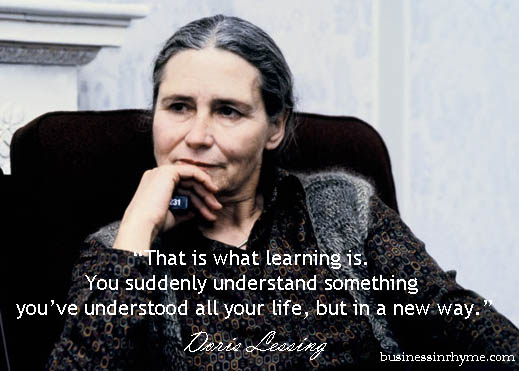
While you are studying at a Faculty, many of the courses you encounter (obligatory) you don’t like or you don’t recognize at that particular time you do really need certain knowledge and skills they offer. And on the other hand, there are subjects you simply adore and you are always excited about.
When you are young and full of energy you simply don’t want to waste your time on something you don’t like when there is bunch of other stuff you’d rather do. So I made a little pact with myself that everyday, at least for 10 minutes I will do seminars and projects that I’m excited about. Every day, consistently! Why I did this and how it helped me? It helped me in two ways:
At the end, I managed to graduate a year before anticipated time.
These principles we can also apply to our creative projects and make ourselves more productive and exited about what we are doing.
Now, here is a little exercise I have for you today:
I hope you find this exercise fun and applicable to your creative routine. By being persistent it can eventually help you enjoy more your creativity and writing.
If you liked this post and you are interested in getting more inspiration for your creativity, sign up for our free bimonthly newsletter.
I want to tell you a secret
little secret, simple and honest –
You are the only
reason for your existence:
to grow
to glitter
to laugh.
You are the only
one who makes this prison
of negative persistence.
You are the only
one who can say: “No, I’m not a
quitter!”
Open your eyes widely
world that lies beneath you
is your home.
Open your heart kindly
let your dreams fly back to you,
wildly.
Maja S. Todorovic
As blank page stares at me
clock ticks in the rhythm of my heart beat.
Thoughts swarm like bees in a miniscule hive.
Shadows make patterns, hexagonal hive
they dance, trying to catch me
not skipping the beat.
I try to write, as my thoughts following the beat
feisty and seduced, like honey queen in her hive,
run from my pen, throwing syllables at me.
This poem will never be written: because of me, in this mindless hive, it lost its beat.

Need some more poetic inspiration? Sign up for a free bimonthly newsletter.
Cucumber, cabbage, cauliflower:
beheaded, without voice
swirl around
shorn of leaves, travel in pieces
without choice
bounce from ground to ceramic plate
Greens of the sweetness
curled above my moist tongue
test their fate
soft, crumbled blades dream of living
for a second longer, drunk
desperately among my teeth stuck.
Maja S. Todorovic

Need some more poetic inspiration? Sign up for a free bimonthly newsletter.
In this article, I have in depth described how poetry can be closely related to accessing our tacit knowledge, which in our business world can bring us lot of advantage. Tacit knowledge is represented by all our skills that are not only shaped by our education, but mostly through our life conditions, environment, culture, ext. We could say that tacit knowledge is everything undefined, inexplicable, unknown yet perceived knowledge by one person – usually rooted deeply in the subconsciousness and its largely based on any internalized information.
In the paper “Cooking up a storm: Flavoring organizational learning with poetry” author Grisoni L., argues that poetry can go a step further and actually
create a fusion between tangible, rational and explicit knowledge and tacit or implicit knowledge, providing opportunities to access new organizational knowledge; emotional richness, texture and flavored nuance to organizational knowledge and learning.”
In the mentioned paper, poetry is used as a creative research method and as such it contributes to development of new forms of knowledge. Poetry reveals what is hidden, beneath the ordinary organizational behavior, procedures and policies.
The case study for the paper is based on a group of 60 middle and senior managers from a single organization and they were asked to form small groups of three, share their stories and experiences from their working environment. Listeners would capture key words from these stories and together the small group would develop short poems using the haiku poetic form.
Here are some of the presented haikus:
Change risk move frightened
Thought safe, hidden fear revealed
Moved, sparkling sunshine
Ongoing concern – always
People in need, a start
Towards positive change!
Member of team
Develop role, career
Encouraged, valued.
After successful presentation of hauikus, conclusions that emerged are that working with poetry holds the potential to capture emotion and express the un-sayable with passion, truth and intensity. It provides a supportive underpinning to discussions relating to emotions, which form an important part of the organizational learning literature, surfacing and facilitating dialogue about these issues in a way that other processes may not access.
What’s also interesting is that we do create explicit form of knowledge where our skilled performance is delivered in new ways through social interaction. In this research paper has been shown that poetry is a wonderful medium for doing that. But, how else can poetry help us in business setting? Any thoughts? Please share in the comments below.
Knowledge
If you liked this post and you are interested in getting more inspiration for your creativity, sign up for our free bimonthly newsletter.
Air is crisp,
biting my cheeks.
Loneliness is present.
Maja S. Todorovic


