Blog

3 reasons why anything you write has value

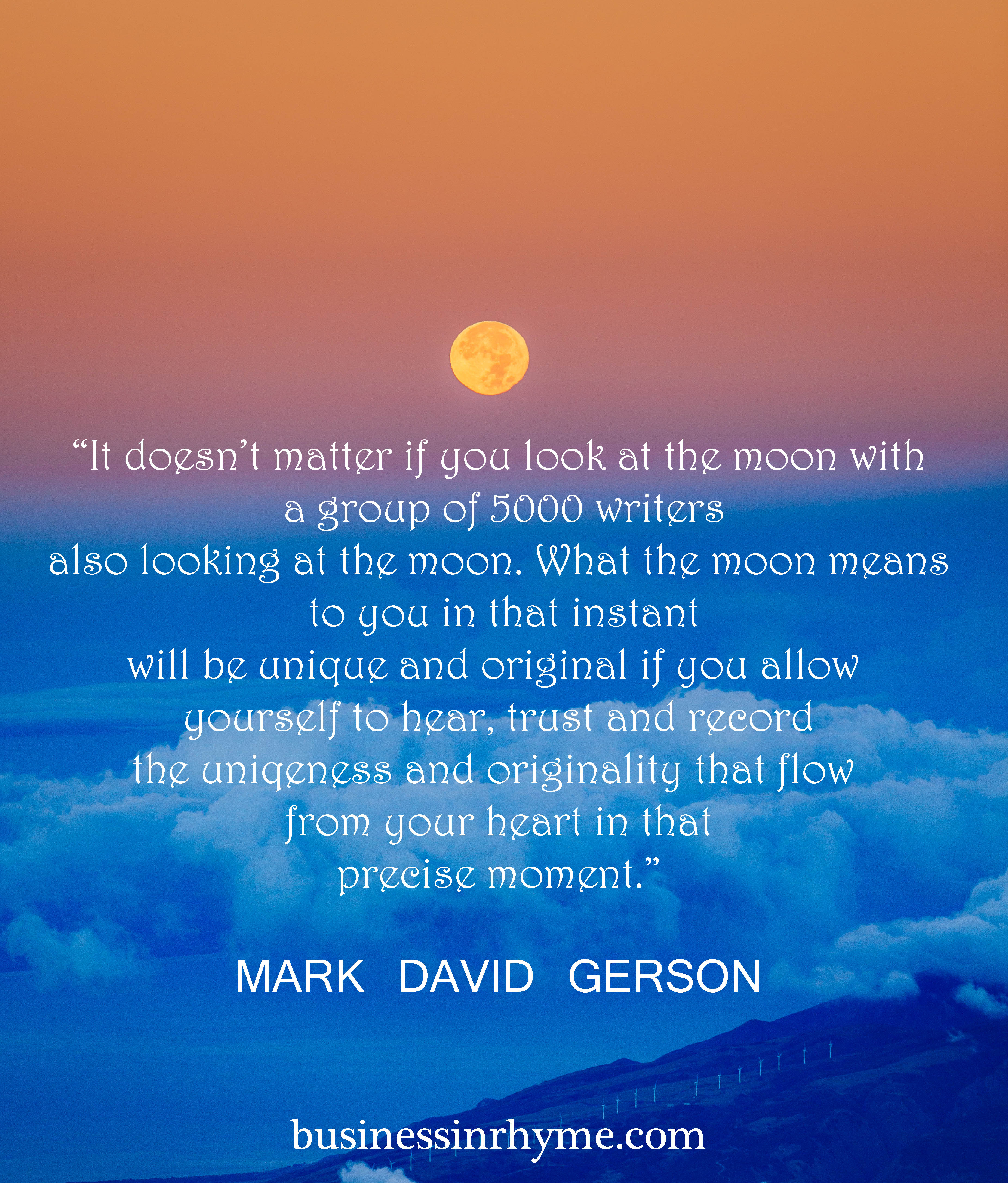
quote_writingvalue

Probably you have encountered yourself thinking that what you wrote was not good enough, that nobody would like to read it, ext. And as writers we all have that moments. It’s so easy to let that moment overpower us – just let it flood us with self-loathing about our own skills and capabilities. But today I want to offer you a different perspective on your writing and tell that anything, any word you write has value and it’s not your waste of time.

I so immensely believe in the power of written words, our own words we spill on pages that I’m quite confident in the following statements I’m about to make:

  1. Your writing has value because it’s inevitable part of your own self-exploration and the way to know yourself better.

Each writing session is actually part of something much bigger, a pattern, a recorded reflection of you in particular moment in time. It doesn’t matter do you write a novel, an article, or purely stating your opinion and commenting on someone else’s work – it’s part of you. And anything that is coming from your own sincerity and open heart has value.

What you write at this moment doesn’t have to be perfect. Probably this exact information you are reading can be written in better style, using better words (especially concerning that English is not my mother tongue), but still you can understand the encouragement I want to give you here. And that is what counts, the message and intention behind it.

But this moment me writing this, leads to another writing moment, another blog post, another poem and inevitably we become more comfortable and confident in our writing, which reveals my second reason:

  1. Your writing has value because it’s part of the process where you improve your writing skill and you ‘calibrate’ your writing voice.

As long as you trust your authenticity your writing is original. The way you select and arrange words – especially in poetic writing which is so sophisticated, each time you write poem you are discovering your specific writing expression. It’s unique just as your finger print – you learn to use the words to best express your nature, personality, opinions, belief system and anything you stand for.

  1. Your writing has value as it teaches you to be more mindful of your thinking and stay present in the writing moment.

Each poem or paragraph you write doesn’t have to be approved by editors, experts or published in high impact journals in order to be of value. You write what is true and real for you in that exact moment. While we progress with writing, as it changes so do we. At the beginning of my writing practice I used to write long prose-poems, where I needed a lot of space and words to express myself. As mindfulness begins to dominate my writing lines, so my writing becomes simple and clear. You probably also can relate to this: compare your early works with something you recently wrote and you will see how your poems/writing is more coherent, straight to the point and purposeful.

These are my top 3 reasons why you should keep writing, each time you start to doubt and feel discouraged. There is no word, minute or paper wasted.

And probably the 4th and most obvious (and important) reason that I didn’t list above it’s because it simply brings you joy and fulfillment. Yet, I focused on another crucial elements that most people don’t recognize and easily overlook. These are my three reasons giving me that push I sometimes need to write and commit myself to get the words out there.

Trust your yourself – your writing has value.

The time will come
when, with elation
you will greet yourself arriving
at your own door, in your own mirror
and each will smile at the other’s welcome,

and say, sit here. Eat.
You will love again the stranger who was your self.
Give wine. Give bread. Give back your heart
to itself, to the stranger who has loved you

all your life, whom you ignored
for another, who knows you by heart.
Take down the love letters from the bookshelf,

the photographs, the desperate notes,
peel your own image from the mirror.
Sit. Feast on your life.

Derek Walcott


If you liked this post, please share! And if you are interested in getting more inspiration for your creativity, sign up for our free monthly newsletter.

Autumn

For some reason autumn has always been my favorite time of the year. Dark green, yellow and deep red are colors that always reminded me of maturity, contentment and that satisfying feeling of carrying enough knowledge and experience into the colder and darker days…

For the first official day of autumn let us enjoy these simple yet mindful words by Amy Lowell:

A photo by davide ragusa. unsplash.com/photos/4jcFu1byopQ


If you liked this post, please share! And if you are interested in getting more inspiration for your creativity, sign up for our free monthly newsletter.
INFOGRAPHIC: 9 benefits of reading poetry

As opposed to the most popular post on this blog ‘Why people don’t like poetry’, I have compiled according to my so far done research a little, simple (yet cute, you have to admit 🙂 ) infographic about beneficial aspects of reading poetry.  Many of us do like reading/writing poetry and we all know that it goes beyond pure use of certain words and language functions.

infographic_benefits_reading_poetry

I think this is especially interesting to the newcomers to this blog and how they are not that much acquainted with the previous work done, here are also links of the specific posts leading to creation of this infographic.

How poetry can stimulate creativity?

Poetry and Creativity: crucial blocks in building leadership qualities

Can poetry help you become a better strategist?

Are you a ‘deep reader’? 3 reasons why you should nurture this habit

How important is tacit knowledge for your creativity and one simple way to get more of it

Develop your own mindfulness practice for more patience and joy at work

Diversity at workplace: how to use poetry for improving communication and intercultural differences

Raise your emotional intelligence for creative entrepreneurial leadership- part I

Raise your emotional intelligence for a creative entrepreneurial leadership – part II

Are you an introvert? Poetry can help you access your inner treasures

Please, feel free to share this info as we together can inspire more people to make poetry essential part of their lives.


If you liked this post, please share! And if you are interested in getting more inspiration for your creativity, sign up for our free monthly newsletter.
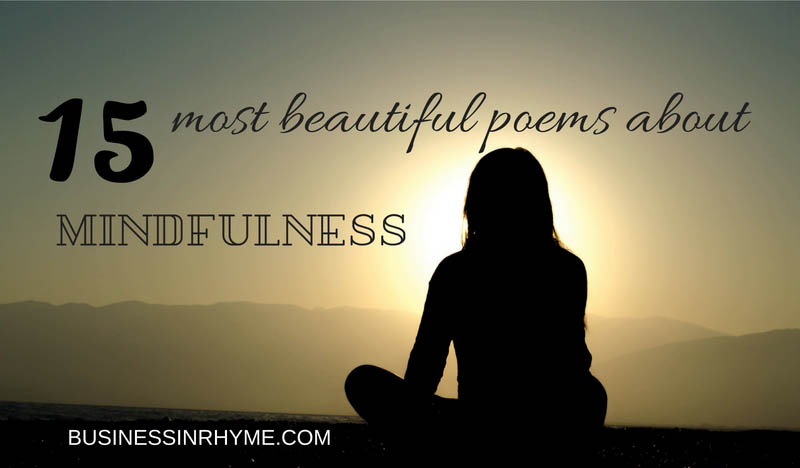
Making Peace by Denise Levertov

As today we are celebrating a World Peace Day, I thought of sharing this beautiful words by Denise Levertov, “Making Peace” and through poetry take opportunity to first find peace within ourselves and simply let that energy transcend further, around us:

peace_poetry


If you liked this post, please share! And if you are interested in getting more inspiration for your creativity, sign up for our free monthly newsletter.
15 most beautiful poems about mindfulness

mindfulness_poetry

We are all aware that present moment is the place where our power lies. Not in the past or future, but in the now where we can make the most of our lives. Yet, being mindful is not that easy: we often catch ourselves dwelling on the past or worrying about distant events, thus allowing sometimes beautiful tiny moments escape our attention. In this post I share my own practice on using poetry for meditative purposes that I found to be helpful. Today I list here my 15 top poems about mindfulness, purpose in life and happiness. I hope you’ll enjoy them as much as I do.

 The Journey by Mary Oliver

One day you finally knew
what you had to do, and began,
though the voices around you
kept shouting
their bad advice-
though the whole house
began to tremble
and you felt the old tug
at your ankles.
“Mend my life!”
each voice cried.
But you didn’t stop.
You knew what you had to do,
though the wind pried
with its stiff fingers
at the very foundations,
though their melancholy
was terrible.
It was already late
enough, and a wild night,
and the road full of fallen branches and stones.
But little by little,
as you left their voices behind,
the stars began to burn through the sheets of clouds,
and there was a new voice
which you slowly
recognized as your own,
that kept you company
as you strode deeper and deeper
into the world,
determined to do
the only thing you could do-
determined to save
the only life you could save.

What Do We Know by Mary Oliver

The sky cleared
I was standing
under a tree.

and there were stars in the sky
that were also themselves
at the moment

at which moment
my right hand
was holding my left hand
which was holding the tree
which was filled with stars
and the soft rain —
imagine! Imagine!
the long and wondrous journeys
still to be ours.

The Peace of Wild Things by Wendell Berry

 When despair for the world grows in me
and I wake in the night at the least sound
in fear of what my life and my children’s lives may be
I go and lie down where the wood drake
rests in his beauty on the water, and the great heron feeds.
I come into the peace of wild things
who do not tax their lives with forethought
of grief. I come into the presence of still water.
And I feel above me the day-blind stars
waiting with their light. For the time
I rest in the grace of the world, and am free.

What We Need Is Here by Wendell Berry

 Geese appear high over us,
pass, and the sky closes. Abandon,
as in love or sleep, holds
them to their way, clear
in the ancient faith: what we need
is here. And we pray, not
for new earth or heaven, but to be
quiet in heart, and in eye,
clear. What we need is here.

You Reading This, Be Ready by William Stafford

 Starting here, what do you want to remember?
How sunlight creeps along a shining floor?
What scent of old wood hovers, what softened
sound from outside fills the air?
Will you ever bring a better gift for the world
than the breathing respect that you carry
wherever you go right now? Are you waiting
for time to show you some better thoughts?
When you turn around, starting here, lift this
new glimpse that you found; carry into evening
all that you want from this day. This interval you spent
reading or hearing this, keep it for life–
What can anyone give you greater than now,
starting here, right in this room, when you turn around?

Enough by David Whyte

 Enough. These few words are enough.
If not these words, this breath.
If not this breath, this sitting here.
This opening to the life
we have refused
again and again
until now.
Until now

Stand Still by David Wagoner

The trees before you and the bushes beside you are not lost.
Wherever you are is a place called Here,
And you must treat it as a powerful stranger,
Must ask permission to know it and be known.
The forest breathes. Listen. It answers,
I have made this place around you,
If you leave it you may come back again saying Here.

No two trees are the same to Raven.
No two branches the same to Wren.
If what a tree or a bush does is lost on you,
You are surely lost. Stand still. The forest knows
Where you are. You must let it find you.

Happiness by Hermann Hesse

If luck you chase, you have not grown
enough for happiness to stay,
not even if you get your way.

If, what you lost, you still bemoan,
and grasp at tasks, and dash and dart,
you have not known true peace of heart.

But if no wishes are your own,
and you don’t try to win the game,
and Lady Luck is just a name,

then tides of life won’t reach your breast
and all your strife
and all your soul will rest.

Rumi

Be empty of worrying
Think of who created thought
Why do you stay in prison
When the door is so wide open
Move outside the tangle of fear thinking
Live in silence
Flow down and down
Into always widening
Rings of being

Hafiz

Now is the time
Now is the time to know
That all that you do is sacred.
Now, why not consider
A lasting truce with yourself and God?
Now is the time to understand
That all your ideas of right and wrong
Were just a child’s training wheels
To be laid aside
When you can finally live
with veracity and love.
Now is the time for the world to know
That every thought and action is sacred.
That this is the time
For you to compute the impossibility
That there is anything
But Grace.
Now is the season to know
That everything you do
Is Sacred

Franz Kafka

You do not need to leave your room. Remain sitting at your table and listen.
Do not even listen, simply wait. Do not even wait, be quite still and solitary.
The world will freely offer itself to you to be unmasked, it has no choice,
it will roll in ecstasy at your feet.

T.S. Eliot

I said to my soul, be still, and wait without hope for hope
would be hope for the wrong thing; wait without love
For love would be love of the wrong thing; there is yet faith
But the faith and the love and the hope are all in the waiting.
Wait without thought, for you are not ready for thought:
So the darkness shall be the light, and the stillness the dancing.

Osho

There is a music which has no sound,
the soul is restless for such silent music.
There is a love in which the body is not,
the soul longs for such unembodied love.
There is a truth which has no form,
the soul longs for this formless truth.

The Way It Is by William Stafford

There’s a thread you follow. It goes among
things that change. But it doesn’t change.
People wonder about what you are pursuing.
You have to explain about the thread.
But it is hard for others to see.
While you hold it you can’t get lost.
Tragedies happen; people get hurt
or die; and you suffer and get old.
Nothing you do can stop time’s unfolding.
You don’t ever let go of the thread.

One Sand Grain Among the Others in the Winter Wind by Jane Hirshfield

I wake with my hand held over the place of grief in my body.
“Depend on nothing,” the voice advises, but even that is useless.
My ears are useless, my familiar and intimate tongue.
My protecting hand is useless, that wants to hold the single leaf to the tree
and say, Not this one, this one will be saved.


If you liked this post, please share! And if you are interested in getting more inspiration for your creativity, sign up for our free monthly newsletter.

If only

If only I could be a river

a river that goes, flows to the mouth of giant

whale, joining other watery hands to handshake in

the rhythm of waves, rejoicing drop by drop in the

eternity of an ocean;


If only I could be a wind, that carries my breath

collides white clouds, like a spider’s net catches every word

has the strengths to rearrange desserts

and knows how to surrender

in the eye of storm;


If only I could be a tree,

a tree that knows its place under the sun,

how to befriend soil and welcome rain

a tree that accepts its roots – broken sinews

too tired to grow:


I would congratulate myself,

I would sing the song only I hear,

I would visit places only I knew exist

I would finally be who I am.


Maja S. Todorovic

Making sense of life: putting your memoir in poetic discourse (writing prompt)

Dent Blanche im Nebel, 4000er im Kanton Wallis, Schweiz. Alps of Switzerland

Following this post published few weeks ago, it occurred to me: there is always something we haven’t told yet. A story, an event or memory that we shy from for some reason, that we avoid thinking about, talking about. And I don’t mean talking to others, but to ourselves. That internal conversation (or lack of it), has a subtle impact on our day to day life governing our decisions and choices in ways we are not even aware of. Our subconsciousness is like a vast ocean where we can drown deep with our feelings or we can strive for the surface to enjoy the sun and blue sky.

Each emotion and memory from the past has hidden opportunity for growth and healing. And these are the main reasons why people engage in writing memoirs. It’s a path of self-exploration, where time, the main ingredient offers different perspectives and lays a platform for us to embrace and accept our past. Not simply to remember but to celebrate each moment in life as these moments are the foundation for our future self. It can be painful and cathartic, but most importantly – freeing! In this interesting interview, Samantha M. White the author of  Someone to Talk To: Finding Peace, Purpose, and Joy After Tragedy and Loss explains that in your memoir writing  – the results can go beyond your initial intention.

Writing my memoir transformed my life. Not only my day-to-day present, and my future, but even the past about which I had written!

Transformation was not my goal. I wrote it because I had a story pent up inside me, pressing to be told – to share what had happened to me, and how I had found my way out of pain. I wanted to assure readers of the universality of suffering, and the reality of healing and finding new joy. I felt driven, and afraid that if I died before publishing the book, an important message wouldn’t be heard”.

So today I want to propose a bit different writing exercise. Think of any event or situation in your life that you would like to understand better, to explore, analyze or that just needs to be ‘poured’ on your paper and write a poem about it. Tell your story using poetry. And you might ask, why just don”t write about it? I think that poetry goes beyond prose writing and it allows you more freedom to express your feelings in different ways. Often we can’t find the right plain, straightforward words to say something but it needs metaphoric guidance that offers us strengths to deeply dive into the ocean of our subconsciousness. Take your time and write your way through it.

Narrative form of poetry and memoir complements each other to open the door of that internal conversation – you might be surprised what ‘s on the other side.

I personally often use this technique to simply sort my feelings and make a sense of life. These confessional poems are often highly emotionally charged and there’s the beauty: being able to feel is for me a proof that I’m alive. Accept every emotion that comes your way, because that’s human – to be vulnerable and celebrate your flaws, mistakes and successes as you navigate through life – the best you can.


If you liked this post, please share! And if you are interested in getting more inspiration for your creativity, sign up for our free monthly newsletter.

Poetry improves lives: a guest post by Jason J. Michael

This is a guest post, a courtesy of a fellow blogger and poet Jason J. Michael. This essay is a bit longer than usual posts on this blog, but I encourage you to read it through – a touching story on how poetry, particularly haiku has changed his life, literally.

The Healing Power of Haiku

4641
Believe in yourself,
And your ability to
Make a difference.

   On September 3, 2000, when I was twenty-nine, my father died. He smoked himself to death acquiring, in order, blocked arteries, throat cancer, lung cancer, emphysema, and finally congestive heart failure, which in combination with the others claimed his life. His untimely death was fully expected by everyone around him, except for me. A jazz musician, he had quietly sold off his instruments to friends, had delusions of teaching sax quartets in our kitchen, gone to the drugstore in his briefs, and had visions of a mute, glowing boy and girl that accompanied him on errands. All of these I was aware of. None of them I took that seriously. I was living home with my parents temporarily, but consumed by my career goals. I was directing, acting, and composing for a local dinner theatre, I loved the job and it held my full focus. Besides, parents are immortal, right?

I was with him in the hospital, holding his hand, when he passed. In fact, I had been the one to give permission to take him off the machines that were keeping his heart and lungs operational when my mother, in an unexpected wave of grief, refused the honor and responsibility herself, stating “I just can’t do it.” The decision by default fell to me and, sensing no recourse, I ordered him removed from the machines and held his hand till his heartbeat faded. From my point of view, I had just killed my father.

The following year was a blur of work juxtaposed against a backdrop of depression and excessive sleep. One year to the day, on the anniversary of his death, September 3, 2001, I started working as a full-time music teacher at a Catholic boys’ school in Philadelphia. It was exactly the kind of job he would’ve wanted for me, and I felt pushed into it by his overshadowing presence. Everyone there was wonderful, but the pain of his loss coupled with the guilt I had felt over “pulling the plug” was consuming me, and combined with the isolation I felt from having moved away from my family for work, I sank further into depression and almost nightly contemplated suicide.

Then one night in late fall of 2001, while sitting alone in my apartment, I started flipping through channels and stopped on a bald man with a calming presence, wry wit, and warm, gravelly, voice. His name was Dr. Wayne Dyer, the PBS special was There’s a Spiritual Solution to Every Problem, and I found myself drawn to what he was saying. Dyer’s pithy, anecdotal, personal empowerment spirituality resonated and stuck with me long after the special ended, and by the next evening I was reading his book, The Power of intention. Within a few days signature quotes such as “You’ve got to believe it to see it” and “You are a spiritual being having a human experience” started to take up permanent residence in my brain and I was feeling a bit better. One quote, “Don’t die with your music still in you,” held special significance for me.

My degree had been in Music Composition, and my father and I had spent many hours composing together in our basement. When he died the music in my head had gone silent as if it died with him, but I knew instinctively, defiantly, that that wasn’t the case. In my grief I couldn’t access it; my guilt over “killing” him, and my need for his approval had turned my creative volume setting to mute. But I knew it was there, knew that Dr. Dyer’s warning mantra was applicable to my life, and knew that I would have to start slowly if I was to ever rekindle the creative flame inside myself. As a musician I had often been both composer and lyricist. I prided myself on my ability to put words cleverly together. But I would have to start again slowly, with small projects that allowed for a big sense of accomplishment. So, on November 18, a few weeks after watching the special, I sat at a desk over lunch in the center of a crowded school hallway – a reluctant and bored hall monitor – and wrote my first haiku in twenty years.

1
If I ruled the world…
But wait! Life is perception.
Where did I go wrong?

I struggled to write four haiku that day, but the next day I wrote more, and more after that. By January 20, 2002 I had written a hundred little poems, and realized I was starting to feel a bit better. I still wasn’t composing, but my creative juices were flowing, and I was amassing a large body of poetry that I could be proud of.
At the time I didn’t realize the full impact that writing haiku was having on my life, or how much I had almost obsessively fallen in love with distilling my daily thoughts down to a 5-7-5 syllabic format. I didn’t realize fully the therapeutic benefit, that by putting my thoughts simply and creatively on paper and “out there” I was releasing the pent up depression, guilt, and grief that had built up inside me over the last year and a half. I just knew I was being creative and felt better, and when something makes you feel good you keep doing it, don’t you?
Sixteen years after my father’s death, practically no week has gone by that I haven’t written at least one haiku. As of this writing, I’ve composed over 4,600 of the little buggers, self-published two books of poetry, plus a third children’s book. My music took years to return to me, but when it finally did it blew in with a vengeance, and I now compose fairly regularly, along with trying to maintain my blog, of course.
Everyone’s pathway to healing is unique, and for all I know had circumstances been different, perhaps something else would have come along to intervene, lift me up, and rehabilitate my spirit. Then again, perhaps nothing would have changed, and in my grief I may have commit suicide. But thankfully, THANKFULLY, that wasn’t to be my fate, and I ran across Dr. Dyer and his life philosophy when my spirit needed him the most. And that led me to fight for my life, a little bit at a time, with seventeen syllables in a crowded hallway, and with props to Frost, “that has made all the difference” for me. So, in case you ever had any doubts that poetry has magical properties or lasting value, I’m here to tell you that I’m living proof that poetry can change or even save a life. And that is the true healing power of haiku.
Namaste,
Jason

Jason J. Michael is a freelance actor, director, music director, and composer. He has self-published two books of poetry, True Haiku for You and A Haiku a Day; and one children’s book, Daddy Doesn’t Purr (But I Love Him Anyway), all available on Amazon. He won the Writer’s Journal National Poetry Contest with his poem “The Greatest Treasure” many years ago and has written some 4,600 haiku to date. He lives in King George, VA with his wife, son, and three cats. His blog, Reflections from Shangri-La, can be found at https://reflectionsfromshangrila.wordpress.com/


If you would like to contribute with your guest post visit this link for further information. And, if you are interested in getting more inspiration for your creativity,sign up for our free monthly newsletter.

Poetic inspiration: Silent messenger

writing_messenger

Your writing is a silent messenger

of who you are.

Use it to accept, love and share

your true self,

because sky has an immense space

for another shining star, your star.

Don’t let that corner stay cold and unreached far,

trapped and forgotten in dark.

Maja S. Todorovic


If you liked this post, please share! And if you are interested in getting more inspiration for your creativity, sign up for our free monthly newsletter.

7 most powerful ways to regain time for writing in the midst of chaos

productivity_writing_chaos

The more I write and search for inspiration for blog posts, the more I come across analogy of how certain natural laws that govern universe actually can be very well applied to our everyday life. If we fast rewind our memory to a high-school years we might recall the 2nd law of thermodynamics that basically  says: the universe tends to go from present order to bigger disorder. And does that apply to your everyday life? Well imagine: you can spend all day cleaning your messy room and within couple of working hours, you are practically at square one – like you didn’t tidied it up at all.

Sounds familiar?

We all live our lives chaotic to some degree. We cannot control every circumstance but we can put some effort and take charge to at least try make some order. And making that order can mean finding more time to write.

My first recommendation is to:

1.Have a clear writing goal

If you write for a blog or a book, have clear mind about what you want to accomplish. For a blog having in advanced prepared editorial calendar with defined frequency of your posting can be handy in overall estimate on what you need to write, does it require research and ext. Pretty much the same comes with a book. That writing goal can be a number of pages, chapters or developing your story concept.

2.Prioritize and reschedule

Squeeze writing  in your schedule like you plan other activities: your meals, working out, household chores. Once it becomes that ingrained part of your everyday life, the lesser are chances for you to skip it in favor of some other activity.

 That can also mean:

3.Getting up an hour earlier 

and writing during that peaceful time where dreams and reality collide.

4. Trading your evening TV hours for some quality writing time

Instead of being hypnotized in front of a glowing screen, indulge in your imagination and focus on your writing.

5.Using your commuting and travel time efficiently

If you travel by bus or train to work, this is an excellent opportunity to use this (almost wasted) time to think about our writing, jot some ideas down or brainstorm new poem/story.

6. Sparing some treasure time during weekends

Organize your weekends in such way that part of your relaxing routine be writing.It could be as simple as sitting down to enjoy  cup of coffee or if you go for a walk: use these breaks to elaborate your writing ideas or finish previous writing tasks.

7.Making space for writing

Putting physical order in your everyday environment can be helpful in terms it will motivate you to write instead of dealing with stressful petty things. Having that special, inspiring place you dedicate to your writing can help you in making writing  a priority – being that small gesture like  clearing out a counter to write down your new idea. Such small acts of generosity towards our passions and creativity can be a triggering point to transform our writing into a regular practice.

How do you deal with chaos and find time for writing?


If you liked this post, please share! And if you are interested in getting more inspiration for your creativity, sign up for our free monthly newsletter.