
Need some more poetic inspiration? Sign up for a free bimonthly newsletter.

Need some more poetic inspiration? Sign up for a free bimonthly newsletter.

I have often written here about the unpredictability of creative outlets, the inspiration that comes in the most strangest time and situations, but can we really do something about it and take just a little bit control over it?
What I observed in my years of research and work is that we as humans tend to be reactively creative. It means that we search for creative solutions and answers mostly when we are challenged to do so.
For example:
When these 3 things happen, then we are prompted to react to a problem and get creative.
What if we take a stand to be proactive about our creativity? Actually, can we practice creativity regularly? Some experts claim you need to be proactive about your creativity to discover and manifest your true potential as a person.
We are creatures of habits and conformity. Most of us are dreaded by the thought of any change in our lives. But if we do make a little challenges for us every day, we are actually practicing our creativity, being proactive about it.
As Brian Eno puts it in this interview:
The point about working is not to produce great stuff all the time, but to remain ready for when you can.There’s no point in saying, ‘I don’t have an idea today, so I’ll just smoke some drugs.’ You should stay alert for the moment when a number of things are just ready to collide with one another… The reason to keep working is almost to build a certain mental tone, like people talk about body tone.
So what can you do to practice proactive creativity? For example: take participation in the activities in your community, take an art class, invent new recipes – learn to cook new dishes, travel and learn new language, try new sports or dance, eat with chopsticks instead of using fork all the time, change your usual route to work/school.
Try and experience something different form your current skill sets – you may be pleasantly surprised by the fresh creativity that will start to pour in. It’s a kind of preparation phase as B. Eno says, when unpredictable good ideas appear – you are ready to make the most of them.
We can design our lives in such way we invite creativity every day- it’s up to us.
If you liked this post and you are interested in getting more inspiration for your creativity, sign up for our free bimonthly newsletter.

Need some more poetic inspiration? Sign up for a free bimonthly newsletter.
She slowly travels towards destined ninth house
where Mercury peacefully waits for Jupiter to arrive
in peregrine flight, exalted in graceful detriment
of opposing stone monolith in the third,
(wanting to return in second)
strong, but humble in the waiting room
of offspring stars breast-fed by the ever-giving moon
Maja S. Todorovic

Need some more poetic inspiration? Sign up for a free bimonthly newsletter.
Yes, I know you, Fear.
I know…how my mother’s body
screamed when she couldn’t get out of bed.
Her eyes would darken,
swallowing my childhood smile.
I know how my older sister hid her head
among pages, pretending to be an astronaut
and I was a suitcase she rolled over the moon.
I know how my father duct-taped his voice,
washing for hours his hands in a bathroom sink
each time he would crush the car.
I know, you are that lump in my throat
too large even for this poem to hold.
Maja S. Todorovic

Need some more poetic inspiration? Sign up for a free bimonthly newsletter.
Your touch is a multiple
sensation of undulating currents,
pulsating limbs:
concave urges initiate every cell
for complementary tangible breath.
In radiance, I crave for more.
Maja S. Todorovic

Need some more poetic inspiration? Sign up for a free bimonthly newsletter.
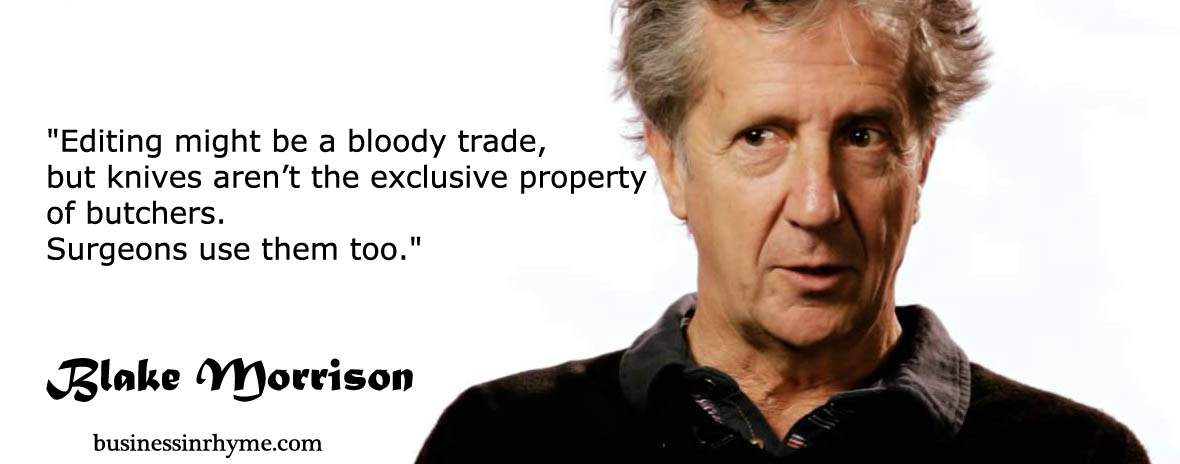
This is one of the topics I haven’t written about on the blog before and finally that time came. I know how it is hard to edit your own writing and I will share what in my experience has brought me the most effectiveness in this area. This post will be divided in two parts and I hope it will help you in your editing process as well.
One of the first things I noticed, depending on your genre of writing and worth keeping in mind is that:
Now, when you spend years in some form of writing, your editing approach evolves as much as your writing. How your writing improves, somehow your need for editing is adapting – still, I always aim to stay true to myself in my communication. That’s the core rule.
Nevertheless, there are few effective tricks that help me become more productive in my editing:
1. Reading out loud.
Only by reading your writing out loud you can get the feel how it gets perceived by the reader. You notice the rhythm and fluency of your words. It can help you immensely.
To carefully edit, read it out loud a few times, and then move on.
2.Let it ‘marinate’ over night.
It gives you an opportunity to observe your writing from fresh and clear perspective; it helps you restore your inspiration and tap into your own creativity – than any revision goes smoothly and you are able to express your thoughts more eloquently.
3. Edit in intervals.
When you read your writing, a lot of things might bug you at the same time: poor grammar, repeating phrases, mushy sentences…When you edit, try to focus on only one thing at the time. For example:
The first time, go through content, cohesion and rhythm of your writing. Are there any ideas that are disconnected, gaps of information, ext? Reading out loud helps you find these omissions. Or even better – read the piece out loud to someone unfamiliar with the subject and listen to where they start asking questions or looking for clarity. That means you haven’t explained something well enough, and requires further elaboration.
The second time pay attention to your structure and with what impression leaves you the piece as a whole when read? Is there anything you need to emphasize? Does the format supports the purpose of your writing? Always format accordingly to your requirements to show your professionalism. It’s easier for readers to digest information presented and editors prefer industry-standard formatting.
The third time you edit, focus on details, typos and grammar. Probably you’ve already found some of these by reading your work twice before. Some tips you can use here include:
– use action verbs instead of passive ones;
– avoid using grammar expletives;
– don’t dwell too much on punctuation rules.
Do you know your 5 most frequent words you use in your writing? Overuse of certain words can make your writing repetitive, boring, uninviting. Don’t be afraid to use different words especially in fiction like slang, words from different languages and less used phrases. I like to use slang or terms of natural phenomenon when I want to accentuate a situation or a character. It can spice up your writing and make it more interesting. Can that confuse your reader? Maybe, but look at it like you are offering your reader an opportunity to learn something new. A tiny dash of mysteriousness in your writing can do no harm – on the contrary – it gives special charm and flavor to your piece.
In the next part we’ll talk more about how to silent that inner critique that simply sabotages our editing productivity.
How does your editing process look like?
If you liked this post and you are interested in getting more inspiration for your creativity, sign up for our free bimonthly newsletter.
 Business in Rhyme