
Need some more poetic inspiration? Sign up for a free bimonthly newsletter.

Need some more poetic inspiration? Sign up for a free bimonthly newsletter.
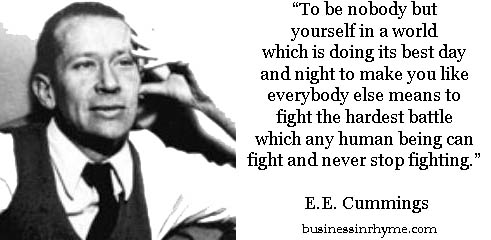
Confronting blank page takes courage? It might sound silly to many, but if you are a writer, especially a poet, you probably know what I mean:
It takes courage to spend time with yourself and dig deep, to the darkest and scariest parts of yourself and let them shine through your poems.
Only very few are brave enough to go somewhere place quiet, shut down the noise of the outer world and start listen to themselves; to hear who they truly are, and with open heart receive what ever they encounter. All experiences full of disappointments, grief, hurts, desires and happiness live and expand in each of these verses that we can read in the poems of those brave enough to write about their feelings. And they give us opportunity to live them also.
It takes courage to accept who you are and be honest about it.
Poetry is so personal on the one hand and universal on the other, that you simply can’t fake it. In every poem, your writing is like stripping your soul to the bare bones, where you become even more vulnerable. But that doesn’t make you anything more weak – that brevity adds up to your uniqueness that world is hungry for.
It takes courage to write, despite all the negative connotation that majority of people hold against poetry and simply not to care.
Some people simply don’t like poetry. There maybe many reasons for that. But also, there are not very supportive of those who does enjoy writing poetry. And it takes courage to continue to write and share our thoughts, no matter the impressions. I love what Jesse Graves, an assistant professor of English at East Tennessee State University said on the topic in this article:
For me, poetry expresses more about what it is like to be alive in the world today than any other art form. For a poem to work, it needs to address matters of the heart and of the head in almost equal measure. Since there is no interference between the reader and the text, poetry can deal with emotions in an intellectual way, and deal with abstractions in a way that evokes feelings.
It does take courage to try writing poems, especially if you are going to share them with others. Students also have to be willing to enter an unknown territory, even if I give them an assignment to write about, or a form, like a sonnet, they still have to find their own way into the subject matter. There is no real blueprint for how to write a poem..
It takes courage to write poetry and constantly juggle between loving and hating your own writing.
There are days when writing for you is like breathing – that without it you simply couldn’t live. But there are also days when you are unsatisfied with anything you write and you simply need a break. And that’s completely O.K. Actually that distancing yourself from writing can reignite your passion and it takes courage to do that also.
And someone might just call you crazy because you see world a bit differently: you see the joy in the heavy autumn storm, the warmth in the cold winter day or beauty in your teared bag and spilled groceries on the street. For me personally, writing poetry brings the opportunity to see and embrace life’s little imperfections in humble, and sometimes humorous way: instead of dwelling on how everything is wrong and complain – just to accept it, make the best of what I can in given situation and write a great poem about it 🙂
Poetry is everywhere, it just needs editing.
is what James Tate once said, and we are not even aware how much truth there is in those words.
All these aspects, contribute to forming one, in my opinion, a divine process that happens while you write poetry. It shapes you into a person you are supposed to be, the writer you strive to be. And for that kind of growth you do need courage – to accept your weirdness and just enjoy the ride.
It is in the small things we see it.
The child’s first step,
as awesome as an earthquake.
The first time you rode a bike,
wallowing up the sidewalk.
The first spanking when your heart
went on a journey all alone.
When they called you crybaby
or poor or fatty or crazy
and made you into an alien,
you drank their acid
and concealed it.
Later,
if you have endured a great despair,
then you did it alone,
getting a transfusion from the fire,
picking the scabs off your heart,
then wringing it out like a sock.
Next, my kinsman, you powdered your sorrow,
you gave it a back rub
and then you covered it with a blanket
and after it had slept a while
it woke to the wings of the roses
and was transformed.
Anne Sexton
If you liked this post and you are interested in getting more inspiration for your creativity, sign up for our free bimonthly newsletter.
My poems are my ideas,
my dreams, my toys,
my stories, my…
the most beautiful.
You can’t destroy a poem.
It can be hidden somewhere in your head,
in little corner where likes to sleep,
until it decides to walk over your lips.
My poems are clouds where I sit and
watch birds fly and sing.
My poems are…
Maja S. Todorovic
*note: this is translation of a poem I wrote when I was 15. It’s been 25 years since then, and I still feel the same about poetry. Strange and beautiful in the same time.

Need some more poetic inspiration? Sign up for a free bimonthly newsletter.
Need some more poetic inspiration? Sign up for a free bimonthly newsletter.
Need some more poetic inspiration? Sign up for a free bimonthly newsletter.
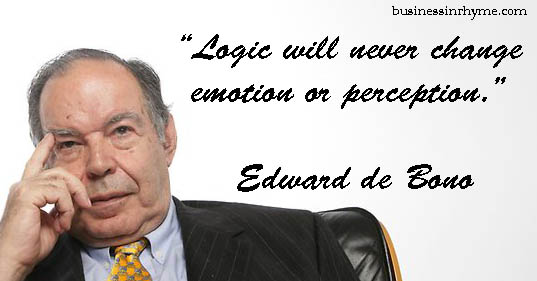
The first definition of the term lateral thinking came in 1967 from Dr Edward de Bono.He has become the world’s leading authority on conceptual thinking and has contributed to development of new tools and approaches to the organizational innovation, strategic leadership, individual creativity, and problem solving. Present in the innovation industry since 1970. his exclusive strategies and methods have brought remarkable results to organizations and to individuals from a wide range of cultures, educational backgrounds, occupations, and age groups.
So, what is actually lateral thinking? It is a way of thinking that solves problems through an indirect and creative approach, using reasoning that is not immediately obvious and involving ideas that may not be applicable by traditional step-by-step logic.
This kind of thinking requires of you to go beyond the obvious and even to take into account parameters that your traditional logic might easily dismiss.
One really attractive and interesting example is given in this article.
Pretend that you’re trapped in a magical room with only two exits. Through the first exit is a room made from a giant magnifying glass, and the blazing hot sun will fry you to death. Through the second door is a room with a fire-breathing dragon. Which do you go through?
There are many ways we can approach this problem in order to solve it. One way could be using poetry techniques, for example kennings.
Bed of fish, smooth path of ships, island-ring, realm of lobsters, slopes of the sea-king, whale-house, land of the ocean-noise, blood of the earth, frothing beer of the coastline…
These are some of the terms and phrases used by the Viking and AngloSaxon poets to name/describe the sea. The word ‘kenning’ comes from the Old Norse verb að kenna, which means ‘to describe’ or ‘to understand’. Poetry asks us to think and view the world from the different perspective. And kennings question our habitual way of thinking. If we apply this technique to the above problem, we could call sun “object that gives light to the earth, object that brings day… “.
So by using this technique, we could come up to a solution by deducting our thinking: sun, in a day time, in the above example is dangerous for us, but what happens when the day goes by? Darkness. And the answer presents itself: we should wait for the sunset, and the first door is a safe passage for us.
The answer to this puzzle is an example of what psychologists call “lateral thinking”: instead of going ahead onto the problem, going sideways can present an elegant solution.
So next time you have a project, creative problem you are working on, try to name it, describe it differently, focusing on its functions and elements and solution might unexpectedly reveal itself.
How often do you use your lateral thinking? 🙂
If you liked this post and you are interested in getting more inspiration for your creativity, sign up for our free bimonthly newsletter.

Need some more poetic inspiration? Sign up for a free bimonthly newsletter.
Need some more poetic inspiration? Sign up for a free bimonthly newsletter.

Need some more poetic inspiration? Sign up for a free bimonthly newsletter.
 Business in Rhyme