Raise your emotional inteligence for a creative entrepreneurial leadership – part II

In the first part of this blog post I shared a poem of a young entrepreneur where he reveals his emotions, struggles and needs when it comes to entrepreneurship and for every wannabe entrepreneur out there, was a quiet a taste for “try walking in my shoes”.

But what about the feelings and emotions when our environment expects us to be or do something that is not our ambition, our passion? How to deal with difficult situations that arise when we cannot follow someone else’s dreams; when we need to tell our story, follow our own path? interpersonalThe poem “To my Father’s business” by Kenneth Koch reflects that type of struggle:

Leo bends over his desk   
Gazing at a memorandum   
While Stuart stands beside him   
With a smile, saying,   
“Leo, the order for those desks   
Came in today   
From Youngstown Needle and Thread!”   
C. Loth Inc., there you are   
Like Balboa the conqueror   
Of those who want to buy office furniture   
Or bar fixtures   
In nineteen forty in Cincinnati, Ohio!   
Secretaries pound out   
Invoices on antique typewriters—   
Dactyllographs   
And fingernail biters.   
I am sitting on a desk   
Looking at my daddy   
Who is proud of but feels unsure about   
Some aspects of his little laddie.   
I will go on to explore   
Deep and/or nonsensical themes   
While my father’s on the dark hardwood floor   
Hit by a couple of Ohio sunbeams.   
Kenny, he says, some day you’ll work in the store.   
But I felt “never more” or “never ever”   
Harvard was far away   
World War Two was distant   
Psychoanalysis was extremely expensive   
All of these saved me from you.   
C. Loth you made my father happy   
I saw his face shining   
He laughed a lot, working in you   
He said to Miss Ritter   
His secretary   
“Ritt, this is my boy, Kenny!”   
“Hello there Kenny,” she said   
My heart in an uproar   
I loved you but couldn’t think   
Of staying with you   
I can see the virtues now   
That could come from being in you   
A sense of balance   
Compromise and acceptance—   
Not isolated moments of brilliance   
Like a girl without a shoe,   
But someone that you   
Care for every day—   
Need for customers and the economy   
Don’t go away.   
There were little pamphlets   
Distributed in you   
About success in business   
Each about eight to twelve pages long   
One whole series of them   
All ended with the words   
“P.S. He got the job”   
One a story about a boy who said,   
“I swept up the street, Sir,   
Before you got up.” Or   
“There were five hundred extra    catalogues   
So I took them to people in the city who have a dog”—   
P.S. He got the job.   
I didn’t get the job   
I didn’t think that I could do the job   
I thought I might go crazy in the job   
Staying in you   
You whom I could love   
But not be part of   
The secretaries clicked   
Their Smith Coronas closed at five p.m.   
And took the streetcars to Kentucky then   
And I left too.
Being honest to yourself, yet still honoring someone else’s dream (like your father’s business) is a representation of emotional intelligence and this type of poetry is a true source of knowledge; to help us grow, get mature, responsible and more decisive about our own lives.

Raise your emotional intelligence for creative entrepreneurial leadership- part I

It is very important to understand that emotional intelligence is not the opposite of intelligence, it is not the triumph of heart over head — it is the unique intersection of both.”

              ~ David Caruso

While doing research for my next blog post I came across very interesting article “Poetry as a way of knowing” which was actually an introduction to a podcasts at Philosopher’s corner.

In this article Laura Maguire, proposes 3 types of knowledge: having practical knowledge which is “roughly defined as knowledge that does and shall (from a normative, prudential or moral, point of view) motivate to act in a certain way” (as described in paper What is Practical Knowledge?), and mostly is reflected in skills we have to do certain things; then, there is propositional knowledge which is a form of descriptive knowledge and mostly reflected in scientific approach where we collect facts to describe and explain the world around us (where in my previous post I went in depth what are the similarities and differences between science and poetry).

But before going to elaborate the third type of knowledge, not everything is black and white when it comes to first two types. As author Laura Maguire argues:

When you study poetry. presumably you develop many skills, like learning how to interpret a poem, which involves other skills, like how to identify and understand metaphor, how to measure meter, and so on.And maybe if you read a lot of poetry you also develop another skill, namely how to write poetry. So, in that sense, it’s easy to see how poetry could be a way of knowing.

And also through series of my posts I tried to elaborate the benefits of writing and reading poetry for the sake of developing other practical skills – crucial for our self-development. But today I would like to talk more about phenomenal type of knowledge as author Laura Maguire described it and how is that beneficial for our business undertakings.

Phenomenal knowledge is mostly related to knowledge of what is like to have a particular kind of experience. Can we learn form that? In other words, when it comes to business, can we get an insight what it’s like to be an entrepreneur, being self-reliant and building good communication with customers, for example? Can it really enhance our emotional intelligence, in general?mind clip art, intelligence, emotinal intelligence

A poem “Love My Startup More Than You” by Rizwan Virk I found on the zenentreprenur blog and goes like this:

Cindy Lu, Cindy Lu
You know that my heart is true

But my Idea is very new
And we’ll make a million dollars
If only I can prove
That the market is true!

Cindy Lu Cindy Lu
Soon I’ll be home
And put my arms around you
….
But first
I’m being shown
Design specs I must review!

The beta downloads are a jumping
But so are the bugs that need a thumping!

Please let me know
When the baby is asleep
Then I can show
You how we’ll avoid feature creep!

Towards you my sweetheart I’ll always feel
A never ending attraction
But right now what I really need to show
Is more customer traction!

Cindy Lu, Cindy Lu
Don’t look at me that way,
You’ll worry yourself blue!

Once we raise our series A
Our mortgage will be easy to pay!

And if the company gets in a bind,
My investors will help me find
Some folks that are keen
To assemble a management team
And we’ll be on our way
To making lots of green!

So please don’t think that I’m mean
When I say:

Cindy Lu, Cindy Lu
You know my heart is true,
But just right now, 
I love my startup
More than you!

This poem is a sort of an ode to all young and ambitional entrepreneurs in the Sillicon Valey. Virk firmly believes that poetry is a great medium for expression of entrepreneurial ideas, ups and downs that entrepreneurship brings and how it changes life. A poem is instinct with love, confusion, desire for stability and how someone is ready to “put on hold” all of his relationships- because business is the only thing that matter.

I would say that poetry is a source of knowledge and as we can learn a lot about love, death and sorrow in poetry as emotions we can learn a lot about entrepreneurial emotions too: get that practical insight of what it means to be an entrepreneur, along with all victories and sacrifices it requires.

It can help us with our doubts, fears, uncertain decision making, but most importantly it can open new windows of creative sources that are aligned with our values – making us emotionally mature and persistent in our endeavors.


An invitation to participate

As an attempt to make this blog even more dynamic, beside my regular posts on the benefits of poetry for life and business, I’m launching new category “Daily verse with purpose” that will feature exciting, motivational and inspirational verses from various poets. This is also invitation to all interested readers, poets and writers to submit their favorite rhymes, verses from different poets that they would like to see featured as “Daily verse with purpose”. Depending on the response I will try to include all your favorite poets – as we all need some additional encouragement with incoming rainy and cold days 🙂 Your suggestions you can submit to businessinrhyme at gmail dot com.

Hopefully, this will be a growing community for all of us where we could submit our own inspirational quotes, poems, verses and ext.

For starters, I’ve chosen “Climb ‘Til Your Dream Comes True” by Helen Steiner Rice.

HS Rice

Poetry and storytelling: part II

It has been said that next to hunger and thirst, our most basic human need is for storytelling.

               ~Khalil Gibran

In the first part of this blog post series you got a glimpse of how important storytelling is for a business, especially for entrepreneurs. Today, I will discuss in more length, about specific techniques we can use in our storytelling and what poetry can teach us about that – especially narrative poems.

Narrative poem is one of the oldest form of literature and is a traditional way of capturing and delivering knowledge and experience – in the form of epic tales with exciting rhythm, rhyme, repetition which makes them easy to remember and share. And that’s what every entrepreneur wants: his story and message to be remembered and shared.

So what important lessons narrative poems can teach us and what should every entrepreneur incorporate into his storytelling?

1.Frame your story

What is it that you want to tell? You have to be very specific and craft your story around it. It also means choosing your character that will lead the audience through story, in many compellin141888-142934g ways – dramatic, funny, full of surprises. It has to deliver vivid pictures and excitement in order to keep the audience’s attention. Once you accomplish that, it’s easier to fine tune other details.


2.And…action!

Don’t bother with setting the scene and too much explanations. Lead the audience to immediate action; overflow them with emotions you want them to experience – people always remember how you made them feel.

3.Activate all five senses

An effective story, do take care of a “big picture”, but also pays attention to small details. Give your audience the opportunity to sweat, get freezing hands, smell the roses … All 5 senses have to be activated for your story to awaken interest, experience and to be memorable. In that way your message will be understood and worth sharing.

4.Don’t be afraid to repeat yourself

Repetition is crucial in learning. Think of your key phrases and words that you can use in smart way, so your story is easier to remember. Don’t overdo it, because otherwise you can make it boring and shallow. Martin Luther King in his famous speech used the phrase “I have a dream” eight times during that speech, which made it so powerful and energetic.

The following poem is an example of effective use of narrative to describe an ordinary job, but one that can touch our hearts in so many different ways:

Sending Flowers by Hannah Stephenson

The florist reads faces, reaches into the mouths of customers.
Turns curled tongues into rose petals,

teeth clinking against one another into baby’s breath.
She selects a cut bloom, a bit of leaf,

lays stem alongside of stem, as if building a wrist
from the inside. She binds them

when the message is right, and sighs at the pleasure
of her profession. Her trade:

to wrangle intensity, to gather blooms and say, here,
these do not grow together

but in this new arrangement is language. The florist
hands you a bouquet

yanked from your head, the things you could not say
with your ordinary voice.

So next time you want to tell your story, try to implement these tips – or even write your own narrative poem – you will certainly get the wanted attention.

Are you living your fullest potential?

It doesn’t interest me what you do for a living. I want to know what you ache for, and if you dream of meeting your heart’s longing.

~Oriah

I must admit, this question bothers me from time to time. Am I giving my best? Would I like to spend my time differently? Is this all there is? Am I truly pursuing my purpose and passion?

life-purposeThe list can go own and unfortunately we all have that little worm of doubt that likes to dig around our consciousness and play with our thoughts. One thing I know for sure: that kind of thinking will not take us anywhere. Yesterday doesn’t exist and tomorrow is too much elusive. So instead, I try to ask my self: “Am I giving my best in this situation, in this particular moment? Am I present enough in what’s going on around me? What would make me feel better – right now?” And when you rearrange things like that – are you your best version from moment to moment, with little effort put on improving yourself  – I think we are living our purpose and giving our best. Just as long we are honest about who we are.

Often, we tend to be too judgmental towards others and ourselves as well. Instead, try to be more empathetic towards your mistakes, wrong decisions, poorly made choices…with everything that you think is wrong with your life. It’s so easy to be a critique, but about being your greatest supporter and fan?

The cumulative effect of feeling good as frequent and long as we can is what actually counts; how much we are satisfied with ourselves. The poem bellow so perfectly captures the importance of those valuable moments and I’m certain it will give you courage to improve “your bits and pieces”, from moment to moment, to your full life.

Compensation by Edgar Albert Guest

I’d like to think when life is done
That I had filled a needed post.
That here and there I’d paid my fare
With more than idle talk and boast;
That I had taken gifts divine.
The breath of life and manhood fine,
And tried to use them now and then
In service for my fellow men.

I’d hate to think when life is through
That I had lived my round of years
A useless kind, that leaves behind
No record in this vale of tears;
That I had wasted all my days
By treading only selfish ways,
And that this world would be the same
If it had never known my name.

I’d like to think that here and there,
When I am gone, there shall remain
A happier spot that might have not
Existed had I toiled for gain;
That someone’s cheery voice and smile
Shall prove that I had been worth while;
That I had paid with something fine
My debt to God for life divine.


Exercise your creativity through poetry, part II

When you invite people to share in your miracle, you create future allies during rough weather.”
― Shannon L. Alder

In this post I intent to recommend some interesting writing exercises, but they are supposed to be done in groups. So grab some of your “pen-friends”, painted-cartoon-of-two-people-talking-for-kiki-by-katy-973x1024play together and see how can you inspire and help each other become more creative.

These exercises can be also performed in the business setting, they’re fun and can be a great way to break out of the ordinary working routine.

Inspired by discovered

Each of you, players, has to write down a rare fact about yourself that most people don’t know about (it can be a secret 😉 ) on a piece of paper, fold it and exchange it with others randomly. Caught by surprise about unknown facts you may find your own fountain of creativity! Write a poem about it and see where it takes you.

Pantomime

Let one of your friends or coworkers gesture with hands: your task is to describe what you see, what you experience and jot it down in words in the form of poem. This can be quite intriguing way of stimulating our creative capabilities, as is discussed in this article, using two hands to explain something prompts the brain to consider issues from multiple perspectives. To spice up a bit, try everything that you write to put in rhyme (in my previous post I explained the benefits of putting boundaries during our brainstorming sessions and how that can stimulate creativity further).

What’s wrong with this picture?

Visual stimulation can unleash your imagination in the most exciting ways. You can pick some random picture and each of players has to make a story in the form of poem, inspired by the picture. Afterwards, you can all debate and see whose story is the most interesting or you can take it step further and compile all stories into one: it has to be believable and follow some logical structure. It’s best suited for groups of two, three people.

With certain moderation you can use these ideas for your own creativity exercises. If you by any chance try them, share your thoughts in the comments below.

It couldn’t be done by Edgar Albert Guest

Somebody said that it couldn’t be done,
    But, he with a chuckle replied
That “maybe it couldn’t,” but he would be one
    Who wouldn’t say so till he’d tried.
So he buckled right in with the trace of a grin
    On his face. If he worried he hid it.
He started to sing as he tackled the thing
    That couldn’t be done, and he did it.

Somebody scoffed: “Oh, you’ll never do that;
    At least no one has done it”;
But he took off his coat and he took off his hat,
    And the first thing we knew he’d begun it.
With a lift of his chin and a bit of a grin,
    Without any doubting or quiddit,
He started to sing as he tackled the thing
    That couldn’t be done, and he did it.

There are thousands to tell you it cannot be done,
    There are thousands to prophesy failure;
There are thousands to point out to you one by one,
    The dangers that wait to assail you.
But just buckle it in with a bit of a grin,
    Just take off your coat and go to it;
Just start to sing as you tackle the thing
    That “couldn’t be done,” and you’ll do it.


3 tips to get your creative leadership to the next level

In the simplest terms, a leader is one who knows where he wants to go, and gets up and goes.

              – John Erskine, author 

When my mother taught me how to cook, she used to say that I should always think from the end: “prepare every pot you are going to use, preheat the oven,  go wash and cut your groceries” –  so I wouldn’t mess the kitchen cabinets with my oily, floury hands. And she was right: it shortens the time of cooking, cleaning and the stress that arise from hurry and clumsiness.

Pretty much the same is with business. Whenever we are able to envision where we want take our project or business, it’s much easier to plan the steps along the way. But in certain times, we don’t have that clarity in which way to turn, what is the desired outcome.

That process of breakthrough ideas – “envisioning” is a rocky journey, full of ups and downs, sometimes with obstacles and sometimes is a smooth sailing across the quiet sea.

Creative leadership can benefit from those bursts of innovative thinking and

Leadership concept on white background. Isolated 3D image

for the sake of project/business idea, the focus should be to emulate, produce and sustain those conditions as much as possible. Poetry as a tool can help us a lot:

  1. Follow the hunch

When the idea is still vague, undeveloped, but you have a hunch, a feeling – write a poem about it. Write about your successful project, the benefits it will bring, how you would feel after accomplishing desired results. This type of writing can stimulate positive mood and enhances your creative abilities.

  1. Combine and play

Creating something new can mean rearranging the existing parts into something different – with different order, structure, introducing new elements. To connect seemingly incompatible in new ways, we can produce something extraordinary and give answers to questions we have. Einstein called this Combinatorial Play.

You can summarize all of your ideas, mix them, connect in every impossible way – in poetry. There is no logic needed, there is no judgment, there is no need for “it doesn’t work” statements. Combine and Play:  you might be surprised with the innovative solutions you come up.

  1. Look at the big picture from a detail perspective

Creative leadership is able to recognize unexpected perspectives, keeping in mind the “big picture” – end result it wants to achieve, but pays attentions to detail, and how the change in tiny, almost invisible parts can make the whole difference.

One useful example is the story of Velcro:

In 1948, de Mestral happened upon his most enduring discovery while hiking. He and his dog returned from a hike covered in burrs from the plants along the trail. De Mestral examined the burrs under a microscope, studying their structure. He began working to develop a synthetic fastening system that mimicked the hooks and loops of the burrs.

The fabric went through a number of phases before it was finalized. De Mestral worked with a weaver in France to create hooks and loops strong and durable enough to cling together as he intended. Originally crafted from cotton, the fabric ultimately proved more successful when made out of nylon. In 1955, de Mestral unveiled his innovative new material: Velcro®. The name is a combination of the French words “velours” and “crochet,” translated to English as “velvet” and “hooks.”

source: biography.com

How poetry relates to this? While examining the world around us, analyzing ideas, exploring available resources – especially in poetry where no rational and logical thinking is required, we can accelerate our ability to see through things, how they work, connect, respond, to understand their background. It’s an unleashed creativity that process of focused logical elimination can jump-start our innovative process.

The idea by Mark Strand

For us, too, there was a wish to possess
Something beyond the world we knew, beyond ourselves,
Beyond our power to imagine, something nevertheless
In which we might see ourselves; and this desire
Came always in passing, in waning light, and in such cold
That ice on the valley’s lakes cracked and rolled,
And blowing snow covered what earth we saw,
And scenes from the past, when they surfaced again,
Looked not as they had, but ghostly and white
Among false curves and hidden erasures;
And never once did we feel we were close
Until the night wind said, “Why do this,
Especially now? Go back to the place you belong;”
And there appeared , with its windows glowing, small,
In the distance, in the frozen reaches, a cabin;
And we stood before it, amazed at its being there,
And would have gone forward and opened the door,
And stepped into the glow and warmed ourselves there,
But that it was ours by not being ours,
And should remain empty. That was the idea.


5 qualities of creative people

When we engage in what we are naturally suited to do, our work takes on the quality of play and it is play that stimulates creativity.

               — Linda Naiman

Many years spent in research and education helped me notice that:

  1. Creative people are not afraid to be childish.
  2. They tend to mix possible with impossible.Gabe-Felice-Psychic-Drawings
  3. They are curious and not afraid to go against the mainstream (follow “the rebel inside”).
  4. Often they are empathetic, emotionally challenged where through creativity they release the pain and initiate healing process.
  5. They embrace their introverted side.

Any of these traits we can emphasize and work on them. I believe we can be creative in whatever field we choose. For example, chefs are creative masters in the kitchen, and sales people or marketers are creative in coming up with strategies to build businesses. Poetry and writing in general can be a useful tool in helping us become more creative in other fields. One of the reasons I like poetry is that you don’t need anything beside paper, pencil and your willingness to commit to writing,

Poetry allows you to play with words – even invent new words which I adored to do when I was i child. I even invented a whole new language and was so proud when nobody could understand me except my best friend. By just playing with words, poetry awakens that forgotten child, loosens our rigid thinking and allows the impossible to become possible -which lead us to the second trait: in poetry we can mix and connect anything we like and you set your own rules for that. There’s no need for explanation, no judgment, just your free mind and spirit. There you can question everything, you can become or be anything you like and the thirst for excitement that comes from the feeling after you finish your little master-piece is what makes everything worthwhile. Being curios about your own capabilities is a sure thicket for more creative outlets.

And more then anything I appreciate my ME time. No in selfish way while neglecting others, but I think in order to develop better creative qualities we need to be alone with ourselves, listen what comes from inside and just let it go. All the pain, hurt, discomfort, disappointment, discontent.. just let it go. Pour your soul into your writing, without censuring anything – you’ll feel like clouds have disappeared and that you can see more clearly: who you are, what you want to accomplish and how.

When I was younger, I used to fear loneliness, why am I different, why I don’t fit in, why do I have different interests, why don’t I have more friends. But the truth is, I always appreciated more meaningful, deeper friendships, you know…people that support you, who are part of your experiences, who witnessed you growing in what you are today. And usually we have only few friends like that. And that’s Ok. It’s Ok to have a lot of superficial acquaintances as well. But being introverted and not easily fit in, can be a blessing in disguise. It can propel your work in the most exhilarating ways and let you experience the world from different perspectives – where by having to much useless encounters would make you too busy and diverted to see. So it’s Ok to be introverted – embrace it in your work and let your creative genius to shine!

Where the mind is without fear by Rabindranath Tagore

Where the mind is without fear and the head is held high
Where knowledge is free
Where the world has not been broken up into fragments
By narrow domestic walls
Where words come out from the depth of truth
Where tireless striving stretches its arms towards perfection
Where the clear stream of reason has not lost its way
Into the dreary desert sand of dead habit
Where the mind is led forward by thee
Into ever-widening thought and action
Into that heaven of freedom, my Father, let my country awake.

Are poets born, taught or both?

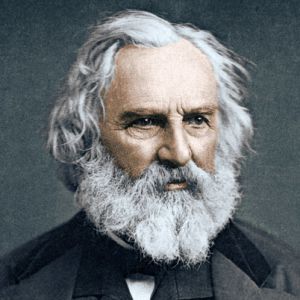
This post is inspired by the poem “The Poet And His Songs” written by Henry Wadsworth Longfellow and it goes like this:MTE5NDg0MDU1MDQ0NTg5MDcx

As the birds come in the Spring,
We know not from where;
As the stars come at evening
From depths of the air;

As the rain comes from the cloud,
And the brook from the ground;
As suddenly, low or loud,
Out of silence a sound;

As the grape comes to the vine,
The fruit to the tree;
As the wind comes to the pine,
And the tide to the sea;

As come the white sails of ships
O’er the ocean’s verge;
As comes the smile to the lips;
The foam to the surge;

So comes to the Poet his songs,
All hitherward blown
From the misty land, that belongs
To the vast Unknown.

His, and not his, are the lays
He sings; – and their fame
Is his, and not his; – and the praise
And the pride of a name.

For voices pursue him by day,
And haunt him by night,
And he listens, and needs must obey,
When the Angel says: Write!

and it left me wondering: are we born writers and poets with innately need to write and create or is it something we discover with time and then put effort and energy into it in order to develop better writing skills? I mean, we all can work to improve our abilities in any area, but are we born with notion that writing is supposed to be our life calling (or any other profession, for that matter)? Do you simply “know” that you must write in order to be yourself, to express your true nature? As Longfellow says “so comes to the Poet his songs…from the misty land…to the vast Unknown”.

For me, some sort of writing was always present. During my career it evolved into scientific writing, yet the most natural way for me to write is in the form of poem – and it showed early in my childhood.

As Marina Abramovic likes to say:

 For me, art is like breathing. You don’t question if you breathe, you have to breathe. So if you wake up in the morning and you have to realize an idea, and there’s another idea, and another, maybe you are really an artist. It doesn’t make you a great artist, it just makes you an artist. To become a great artist is a huge undertaking! So it’s really important, that instinct. You need the instinct to do it”.

There is no doubt that further developing skills requiers hard work – to move from ordinary to extraordinary. But do we need that “special thing” to carry inside in order to go beyond the average crowd? What are your thoughts, please share in the comments bellow.