

Blog
Daily verse with purpose: Sanober Khan

When you write, let your content be your branding

In one of my previous posts I wrote about the importance of creating your personal brand and how to “fine tune” your own writing voice. The issue of branding, marketing, self-promotion can put an additional pressure in any creative work. For many is still a dilemma: do we follow the mainstream market currents and compromise our creative integrity or we follow our creative dream – even if it’s not reliable source of income?
With the rise of digital era and social media, the expansion of creative entrepreneurs is still on the growing rate. And especially if you are a writer, because what ever you write – being that related to your work or not – it sends the message out to the world who you are; what are your values; what do you strive for. With every word we write we literally paint an image about ourselves.
So in a way we can treat our writing as a branding tool. Our writing should communicate our creative vision, in accordance with our professional credibility. In time, it might be hard, to achieve the level of objectivity we desire, but with focus on intentional writing, having aligned our purpose and values, our writing will more reflect of who we are, and how we want to be perceived by the world around us.
Writing (not just as an act of writing), but about our creative endeavors, sharing our creative vision – doesn’t necessarily has to be seen as a try to convince someone into something or selling anything, but rather as a creating an experience where we can share our talents at broader scope; building a firm foundation for a contribution we can make with our work. It’s a natural way of attracting like-minded people and fostering community.
I believe that expressing creative action in any way that will find its course to the hearts of people who want to engage in that kind of experience, doesn’t have to be seen as crude, soulless marketing. Actually, once you create something and let it be seen by the public-it takes the life of its own: to inspire and motivate someone else, to bring enjoyment, purpose or improve someone’s life. That’s the moment when the loop of creativity cycle is closed and it becomes the source of something more beautiful: world can benefit from fruits of your work.
Following some of the rules of poetic expression can be very helpful. Using the words that have a rhythm can amplify your message to the level it resonates with your audience; to become more memorable and make that human connection we need in sharing our creativity. They say: “Content is the king” – then how do you present is it’s throne: how you say something is as important as what you say. It’s a basic a foundation on which you will further build your message to be embraced by your readers. “Wooden” language, with no emotion, no personal perspective, “flat” narrative without promise of adventure and surprise cannot cut through the noise of ordinary information into the hearts and minds of target audiences.
What constitutes good writing? A content, but also concise and well organized information, wrapped in your unique writing style. Now, unmerciful editing will get us closer to more understandable information, but the style is what one remembers. Enriching our writing with poetic tones can add that distinctive melody to our writing. And I’m not talking about metaphors and adorning your writing with useless attributes: I’m talking about the structure, rhythm and balance, skillful art of the phrasing right. It can give the strength to your writing, expressing your creative outlet in right way – the way it will stuck to the hearts and minds of your audience. That’s why I stress out the importance of what you write to read out loud. If you are ensured that what you wrote communicates your personality, in comprehensive manner, then it will have the desired impact.
How These Words Happened by William Stafford
In winter, in the dark hours, when others
were asleep, I found these words and put them
together by their appetites and respect for
each other. In stillness, they jostled. They traded
meaning while pretending to have only one.
Monstrous alliances never dreamed of before
began. Sometimes they last. Never again
do they separate in this world. They die
together. They have a fidelity that no
purpose or pretense can ever break.
And all of this happens like magic to the words
in those dark hours when others sleep.
Daily verse with purpose: P. B. Shelley

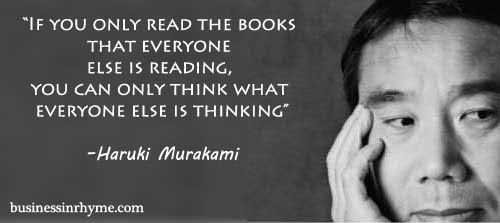
Daily verse with purpose: Haruki Murakami
3 tips to recognize your authentic writing voice

Your writing has a color, sound, feel…just as your natural voice. It translates who you are and is your tool for communication. Making some effort into “crafting and fine tuning” your writing voice is worth your time and energy. It doesn’t matter are you a content developer, fiction writer or you blog just for a hobby, it is essential for you to find that uniqueness inside of you – express it and let it live.
There are some tricks you can employ and that can guide you towards your better writing – better you writing.
Some of the first things you need to ask yourself is who is reading your stuff? Who is your audience? When you are writing, try to imagine your ideal reader and write according to that feeling. What would your reader interest? What would make them smile? What would make them think deeper? What kind of value you can bring to your reader?
The next important thing is to pay attention to how do you feel while writing. Does it exhaust you or it invigorates you? Is it like something you MUST do or is something playful, enjoyable for you to do?
How honest and open are you while writing? Are you always finely wrapped in your security blanket or you explore topics and genre that are out of your comfort zone? That’s good. People can sense in your writing when you are open or you are playing on the safe side. It can be a huge motivation to make your writing worth attention and reading. Being you and being vulnerable is OK – people can more relate to you in such way. We all know that our stories are governed by our subconscious mind. We all have unresolved inner conflicts, doubts, insecurities. Give yourself permission to say things in your own way. You need to own your writing and don’t hide behind other people’s opinions and words. That’s being authentic and unique.
And finally, ask yourself is this something I would like to read? Your answer is the best guidance in which direction your writing is going.
Do you think you have found your authentic writing voice? Tell us about it in the comments.
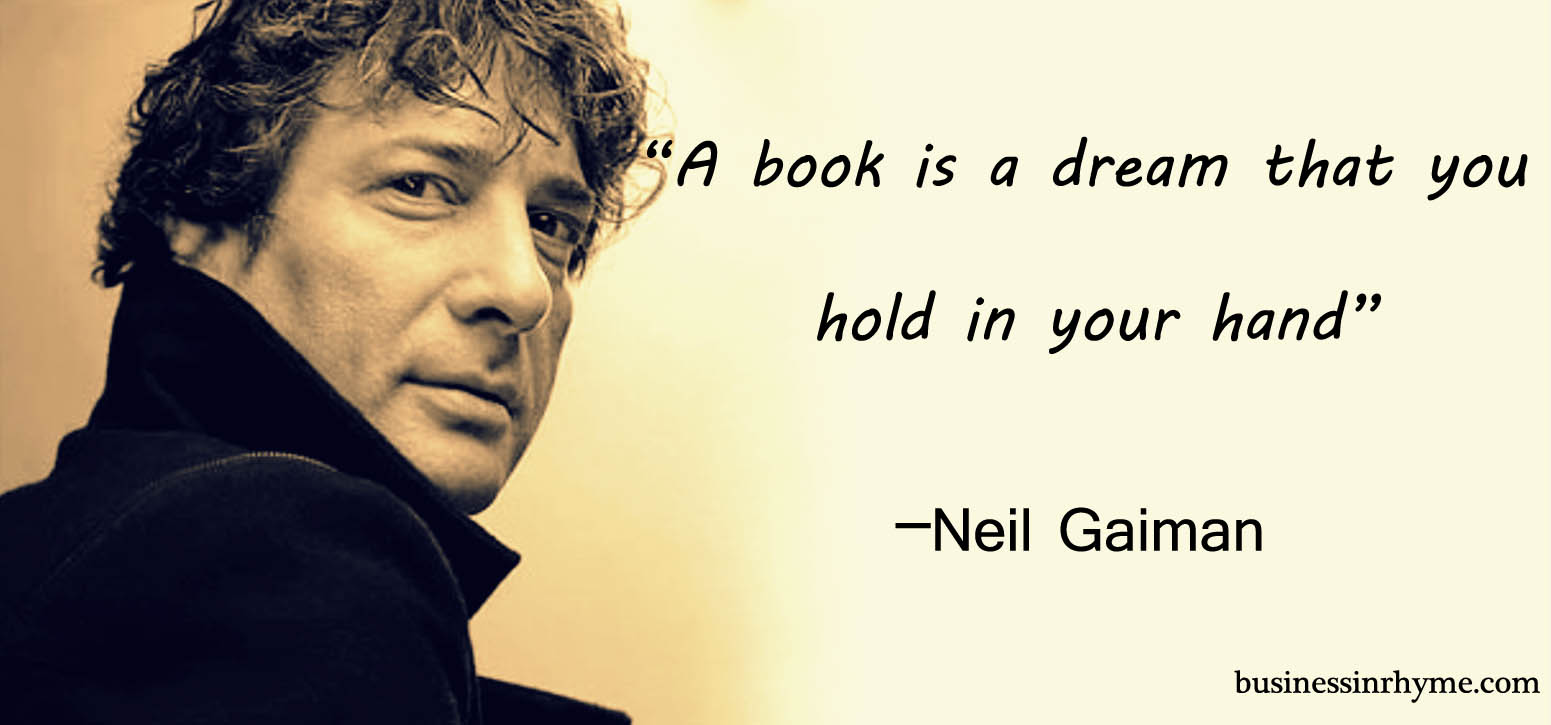
Daily verse with purpose: Neil Gaiman
5 tips to make the most of your creative project

When we are facing an important project ahead (especially creative one), with lot of distractions around us, it might be hard to achieve desired goals. Hence, with a little bit of effort and better planning, prospects on finishing our project in time with desired outcome are more realistic.
These are my 5 top tips on getting the most out of your creative project:
1.Get your priorities straight
For the time you plan to be involved in the project, try to clear up your schedule as much as possible. You will definitely need some breathing space for setting the right mood for work, relaxation and creative action! So think of any activities that for time being you can let go, delegate, postpone in order to give yourself enough room to just be yourself: not having the obligation to keep so many things on your mind (+ doing them) will keep you less distracted and more open for creative flow of ideas.
2. Plan ahead for your creative needs
What I mean by this is try to plan in advance anything you might need for your creative project: supplies, materials, books, tools. In this category can also fall your “basic physiology”: simplify your cooking and shopping routine, stock up your cupboards and pantries so you don’t get overwhelmed with usual questions ”What’s for dinner, mom?” while you are in the middle of executing your crazy and phenomenal idea!
3.Pamper yourself
Don’t forget to allow yourself little pleasures during your creative rush: remember to spare quality time for your friends, family, for a hot bath and a warm cocoa with your favorite book. It’s a wonderful way for you to “recharge your batteries” once you feel your creative inspiration slows down. These daily candid intersections are also irreplaceable sources of energy you need.
4.Find a group of like minded creatives that can cheer you up along the way
These can be very beneficial – having someone to talk to about what you are going through, that can appreciate your needs, answer some of your questions and share your doubts and fears. It can be our helping hand in moments when we hit creative block and lack confidence to move forward. This group doesn’t even have to be in person: joining online forums and chat groups where we can share our ideas and progress can give us a creative boost in times we need the most.
And the last and maybe the most important:
5. Get enough ‘Zzzzzzz’
Sleep. Essential and simple as it sounds, in my personal experience is the prerequisite for any work I want to be delivered with quality and on time. It energizes you, keeps you fit mentally and physically. It can be of special importance for people who like to work early in the morning (like me), because then the mind is at its clearest state and highly focused.
Do you have any special rituals to keep your creativity at working level? Please, share in the comments bellow.
To Imagination – by Emily Jane Bronte
When weary with the long day’s care,
And earthly change from pain to pain,
And lost and ready to despair,
Thy kind voice calls me back again:
Oh, my true friend! I am not lone,
While thou canst speak with such a tone!
So hopeless is the world without;
The world within I doubly prize;
Thy world, where guile, and hate, and doubt,
And cold suspicion never rise;
Where thou, and I, and Liberty,
Have undisputed sovereignty.
What matters it, that, all around,
Danger, and guilt, and darkness lie,
If but within our bosom’s bound
We hold a bright, untroubled sky,
Warm with ten thousand mingled rays
Of suns that know no winter days?
Reason, indeed, may oft complain
For Nature’s sad reality,
And tell the suffering heart, how vain
Its cherished dreams must always be;
And Truth may rudely trample down
The flowers of Fancy, newly-blown:
But, thou art ever there, to bring
The hovering vision back, and breathe
New glories o’er the blighted spring,
And call a lovelier Life from Death,
And whisper, with a voice divine,
Of real worlds, as bright as thine.
I trust not to thy phantom bliss,
Yet, still, in evening’s quiet hour,
With never-failing thankfulness,
I welcome thee, Benignant Power;
Sure solacer of human cares,
And sweeter hope, when hope despairs!
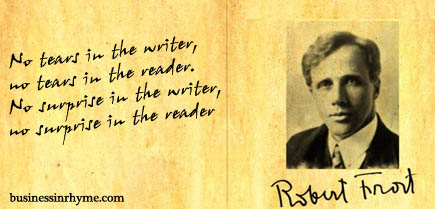
Daily verse with purpose: Robert Frost
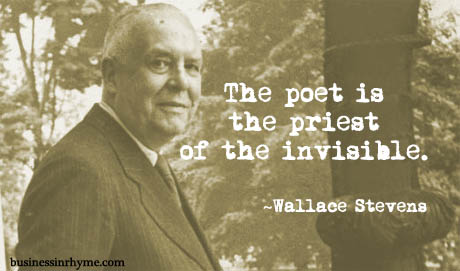
Daily verse with purpose: Wallace Stevens
 Business in Rhyme