9 questions to ask yourself to know if your creative flow is on the right track

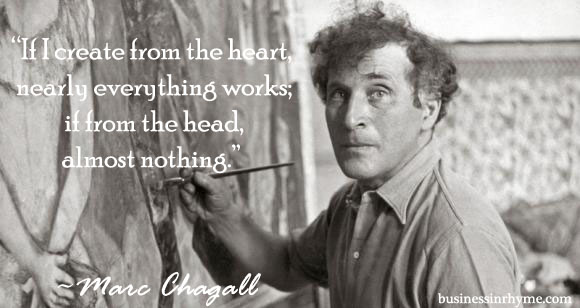
chagall

The moment after you had your breakthrough idea, what happens? Sometimes, with steady persistence we continue on refining our creative solution, we try to implement our idea and sometimes the idea bulb turns on just in another minute to disappear in open air like a deflated balloon.

Why do we give up on some ideas?

In my experience, answer might be hidden among these statements:

  1. I lack discipline and persistence (which might be due to distractions, preoccupation with other things or even due to health reason – simply you don’t feel good).
  1. It requires more effort from my side than I thought. Certain things ask for constant investment of our time, money, energy.. it just seems too difficult, especially if it’s not ‘a one time thing’ but it needs some kind of repetition and maintenance.
  1. The end goal is not clear. What do I want to achieve? What’s the value of what I’m doing? If we don’t recognize an instant gratification, it’s a rather a creativity killer than inspirational flow of ideas.
  1. And the all time famous: fear of failure. “It will not work, I can’t do it, because…” endless reasons we find why we don’t keep up with implementing our idea. Self-doubt is also one of those thirsty worms that creeps into our mind and simply sucks out any creative optimism we might have!

I have found that once I manage to connect my creative pursuits with what I want to achieve goes beyond my own satisfaction and gratification, has meaning and contributes to something larger than myself, I’m more motivated and I manage to put aside all reasons why not to do something.

Now, to keep on track creative project I ask myself simple questions:

  1. Who else can benefit from my work (is it community or business oriented, for example)?
  2. What’s the purpose of my idea (solution, project..)?
  3. Do I have all the resources that I need?
  4. Is what I do, in alignment with who I am and my beliefs?
  5. How can I simplify the process (solution)?
  6. Am I focused enough, or are there any distractions I can remove in order to be more concentrated?
  7. What action I can implement to move forward with my project?
  8. Does it bring me joy and fun?
  9. Does my idea foster beauty and harmony (how does it appeal to senses, what kind of atmosphere it produces)?

You know, when I started this blog a few months ago, I was thinking: “You are crazy, you are starting a  blog about poetry, literature and writing and you don’t have a degree in literature or English language. English language is not even your mother tongue!” Yet I wanted to share my amazement about the benefits that poetry brought into my life. So I began to cheer myself: “But I do know about creativity. I do know about the business and management. I am a creative person. I tried many different things. People can learn from me. And I can learn from them.”

So, “Business in Rhyme” was born and I have even more passion to write about the connection of creativity and poetry than at the beginning. There is still much what I want to share, contribute and learn – it’s a journey I’m looking forward to.

How do you keep your creative flow on track?

”There is a voice inside of you
That whispers all day long,
‘I feel this is right for me,
I know that this is wrong.’
No teacher, preacher, parent, friend
Or wise man can decide
What’s right for you–just listen to
The voice that speaks inside.”  

~Shel Silverstein
4 things nobody tells you about managing creativity

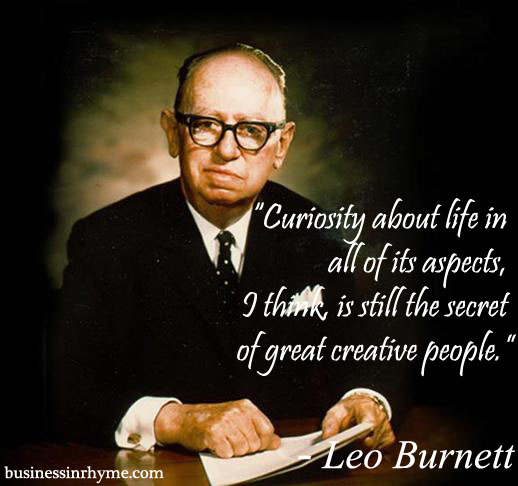
burnett

Often when I think of poetry I find many similarities with the way we induce innovative thinking. Language and words are our main tools. In innovation practice, ideas and knowledge are our tools that bring forth an idea into life. But not any idea: it has to be the right idea. Just as much as the poem has to use the right words to translate an emotion; an experience. The order of words, their flow and rhythm need to be comprised in the best possible way – in the same fashion, an innovative idea needs to solve the problem, improve function or usage.

Poets need a large vocabulary to ‘play’ with; arrange and disarrange words (even invent new ones) to precisely convey their meaning, simulate tone and voice: so does innovators and design thinkers need a deep knowledge of science, engineering, management and business processes to deliver an innovative product.

Yet, doesn’t everything happen in desired moment when we need it. A lot of factors and conditions influence the process of innovative thinking, no matter how much we try to take the control of situation (having the tools and skills we need, time and space, and other resources).

We too much dwell on the speed of innovation, becoming to much obsessed with competition, costs, who delivers innovation.

Questions about what creativity really is, how to harness creative potential that every employee carries and fostering creative spirit for the higher good (contribution and purpose) are neglected and overlooked. In between those moments, real creative solutions somehow slip through the cracks of management rules, policies, principles. In the end, many organizations experience product saturation and volatile stagnation.

There is poem by Ted Hughes: The Thought Fox

I imagine this midnight moment’s forest: 
Something else is alive 
Beside the clock’s loneliness 
And this blank page where my fingers move.  

Through the window I see no star: 
Something more near

Though deeper within darkness 
Is entering the loneliness: 

Cold, delicately as the dark snow, 
A fox’s nose touches twig, leaf; 
Two eyes serve a movement, that now
And again now, and now, and now 

Sets neat prints into the snow 
Between trees, and warily a lame 
Shadow lags by stump and in hollow 
Of a body that is bold to come

Across clearings, an eye,

A widening deepening greenness, 
Brilliantly, concentratedly, 
Coming about its own business

Till, with a sudden sharp hot stink of fox

It enters the dark hole of the head.

The window is starless still; the clock ticks,

The page is printed. 

After reading the poem, it is obvious that he tells a story about the struggle poet has while writing. But it can have a much deeper meaning: we can put an analogy in this poem to a struggle we face while in any type of creating. It poses questions: what generates creative idea, can we ‘catch’ it on time, how to make that ‘element of surprise’ part of our every day life and welcome it, open-handed? Is it even possible?

Creativity can be seen as something that is alive but hidden, mysterious. It looks for loneliness, isolation to show its face:

‘Though deeper within darkness 
Is entering the loneliness’

In the beginning is gentle and cautious. We have to observe it with care, not to scare our “fox” idea:

‘A fox’s nose touches twig, leaf; 

Sets neat prints into the snow’ 

And then, there is a breakthrough moment, powerful – even bombastic, when all gentleness is gone, when idea appears in its full dimension and brightness:

‘Till, with a sudden sharp hot stink of fox

It enters the dark hole of the head’

The poem suggests, to some extent creativity includes tactful and careful planning, a lot of brevity,  but we cannot always predict when exactly is going to ‘strike’. Can we prepare for the creativity “attack”? The best we can do is to be open and responsive to the signs it leaves for us; to awaken that childhood curios nature (even in business organizations) when we ‘spy with our little eye’ every spark, just ready to let it ignite our creative spirit.

Harnessing the power of mythology: 3 ways to enrich your storytelling

mythology

Myths are stories; stories narrated for a thousands of years, having life of their own in our minds and subconsciousness. They are reflection of our belief system, an eternal fight between evil and good, a struggle for achieving beyond perceived, understood and obvious. Mythology can relate to many religious rituals as well, where in the form of songs, poems and stories was used as a vehicle to explain to younger generations how people acquired speech, fire, grain, wine, oil, honey, agriculture, metalwork, and other skills and arts.

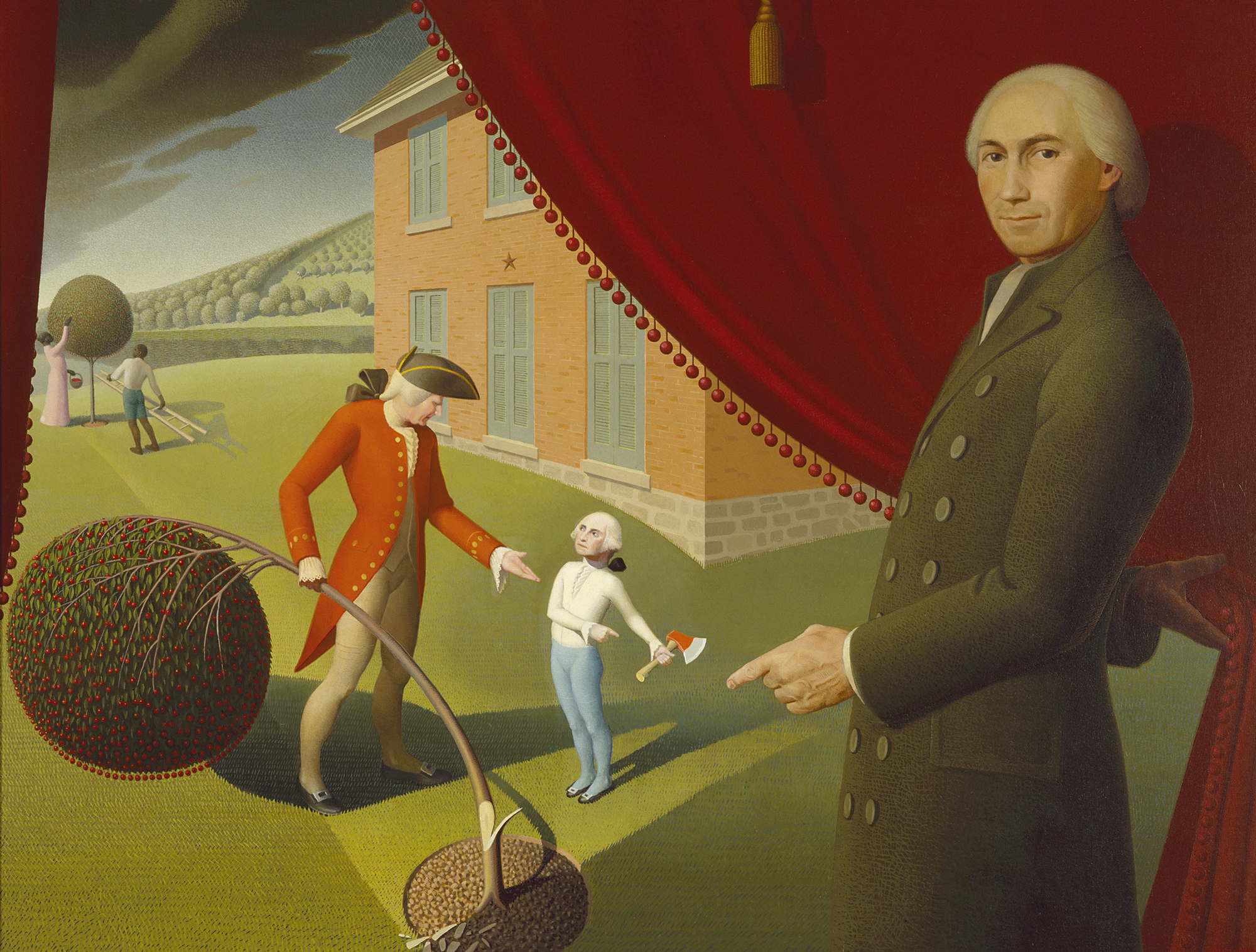
In mythology everything is possible: existence of Gods, Goddesses, beings with supernatural powers and humans taking traits that makes them larger than life and heroes in our minds. For example, Parson Weems created a myth about George Washington in the story of the cherry tree, describing an event that never took place, but used to illustrate the moral behavior of a young George.

parson-weemss-fable-amon-carter-museum-of-american-2

Parson Weem’s Fable (Amon Carter Museum of American Art)

Many crafts, like astrology use the power of mythological creatures and language of symbolism to emphasize the archetypes of human nature, where even the heavenly bodies take on the roles of Gods, and as they “dance” in the sky they “plot” the scenes of our life events.

Mythology was a communicating medium among indigenous people, as it can be found in ancient texts and it is foundation  upon which modern culture has been built.

But this is not where the power of mythology stops. It’s well established in the modern western cultures as classical scholar and professor Elizabeth Vandiver claims: Star Wars, Star Trek and other similar stories are myths as authentic as those found in Hesiod, Homer, and Ovid. They have the elements of classical mythological tales and are so engraved within our culture, that metaphors and psychological profiles defined, we often use in our everyday life as a reference.

And look at poetry:

Leda and the Swan by W. B. Yeats

A sudden blow: the great wings beating still

Above the staggering girl, her thighs caressed

By the dark webs, her nape caught in his bill,

He holds her helpless breast upon his breast.


How can those terrified vague fingers push

The feathered glory from her loosening thighs?

And how can body, laid in that white rush,

But feel the strange heart beating where it lies?


A shudder in the loins engenders there

The broken wall, the burning roof and tower

And Agamemnon dead.

Being so caught up,

So mastered by the brute blood of the air,

Did she put on his knowledge with his power

Before the indifferent beak could let her drop?

Yeats’s poem was inspired by a Greek myth about Zeus and Leda, the daughter of a king named Thestius. Zeus disguised as a swan seduces Leda and takes advantage of her. In the poem this event Yeats in every, tiny detail described very powerfully. And as we know how the myth continues, Leda gets pregnant and gives birth to Helen of Troy.

Many men were enchanted by the Helen’s beauty and she becomes abducted  by a young man named Paris that led to the Battle of Troy, the centerpiece of Homer’s Iliad. Yeats’s poem hides between the verses a drama that takes place in the tragic fall of Troy; it illustrates familiarity that Yeats had with artistic story of Leda and the swan, retold  by sculptors and painters like Michelangelo and Leonardo Da Vinci.

This poem was written in the same year Yeats was awarded the Nobel prize for literature in 1923. Here, he poses the question of predominant misuse of power and how an apocalyptic consequence that might have, beyond the possibility of what our mind can conceive.

So, in a nutshell, mythological approach to storytelling can help us:

  • convey the message on diversity, especially looked from the perspectives of cultural backgrounds;
  • argument the importance of ethical approach in business and other types of relationships;
  • make story more “alive”, entertaining as people like myths: it captivates their attention and ignites imagination, lifting their experience to the level of adventure and pleasant uncertainty.

Let your story become a myth.

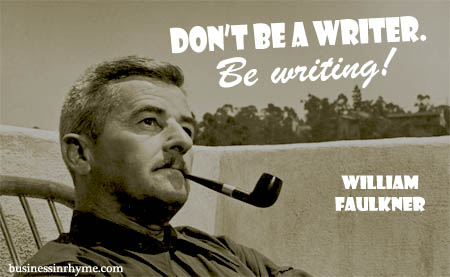
When you write, let your content be your branding

willieamfaulkner

In one of my previous posts I wrote about the importance of creating your personal brand and how to “fine tune” your own writing voice. The issue of branding, marketing, self-promotion can put an additional pressure in any creative work. For many is still a dilemma: do we follow the mainstream market currents and compromise our creative integrity or we follow our creative dream – even if it’s not reliable source of income?

With the rise of digital era and social media, the expansion of creative entrepreneurs is still on the growing rate. And especially if you are a writer, because what ever you write – being that related to your work or not – it sends the message out to the world who you are; what are your values; what do you strive for. With every word we write we literally paint an image about ourselves.

So in a way we can treat our writing as a branding tool. Our writing should communicate our creative vision, in accordance with our professional credibility. In time, it might be hard, to achieve the level of objectivity we desire, but with focus on intentional writing, having aligned our purpose and values, our writing will more reflect of who we are, and how we want to be perceived by the world around us.

Writing (not just as an act of writing), but about our creative endeavors, sharing our creative vision – doesn’t necessarily has to be seen as a try to convince someone into something or selling anything, but rather as a creating an experience where we can share our talents at broader scope; building a firm foundation for a contribution we can make with our work. It’s a natural way of attracting like-minded people and fostering community.

I believe that expressing creative action in any way that will find its course to the hearts of people who want to engage in that kind of experience, doesn’t have to be seen as crude, soulless marketing. Actually, once you create something and let it be seen by the public-it takes the life of its own: to inspire and motivate someone else, to bring enjoyment, purpose or improve someone’s life. That’s the moment when the loop of creativity cycle is closed and it becomes the source of something more beautiful: world can benefit from fruits of your work.

Following some of the rules of poetic expression can be very helpful. Using the words that have a rhythm can amplify your message to the level it resonates with your audience; to become more memorable and make that human connection we need in sharing our creativity. They say: “Content is the king” – then how do you present is it’s throne: how you say something is as important as what you say. It’s a basic a foundation on which you will further build your message to be embraced by your readers. “Wooden” language, with no emotion, no personal perspective, “flat” narrative without promise of adventure and surprise cannot cut through the noise of ordinary information into the hearts and minds of target audiences.

What constitutes good writing? A content, but also concise and well organized information, wrapped in your unique writing style. Now, unmerciful editing will get us closer to more understandable information, but the style is what one remembers. Enriching our writing with poetic tones can add that distinctive melody to our writing. And I’m not talking about metaphors and adorning your writing with useless attributes: I’m talking about the structure, rhythm and balance, skillful art of the phrasing right. It can give the strength to your writing, expressing your creative outlet in right way – the way it will stuck to the hearts and minds of your audience. That’s why I stress out the importance of what you write to read out loud. If you are ensured that what you wrote communicates your personality, in comprehensive manner, then it will have the desired impact.

How These Words Happened by William Stafford

In winter, in the dark hours, when others
were asleep, I found these words and put them
together by their appetites and respect for
each other. In stillness, they jostled. They traded
meaning while pretending to have only one.

Monstrous alliances never dreamed of before
began. Sometimes they last. Never again
do they separate in this world. They die
together. They have a fidelity that no
purpose or pretense can ever break.

And all of this happens like magic to the words
in those dark hours when others sleep.

5 tips to make the most of your creative project

brenda

When we are facing an important project ahead (especially creative one), with lot of distractions around us, it might be hard to achieve desired goals. Hence, with a little bit of effort and better planning, prospects on finishing our project in time with desired outcome are more realistic.

These are my 5 top tips on getting the most out of your creative project:

1.Get your priorities straight

For the time you plan to be involved in the project, try to clear up your schedule as much as possible. You will definitely need some breathing space for setting the right mood for work, relaxation and creative action! So think of any activities that for time being you can let go, delegate, postpone in order to give yourself enough room to just be yourself: not having the obligation to keep so many things on your mind (+ doing them) will keep you less distracted and more open for creative flow of ideas.

2. Plan ahead for your creative needs

What I mean by this is try to plan in advance anything you might need for your creative project: supplies, materials, books, tools. In this category can also fall your “basic physiology”: simplify your cooking and shopping routine, stock up your cupboards and pantries so you don’t get overwhelmed with usual questions ”What’s for dinner, mom?” while you are in the middle of executing your crazy and phenomenal idea!

3.Pamper yourself

Don’t forget to allow yourself little pleasures during your creative rush: remember to spare quality time for your friends, family, for a hot bath and a warm cocoa with your favorite book. It’s a wonderful way for you to “recharge your batteries” once you feel your creative inspiration slows down. These daily candid intersections are also irreplaceable sources of energy you need.

4.Find a group of like minded creatives that can cheer you up along the way

These can be very beneficial – having someone to talk to about what you are going through, that can appreciate your needs, answer some of your questions and share your doubts and fears. It can be our helping hand in moments when we hit creative block and  lack confidence to move forward. This group doesn’t even have to be in person: joining online forums and chat groups where we can share our ideas and progress can give us a creative boost in times we need the most.

And the last and maybe the most important:

5. Get enough ‘Zzzzzzz’

Sleep. Essential and simple as it sounds, in my personal experience is the prerequisite for any work I want to be delivered with quality and on time. It energizes you, keeps you fit mentally and physically. It can be of special importance for people who like to work early in the morning (like me), because then the mind is at its clearest state and highly focused.

Do you have any special rituals to keep your creativity at working level? Please, share in the comments bellow.

To Imagination – by Emily Jane Bronte

When weary with the long day’s care,
And earthly change from pain to pain,
And lost and ready to despair,
Thy kind voice calls me back again:
Oh, my true friend! I am not lone,
While thou canst speak with such a tone!

So hopeless is the world without;
The world within I doubly prize;
Thy world, where guile, and hate, and doubt,
And cold suspicion never rise;
Where thou, and I, and Liberty,
Have undisputed sovereignty.

What matters it, that, all around,
Danger, and guilt, and darkness lie,
If but within our bosom’s bound
We hold a bright, untroubled sky,
Warm with ten thousand mingled rays
Of suns that know no winter days?

Reason, indeed, may oft complain
For Nature’s sad reality,
And tell the suffering heart, how vain
Its cherished dreams must always be;
And Truth may rudely trample down
The flowers of Fancy, newly-blown:

But, thou art ever there, to bring
The hovering vision back, and breathe
New glories o’er the blighted spring,
And call a lovelier Life from Death,
And whisper, with a voice divine,
Of real worlds, as bright as thine.

I trust not to thy phantom bliss,
Yet, still, in evening’s quiet hour,
With never-failing thankfulness,
I welcome thee, Benignant Power;
Sure solacer of human cares,
And sweeter hope, when hope despairs!

8 tips for writing a killer author bio (even if you haven’t published anything yet)

mark-twain

Couple of years ago, a good friend of mine, an artist, came with a request to help her write a resume for an upcoming exhibition she wanted to apply for. Now, writing a resume is not such a big deal, but when you have somebody at the beginning of their artistic career (with only 1 exhibition) and this exhibition she was applying for, was supposed to be held in Louvre, then it is a big deal – at least for artists. And it has to be remarkably written, just as her masterpiece. It was quite a challenge, but I knew her for a long time (we grew up together) and we had to start from somewhere. Certain approaches we applied, eventually paid off (her bio was very much praised as her art) and these approaches can work for any type of biography – including that of a writer.

Beside some minor details about education and study field, I was not left with much to work with: only one exhibition behind her, so what do you write about then?

My first tip is:

  1. Mention the most relevant professional, educational, travel, or personal experiences: what is special about you.

It has to resonate with your audience and the occasion for which you are writing your resume (you can adjust and rewrite your bio according to the current needs). My friend, she used to travel a lot, was great admirer of history and architecture, so we included that. Same applies to writers. If you are writing non-fiction about health issues, than include your personal story. If you are writing a novel, give some juicy details what inspired the idea –  you get the picture. Your biography has to look and sound both human and professional and the trick is to find the balance between the two. Once again, it’s about pulling in the details which will resonate with your readers/editors and which fit adequately with the topics you’re writing about.

  1. Always ask someone who knows you very well about your qualities, skills, what distincts you from other people and include that in your bio.

We tend to be very subjective and overly critical. Observations from other people can be very helpful.I knew that my friend is very skilled with hands, for example (she could make anything you imagine), so I emphasized her knowledge of work with materials, tools, experimenting with textures and colors. Around that we carefully crafted a short story that was about the work she was submitting. And at the end it turned out very well.

Also, she had a lot of pieces that she developed in free time, but never seen the eyes of the public. So, the second thing we did, we developed a basic website where we published the pictures of her other work as well. We included the link in the biography so she could showcase the spectrum of her work – not only sculptures, but sketches, oil paintings, everything that represented her and her work. That contributed to her uniqueness and artistic individuality.

The same can apply to writers:

  1. If you are not already a published writer, build a basic website or blog where you can showcase excerpts of your writings (you reading this probably already have a blog) so try to reorganize your blog to showcase your best work and include the link in your bio.

Also, if you haven’t published anything yet, it’s hard to get reviews and testimonials. What you can do:

  1. Use the comments that people leave you on your website and social media as a testimonial. I’ve seen many writers – entrepreneurs doing exactly that, and it’s paying off.
  1. If you are part of any writing/literally organization, group (even forum) – list that in your bio, as it adds to your credentials. Another plus in an editor’s eyes is your affiliation with writers’ organizations. If you are not, join one! My friend was a member of national artistic network and that detail added to her professionalism.

Now, some technical stuff:

  1. Always write in third person. It kind of makes it easier to talk about yourself and your achievements. You should give it a try.
  1. Keep it short.

Editors, committees, even your readers don’t have much time to read a novel in your biography. Try to be concise, yet informative.

  1. The opening line should be straightforward and meaningful (in simple words telling who you are): if your degree is relevant, then note it.

This is where you captivate your reader (editor). You have to introduce yourself and this is usually the turning point. Never start with personal details – it will just make you look unprofessional.

For the end, apply this trick: read your bio out loud. How does it sounds, feel? You will know you nailed it, when it simply feels right!


3 reasons why we should “revisit” our core beliefs, from time to time

poetry

We could call our core beliefs our “operating system” in this world. The system of values formed from our early childhood, adolescence and later through out the life. Our values are mostly influenced by our family, educational system, but also by our surroundings. Going though life we experience each and every event which we “catalogize” somewhere in our memory as a good or bad and when something similar happens we tend to compare and label each event. Usually this is framed by societal norms that act like boundaries within we want to fall: we strive for success, but in terms that society implies…and it happens that we get lost; that our value system evolves and demands something else from us.

Or we are so wrapped in the societal way of thinking that unless something like illness or other form of trauma happens, we are not able to recognize the signs and life demands our attention – wanting to tell us that something is not right.  Then it’s the time for a different approach.

One thing important here is that we are in complete control over our beliefs and our emotions. We are creators of our experiences and only we can call them “good” or “bad”. Remember the famous experiment in quantum physics where it is proved that observer affects and perceives reality from his own point of view?

In a study reported in Nature (Vol. 391, pp. 871-874), researchers at the Weizmann Institute of Science have conducted a highly controlled experiment demonstrating how a beam of electrons is affected by the act of being observed. The experiment revealed that the greater the amount of “watching,” the greater the observer’s influence on what actually takes place. When a quantum “observer” is watching Quantum mechanics states that particles can also behave as waves. This can be true for electrons at the submicron level, i.e., at distances measuring less than one micron, or one thousandth of a millimeter. When behaving as waves, they can simultaneously pass through several openings in a barrier and then meet again at the other side of the barrier. This “meeting” is known as interference.

Strange as it may sound, interference can only occur when no one is watching. Once an observer begins to watch the particles going through the openings, the picture changes dramatically: if a particle can be seen going through one opening, then it’s clear it didn’t go through another. In other words, when under observation, electrons are being “forced” to behave like particles and not like waves. Thus the mere act of observation affects the experimental findings.

Source Sciencedaily.com

We are creators of our reality, and values we follow. I think that from time to time we should reevaluate our core beliefs, because we change; it evolves with us and there 3 crucial reasons for that:

1.What stands as a truth for us, might not be the same for somebody else.

Some beliefs have roots in the experiences of our parents or have the origin in the collective subconsciousness. We should honestly ask ourselves: “Is this what I truly believe? Is this what I want?” Your definition of success is only yours. The same it comes with the notion of failure.

2.Our needs and desires change.

When I was 18, 19 the world looked completely different. I had different expectations of myself. What I wanted to do then is not in alignment with who I am today. My purpose changed as much as my ambition, which influences my further choices and decision making.

3.Each experience is an opportunity for growth.

I don’t dwell that much on the bad stuff. Yeah, it happened, but I don’t want to be stuck in the past. It has no power unless as a learning lesson; something I wouldn’t like to happen again and that’s it. While letting go we are able to move forward, like removing heavy chains off our feet. And than you are prepared for new experiences.

Engaging in the poetic process can accelerate our quest in search for meaning, value and purpose. Claire Morgan in her book “What Poetry brings to Business” further notes:

The development of ethical sensibility is a mind changing process. The changing of mind is partly dependent on a reframing of viewpoint in which the transformative potential of art can be a major motor. The absence of a simple, singular message in the artwork is a part of its value in developing an ethical sensibility.

Poetry is a pathway to new experiences: unlived, missed, desired. Either way eventually,  it can be our guidance in which way to turn our life and to what kind of reality we strive for.

They Were Welcome To Their Belief -by Robert Frost

Grief may have thought it was grief.
Care may have thought it was care.
They were welcome to their belief,
The overimportant pair.

No, it took all the snows that clung
To the low roof over his bed,
Beginning when he was young,
To induce the one snow on his head.

But whenever the roof camme white
The head in the dark below
Was a shade less the color of night,
A shade more the color of snow.

Grief may have thought it was grief.
Care may have thought it was care.
But neither one was the thief
Of his raven color of hair. 

How important is tacit knowledge for your creativity and one simple way to get more of it

polanyi

We could say that tacit knowledge represents everything undefined, inexplicable, unknown yet perceived knowledge by one person – usually rooted deeply in the subconsciousness and its largely based on his or her emotions, experiences, intuition, observations, any internalized information. It is the knowledge we all have, we all use – it influences our judgment, decisions and it’s kind of a framework that makes explicit knowledge viable. For first time, it was conveyed by the Hungarian philosopher-chemist Michael Polanyi (1891-1976) in his 1966 book ‘The Tacit Dimension.’

Innovations and innovative thinking are mostly related to science, to factual representation of knowledge. It’s a knowledge completely rationalized and most importantly verified – verified by accepted methods and methodologies. Yet for any innovative thought to be brought to surface, it has to have some sort of ignition point: unease, desire, need, unconformity that propels us in searching for new solutions and expressions – being that technology, art or science. That ignition point is our tacit knowledge.

In a research paper ‘Bicycling on the Moon: Collective Tacit Knowledge and Somatic-limit Tacit Knowledge’ author Collins H., argues that:

This knowledge has to be known tacitly, because it is located in human collectivities and, therefore can never be the property of any one individual. The simplest way to see this is to note the changes in content of the knowledge belonging to communities is beyond the control of the individuals within the communities.

In any entrepreneurial pursuit, or development of organizational knowledge accessing individual tacit knowledge is the center of creation and finding channels for verbalizing, sharing and expressing this knowledge is of vital importance.

We are not always able to recognize our tacit knowledge, but it is who we are; sometimes it turns out of nowhere as an intuition, or an attitude. It can be a surge of unorganized impulses and discomforts. One form of this outlet can be directed through poetry.

In the paper ‘Personal Performatives: Collecting Poetical Definitions of Management’ author Kostera M., firmly believes that:

Poems are also therefore an act of discovery, and require a degree of effort to write and to be understood. Poetry can cut through superficiality and help us to see the world differently. Poetry, as an approach is well suited for expressing the ambivalence and volatility of the managerial experience.

I. A. Richards, literary critique liked to call that

a pseudo-statement of words which is justified entirely by its effect in releasing or organizing our impulses and attitudes.

We can think of writing a poetry as a sort of revelation, an imaginative “living of the situation”  and we emerge from that experience like it really happened. It reframes our values, our goals, needs and it dictates the further factual exploring we strive to. Poetry is a lens through which we can see real truth and it’s no strange that some philosophers like Aristotle were afraid of poetry, that it can destabilize well run state.

Tacit knowledge is a particular challenge for knowledge management. Companies would like to prevent knowledge loss due to employee migration. Long gone are the days when employee would stay in one company for twenty + years. Now it’s usual that people change jobs more frequently – even every 2-3 years. In my 15 years of professional experience I’m in my fifth different (entrepreneurial) engagement. However, tacit knowledge almost always goes with the employee.

Tacit knowledge is essential to competitive advantage because it is that special ingredient that nobody can copy. Individuality and originality. Forms of tacit knowledge may include emotional intelligence, leadership skills, humor, sense for music, aesthetics, rhythm, cultural inheritance – practically all hidden talents.

It’s the reason some companies pump out innovation after innovation while other experience saturation.

Mapping your subconscious mind through poetry can be a key to your creativity. As a poet Wallace Stevens said:

Is the poem both peculiar and general?

There’s a meditation there, in which there seems

To be an evasion, a thing not apprehended or

not apprehended well.

Does the poet evade us as a senseless element

Evade, this hot depended orator

The spokesman at our bluntest barriers

Exponent by a form of speech, the speaker

Of a speech only a little of the tongue?


4 qualities of thought leaders and how to become one

thoughtleadership

We all want to become more influential, persuasive in what we do. It’s of vital importance, being you a writer, small business owner or just an employee in the company. Getting our message across, being understood and perceived in the right way is how new, creative bonds are built in relationships – especially the business ones.

What being a thought leader is about anyway? Many people relate that term only to marketing and ways how to monetize “masterpiece” thinking, which opens the door to the new markets and new sources of income. That is the end-result of good directed and implemented thought leadership, but before that in order to become more influential you need to offer a sort of purposeful contribution that your audience and clients can actually benefit from. It’s a well developed internal strategy, wrapped in the perceptive cultural approach.

There are 4 qualities that are a common denominator among successful thought leaders:

1.They bring innovative thinking.

Especially entrepreneurs and people “zooming outside of the box” – they question everything and don’t take anything for granted. Sure, sometimes they don’t succeed at once –still, they move, shake, disrupt, and build paths through unexplored industrial jungles.

2.They are the brand.

Sharp and focused branding behind their persona is another ingredient in their leadership recipe. They are not afraid to begin, all over again – from zero, building something worthwhile, aligned with their personal values.

3.They are strategic thinkers and engaging storytellers.

Not only that they have well structured strategy around their message, they know how to convey it in a form of engaging and moving stories – stories that relate to our human side, experience and position in the world, which lead us to the final trait:

4.Thought leaders are empathetic.

Often, thought leaders draw their own life energy from struggles and suffering they went through themselves, which give them the opportunity to better understand the social needs. There, they see the chance to disperse their message and they are heartfelt, generous with their time, talents, money. Think of Richard Branson or Deepak Chopra for example.

In some of my previous posts I extensively wrote about the benefits of poetry in developing leadership qualities. It is that magic bond that allows of incomprehensible to be understood, unsaid to be heard, complex to be simplified to the tiniest pieces.

We are all thought leaders, once we decide to be.

It is not the Critic That Counts by Theodore Roosevelt

It’s not the critic who counts,

not the man who points out how the strong man stumbled,

or when the doer of deeds could have done better.

The credit belongs to the man who is actually in the arena;

whose face is marred by dust and sweat and blood; who strives valiantly;

who errs and comes short again and again;

who knows the great enthusiasms, the great devotions and spends himself in a worthy cause;

who at the best, knows in the end the triumph of high achievement;

and who at the worst if he fails, at least fails while daring greatly,

so that his place shall never be with those cold and timid

souls who know neither victory or defeat.”


A simple thing you can do to make your storytelling more engaging

franBG

No matter are you a writer, a business owner or you just want to improve your presentation skills, effective storytelling is like having an ace in your sleeve that you can pull out just in time when you have to make your point or become more persuasive. In my previous posts about storytelling I discussed the power of narrative and today I shell go more deeply into how to harness that power to keep your audience active, engaged and responsive. Now, structuring your story, speech or even website content can be hard with distractions coming all over the place. In order to pass your ideas across and stuck to the memory of your audience you have to use all tricks and tools available to you. And avoid little mistakes along the way.

Here is what I mean:

Don’t begin with unattractive facts and figures (unless you are dealing with science and research, but even that kind of story we can make more compelling).

Frankly speaking, nobody cares about that! Stats are boring. We are addicted to stories, actions, emotions, adventures. Humans like a hero that’s on a journey, capable of mastering endless obstacles in order to fulfill his duty and purpose. So give your audience a hero, a story with purpose that delivers message, leaving them motivated and inspired.

One simple thing you can implement in your story telling is to incorporate the technique of a mythological narrative.

It’s a story structure that is found in many folk tales, myths, poems and religious texts from around the world.

In a mono-myth, the narrative goes like this: something happens that provokes our hero to leave his home; hero has (usually) a difficult journey ahead, where the destination and conditions are uncertain; after completing a series of challenges, hero returns with some kind of a reward, wisdom – some kind of benefit that he brings to his community.Think of Gilgamesh or Iliad. These were very long, epic and spoken word poems, that portrait the journey of a hero, all of his struggles, tragedies, misfortunes or little victories.

This is an excellent strategy when you want to accentuate the information you have and how that can benefit your audience. It also shows the pros and cons of taking risks and how we grow while learning something new.

In this article you will find three beautiful examples of using storytelling for small business purpose. The one I would like to share is about company Stio that introduced the outdoor apparel brand with a blog called The Town Hill Chronicles. The blog, by a team of professional writers, profiled people living in mountain communities across the U.S. In doing so, it helped Stio tell its brand story, how ordinary people experience outdoor life and activities (making them heroes of their brand), which eventually turned an audience into real a community that promotes and shares value of living in accordance with nature.

For the end I will leave with some thoughts by John M. Ford:

Against Entropy

The worm drives helically through the wood
And does not know the dust left in the bore
Once made the table integral and good;
And suddenly the crystal hits the floor.
Electrons find their paths in subtle ways,
A massless eddy in a trail of smoke;
The names of lovers, light of other days
Perhaps you will not miss them. That’s the joke.
The universe winds down. That’s how it’s made.
But memory is everything to lose;
Although some of the colors have to fade,
Do not believe you’ll get the chance to choose.
Regret, by definition, comes too late;
Say what you mean. Bear witness. Iterate.