Are you ready to enter a new relationship? 9 luscious ways to seduce your reader with your writing!

John Cheever

You as a writer and author, while building your audience are becoming a brand. And your writing is your best branding and marketing tool that exists. Words, emotions, message you transcend through your writing is that magnet that attract readers who share your values and point of view. But once they jump into your writing boat, you and your readers began to interact and build certain relationships; things become different, and a little bit complicated. But you as a writer, don’t want the status: It’s complicated. You want the status: Engaged.

Think about it for a second:

When you are in a relationship with someone and you enjoy it:

  • it is a person you are looking forward to see;
  • it someone you care about and like spending time with;
  • it’s probably someone who shares your values as well;
  • you interact on the basis of mutual trust.

Even classical marketing is moving from brand oriented marketing to marketing that is oriented towards building relationships.

To truly understand what kind of impact is your writing having on your readers you can ask yourself these questions:

Did my writing enabled me to build meaningful connections with my readers?

If not, what can I do to emulate the positive dynamics of such relationships?

  • It has to be a content your reader likes spending time reading;
  • It has to offer something of interest that makes your reader want to  expect fresh content and read it again;
  • That content deals with topics your reader cares about and shares his values.

In order to achieve these objectives you can apply certain tactics through your content:

  1. Offer your readers opportunity to know about you and don’t be afraid to show your vulnerability. In that way you are engraving that human component in your writing and building foundation for future relationship.
  2. Offer understanding, compassion; be helpful through your writing.
  3. Use catchy anecdotes and funny stories that are amusing and captivating.
  4. Show you’re interested in their perspective on things, even if it doesn’t agree with your own.
  5. Don’t be afraid to repeat yourself. What I mean is that pretty much the same message you deliver you can say in different ways and modes of expressing. People digest information differently. I remember while I was working with students, the more graphics I used, the students at the class were more ‘tuned in’ with the information, absorbing it in with wide open eyes, not wanting anything to miss. So use visuals as well, audio features, retell what you have to say in different ways.
  6. Be chatty. Start a conversation by asking questions.
  7. Always spice up everything with your quirkiness, with something that makes you different and that can enrich your content to the level it is worth remembering and sharing.
  8. Let your readers know that you are accountable and professional, but throw some ball once in a while. Add some playfulness in your writing because too much of serious approach can be sobering and counter effective.
  9. But never go across the line of NOT being you. What ever you write, be true to yourself because dishonesty leads to mistrust and deceit and like in any relationship, your reader might just break up with you and your writing (remember: rebound can be painful 😉 ).

Why does this written doe bound through these written woods?
For a drink of written water from a spring
whose surface will xerox her soft muzzle?
Why does she lift her head; does she hear something?
Perched on four slim legs borrowed from the truth,
she pricks up her ears beneath my fingertips.
Silence – this word also rustles across the page
and parts the boughs
that have sprouted from the word ‘woods.’
Lying in wait, set to pounce on the blank page,
are letters up to no good,
clutches of clauses so subordinate
they’ll never let her get away.

Wislawa Szymborska

3 reasons why you should have a purpose statement

TODAY -- Pictured: Dan Brown appears on NBC News' "Today" show (Photo by Peter Kramer/NBC/NBCU Photo Bank via Getty Images)

We are much familiar with mission and vision statements that companies develop in order to communicate their business much clearer to customers and business associates.

Now, I will not go here in detail what mission and vision statements are, but if you think more clearly, we all as individuals “project” ourselves and with our behavior, actions, language (both verbal and body) we communicate who we are. In one of my recent posts I suggested that we should revisit our core beliefs from time to time, as they change with our maturity and conditions around us. This time I propose, just as your business or company can have mission and vision statement, for you to develop your own purpose statement. I believe, by developing our own purpose statement (that encompasses both your mission and vision in life) we can:

  • become more effective; it helps keeping you on track with your goals and plans;
  • develop personal leadership; by referring to it and internalizing its meaning, we make choices that serve our values and discard the things that contradict them.
  • stay motivated to achieve our goals.

In this post, I talked about thinking in reverse,  which literally means having the end goal in mind: what do you want to achieve, in what sense do you want to contribute, what are your values and how your goals you want to achieve align with your values…all that in sum, represents your purpose.

By looking in front of us, that kind of thinking becomes more powerful, more influential in any further decision-making than by being chained by baggage of the past that doesn’t help us.

There is something powerful about writing these things down. And I mean writing by hand on paper: it’s like you are breathing life in those words, you are declaring what you want, who you are and everything becomes more real, and more probable to happen.

I don’t think it should follow any specific format or length, but it has to be relevant to you, to be your motivation in further life decisions.

Some ideas how to start:

  • Write about the project you’ll have in near future and think of outcomes you wish to achieve; what steps you can apply to get you closer to completing a successful project?
  • Collect all the notes, pictures, quotes, poems that inspire you, that you identify with and let that be your guidance in developing your purpose statement.

Of course, there is a flip side that we should all be aware of: life has unfortunately that ugly side of face – frustration, full of trials and errors when is so easy just to give up. For a real passionate purpose you are ready to work hard and endure long enough to get where you want to be. It’s like drudging through the drudgery as writer Joshua Fields Millburn refers to it.  It is part of the process and your purpose statement is there to remind you who you are and who you want to become.

Look at developing your purpose statement as a journey to self-discovery. Nobody can and no one expects from you to have figured all out at once, but it’s a step forward. Purpose can change and evolve with you, or you can have multiple purposes. And why not, as long as they don’t contradict your core values?

Life has loveliness to sell,
All beautiful and splendid things,
Blue waves whitened on a cliff,
Soaring fire that sways and sings,
And children’s faces looking up,
Holding wonder like a cup.

Life has loveliness to sell,
Music like the curve of gold,
Scent of pine trees in the rain,
Eyes that love you, arms that hold,
And for your spirit’s still delight,
Holy thoughts that star the night.

Spend all you have for loveliness,
Buy it and never count the cost;
For one white singing hour of peace
Count many a year of strife well lost,
And for a breath of ecstasy
Give all you have been, or could be.

Sara Teasdale

You need these 6 skills to improve your strategic thinking

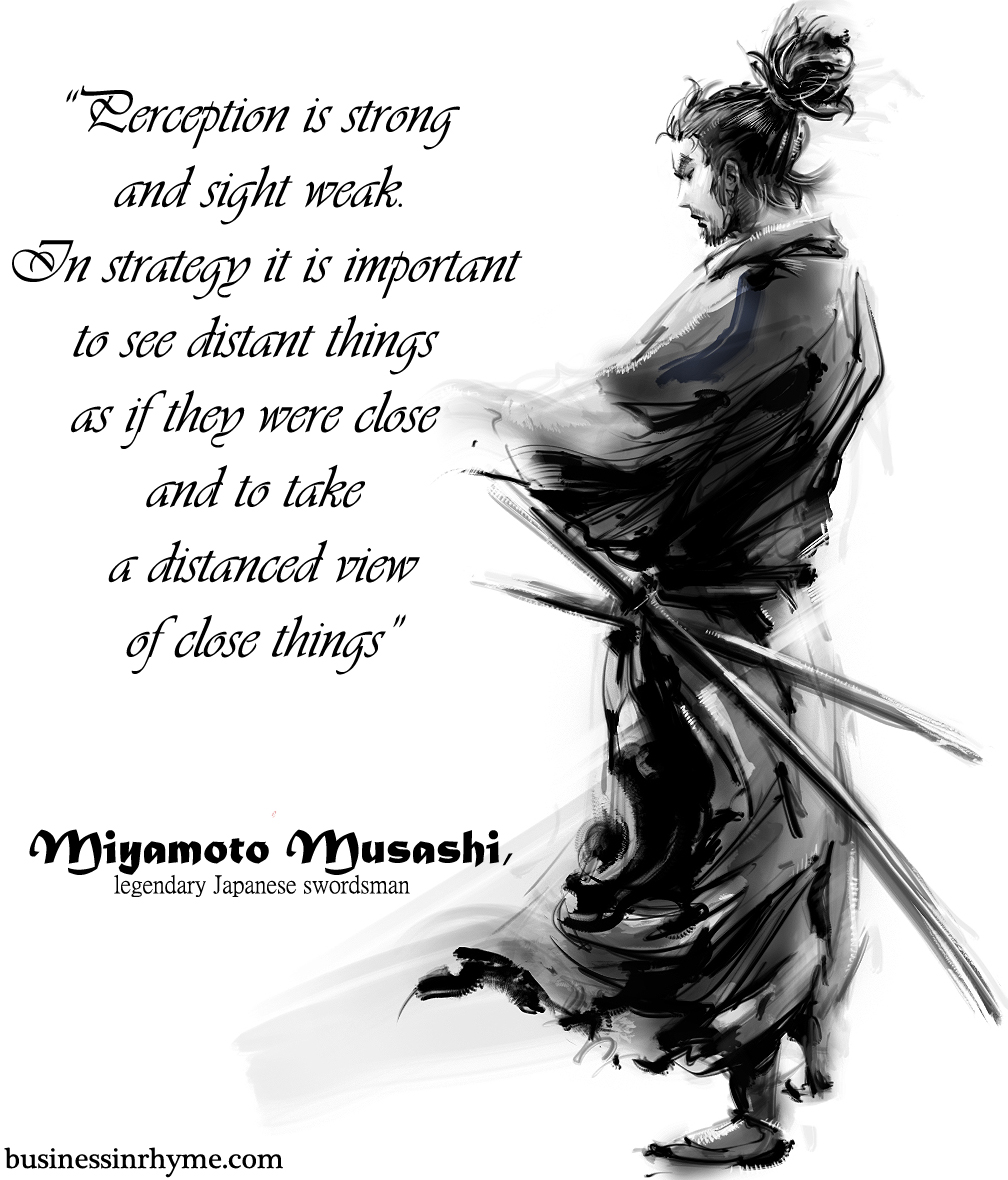
miyamoto-musashi-

On a few occasions, I have already written about the strategic thinking and the impact it can have in our everyday life. Today I will try in more detail to break down, which are the skills that comprise strategic thinking. In my own experience I focus on implementing certain steps in my analysis of situation before I make any decision or take a stand in dealing with a problem. These steps can help us work on certain skills that in the long run can improve our strategic thinking and the ability of decision making.

  1. The foremost critical skill I identified to think strategically is to have a clear vision of what you want to achieve. That includes both business and personal goals with sharp focus on what you really want. I would say that this is a prerequisite in almost any life situation because unclear motivation opens door to insecurity, fear of failure and at the end it leads to indecisiveness.
  1. The second skill I like to call is thinking in reverse. What I mean by that is once you have the end goal in mind it’s easier to design actionable tasks and objectives that will structure your strategic approach. Each objective needs to have a timeline for execution as well defined needed resources. In business situations is not an uncommon thing to have even different scenarios brainstormed, according to the variability of conditions and environment where by tackling the problem from different angles, we are still able to achieve desired goal.
  1. Being able to achieve desired milestones a strategic thinkers need to have a high level of responsiveness and adaptability. It requires just letting enough room for flexibility into their plans, where they can review progress and revise the course of action once the conditions change. It’s somehow an innate ability to be proactive and allow intuition to be receptive to anticipate change – which is better approach then responding to change once it occurs. They listen, observe, interact with their environment in such manner that they identify subtle signals that raises the awareness and helps in tailoring the best solutions to a given problem.
  1. They are lifelong learners, oriented towards growth and are never afraid to ask questions. One of the drivers in developing a better strategic thinking is the desire for new experiences and trying something new. For them is never too late to learn a new language, dance or ride a horse! This avid hunger for life enables them to think better on strategic issues.
  1. They measure 3 times before they cut. What I mean by that is that the creative part they have, they don’t shut down because some solution is ‘too risky’, ‘too costly’, but rather they have a specific notion how to balance out the surges of creativity with a sense of what is achievable and what will bring the greatest benefit in the long run. It’s a sort of cautious optimism entwined with honest desire to make the best of what’s given to them.
  1. They make room for ‘me’ time. The best and greatest strategic thinkers take time out for themselves: To relax, to release any tension in their body, to slow down their fast pace thoughts. It allows them to find inner stability and prepare for future tasks.

We can work on improving our skills by challenging our conventional thinking patterns, brainstorm different scenarios for a given a problem and recognizing weaknesses and strengths of any situation or business condition.

Whose woods these are I think I know.
His house is in the village, though;
He will not see me stopping here
To watch his woods fill up with snow.

My little horse must think it queer
To stop without a farmhouse near
Between the woods and frozen lake
The darkest evening of the year.

He gives his harness bells a shake
To ask if there is some mistake.
The only other sound’s the sweep
Of easy wind and downy flake.

The woods are lovely, dark, and deep,
But I have promises to keep,
And miles to go before I sleep,
And miles to go before I sleep.

This poem by Robert Frost is an excellent example on how we make our choices in life. What variables are the most important in our question to which direction to turn? This poem stimulates constant reexamination of situation, “measuring before cutting” and instinctively is actually ‘training’ us to think more strategically.

While reading poetry you are challenging your thinking on more subtle levels. That kind of stimulation empowers both ability of visualization and gaining clarity which is vital in strategic thinking.

Harnessing the power of mythology: 3 ways to enrich your storytelling

mythology

Myths are stories; stories narrated for a thousands of years, having life of their own in our minds and subconsciousness. They are reflection of our belief system, an eternal fight between evil and good, a struggle for achieving beyond perceived, understood and obvious. Mythology can relate to many religious rituals as well, where in the form of songs, poems and stories was used as a vehicle to explain to younger generations how people acquired speech, fire, grain, wine, oil, honey, agriculture, metalwork, and other skills and arts.

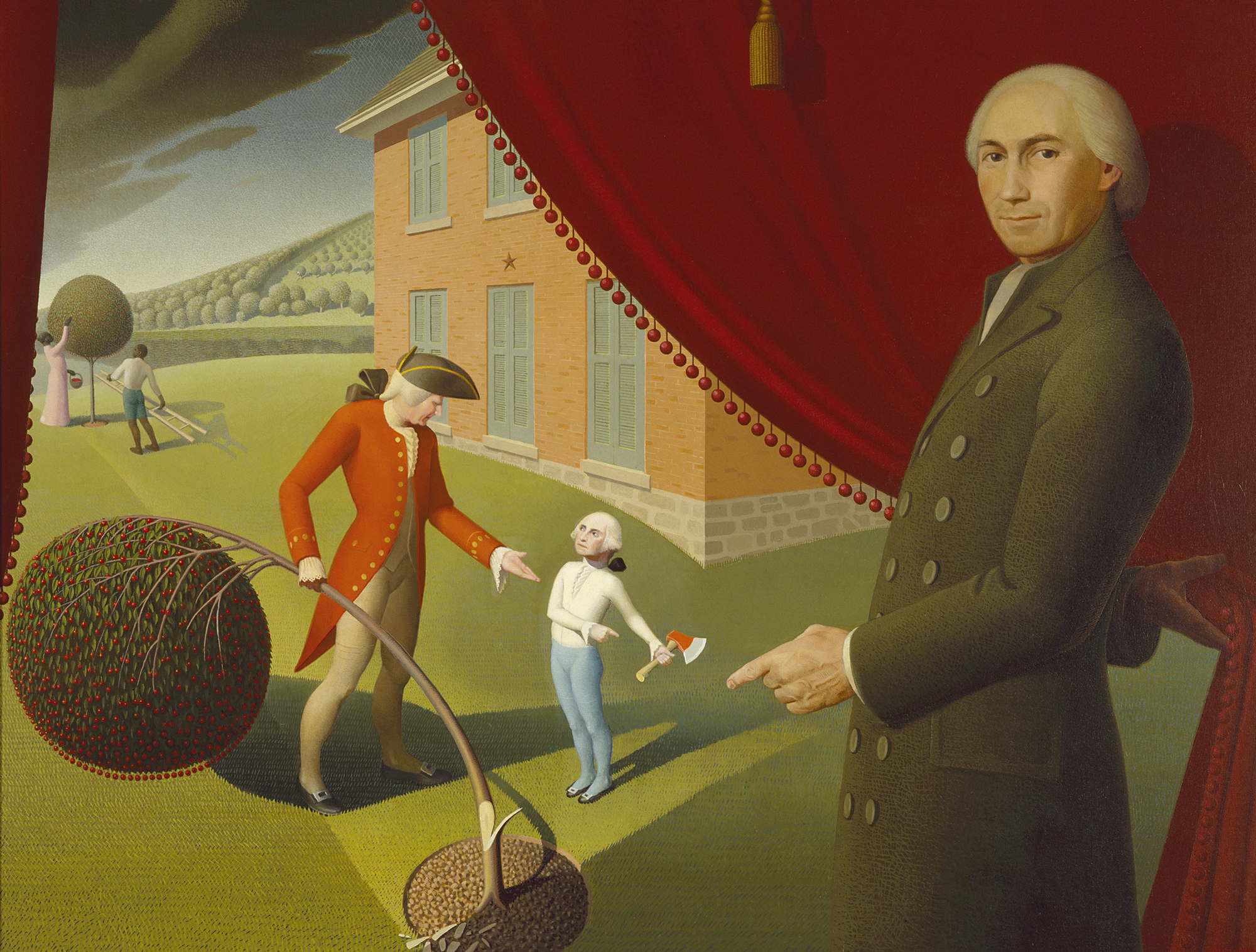
In mythology everything is possible: existence of Gods, Goddesses, beings with supernatural powers and humans taking traits that makes them larger than life and heroes in our minds. For example, Parson Weems created a myth about George Washington in the story of the cherry tree, describing an event that never took place, but used to illustrate the moral behavior of a young George.

parson-weemss-fable-amon-carter-museum-of-american-2

Parson Weem’s Fable (Amon Carter Museum of American Art)

Many crafts, like astrology use the power of mythological creatures and language of symbolism to emphasize the archetypes of human nature, where even the heavenly bodies take on the roles of Gods, and as they “dance” in the sky they “plot” the scenes of our life events.

Mythology was a communicating medium among indigenous people, as it can be found in ancient texts and it is foundation  upon which modern culture has been built.

But this is not where the power of mythology stops. It’s well established in the modern western cultures as classical scholar and professor Elizabeth Vandiver claims: Star Wars, Star Trek and other similar stories are myths as authentic as those found in Hesiod, Homer, and Ovid. They have the elements of classical mythological tales and are so engraved within our culture, that metaphors and psychological profiles defined, we often use in our everyday life as a reference.

And look at poetry:

Leda and the Swan by W. B. Yeats

A sudden blow: the great wings beating still

Above the staggering girl, her thighs caressed

By the dark webs, her nape caught in his bill,

He holds her helpless breast upon his breast.


How can those terrified vague fingers push

The feathered glory from her loosening thighs?

And how can body, laid in that white rush,

But feel the strange heart beating where it lies?


A shudder in the loins engenders there

The broken wall, the burning roof and tower

And Agamemnon dead.

Being so caught up,

So mastered by the brute blood of the air,

Did she put on his knowledge with his power

Before the indifferent beak could let her drop?

Yeats’s poem was inspired by a Greek myth about Zeus and Leda, the daughter of a king named Thestius. Zeus disguised as a swan seduces Leda and takes advantage of her. In the poem this event Yeats in every, tiny detail described very powerfully. And as we know how the myth continues, Leda gets pregnant and gives birth to Helen of Troy.

Many men were enchanted by the Helen’s beauty and she becomes abducted  by a young man named Paris that led to the Battle of Troy, the centerpiece of Homer’s Iliad. Yeats’s poem hides between the verses a drama that takes place in the tragic fall of Troy; it illustrates familiarity that Yeats had with artistic story of Leda and the swan, retold  by sculptors and painters like Michelangelo and Leonardo Da Vinci.

This poem was written in the same year Yeats was awarded the Nobel prize for literature in 1923. Here, he poses the question of predominant misuse of power and how an apocalyptic consequence that might have, beyond the possibility of what our mind can conceive.

So, in a nutshell, mythological approach to storytelling can help us:

  • convey the message on diversity, especially looked from the perspectives of cultural backgrounds;
  • argument the importance of ethical approach in business and other types of relationships;
  • make story more “alive”, entertaining as people like myths: it captivates their attention and ignites imagination, lifting their experience to the level of adventure and pleasant uncertainty.

Let your story become a myth.

When you write, let your content be your branding

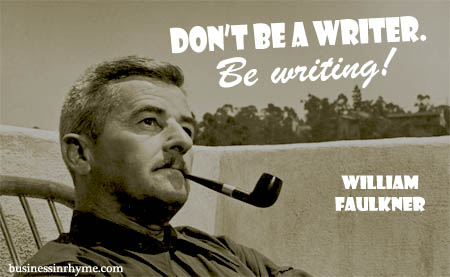
willieamfaulkner

In one of my previous posts I wrote about the importance of creating your personal brand and how to “fine tune” your own writing voice. The issue of branding, marketing, self-promotion can put an additional pressure in any creative work. For many is still a dilemma: do we follow the mainstream market currents and compromise our creative integrity or we follow our creative dream – even if it’s not reliable source of income?

With the rise of digital era and social media, the expansion of creative entrepreneurs is still on the growing rate. And especially if you are a writer, because what ever you write – being that related to your work or not – it sends the message out to the world who you are; what are your values; what do you strive for. With every word we write we literally paint an image about ourselves.

So in a way we can treat our writing as a branding tool. Our writing should communicate our creative vision, in accordance with our professional credibility. In time, it might be hard, to achieve the level of objectivity we desire, but with focus on intentional writing, having aligned our purpose and values, our writing will more reflect of who we are, and how we want to be perceived by the world around us.

Writing (not just as an act of writing), but about our creative endeavors, sharing our creative vision – doesn’t necessarily has to be seen as a try to convince someone into something or selling anything, but rather as a creating an experience where we can share our talents at broader scope; building a firm foundation for a contribution we can make with our work. It’s a natural way of attracting like-minded people and fostering community.

I believe that expressing creative action in any way that will find its course to the hearts of people who want to engage in that kind of experience, doesn’t have to be seen as crude, soulless marketing. Actually, once you create something and let it be seen by the public-it takes the life of its own: to inspire and motivate someone else, to bring enjoyment, purpose or improve someone’s life. That’s the moment when the loop of creativity cycle is closed and it becomes the source of something more beautiful: world can benefit from fruits of your work.

Following some of the rules of poetic expression can be very helpful. Using the words that have a rhythm can amplify your message to the level it resonates with your audience; to become more memorable and make that human connection we need in sharing our creativity. They say: “Content is the king” – then how do you present is it’s throne: how you say something is as important as what you say. It’s a basic a foundation on which you will further build your message to be embraced by your readers. “Wooden” language, with no emotion, no personal perspective, “flat” narrative without promise of adventure and surprise cannot cut through the noise of ordinary information into the hearts and minds of target audiences.

What constitutes good writing? A content, but also concise and well organized information, wrapped in your unique writing style. Now, unmerciful editing will get us closer to more understandable information, but the style is what one remembers. Enriching our writing with poetic tones can add that distinctive melody to our writing. And I’m not talking about metaphors and adorning your writing with useless attributes: I’m talking about the structure, rhythm and balance, skillful art of the phrasing right. It can give the strength to your writing, expressing your creative outlet in right way – the way it will stuck to the hearts and minds of your audience. That’s why I stress out the importance of what you write to read out loud. If you are ensured that what you wrote communicates your personality, in comprehensive manner, then it will have the desired impact.

How These Words Happened by William Stafford

In winter, in the dark hours, when others
were asleep, I found these words and put them
together by their appetites and respect for
each other. In stillness, they jostled. They traded
meaning while pretending to have only one.

Monstrous alliances never dreamed of before
began. Sometimes they last. Never again
do they separate in this world. They die
together. They have a fidelity that no
purpose or pretense can ever break.

And all of this happens like magic to the words
in those dark hours when others sleep.

3 reasons why we should “revisit” our core beliefs, from time to time

poetry

We could call our core beliefs our “operating system” in this world. The system of values formed from our early childhood, adolescence and later through out the life. Our values are mostly influenced by our family, educational system, but also by our surroundings. Going though life we experience each and every event which we “catalogize” somewhere in our memory as a good or bad and when something similar happens we tend to compare and label each event. Usually this is framed by societal norms that act like boundaries within we want to fall: we strive for success, but in terms that society implies…and it happens that we get lost; that our value system evolves and demands something else from us.

Or we are so wrapped in the societal way of thinking that unless something like illness or other form of trauma happens, we are not able to recognize the signs and life demands our attention – wanting to tell us that something is not right.  Then it’s the time for a different approach.

One thing important here is that we are in complete control over our beliefs and our emotions. We are creators of our experiences and only we can call them “good” or “bad”. Remember the famous experiment in quantum physics where it is proved that observer affects and perceives reality from his own point of view?

In a study reported in Nature (Vol. 391, pp. 871-874), researchers at the Weizmann Institute of Science have conducted a highly controlled experiment demonstrating how a beam of electrons is affected by the act of being observed. The experiment revealed that the greater the amount of “watching,” the greater the observer’s influence on what actually takes place. When a quantum “observer” is watching Quantum mechanics states that particles can also behave as waves. This can be true for electrons at the submicron level, i.e., at distances measuring less than one micron, or one thousandth of a millimeter. When behaving as waves, they can simultaneously pass through several openings in a barrier and then meet again at the other side of the barrier. This “meeting” is known as interference.

Strange as it may sound, interference can only occur when no one is watching. Once an observer begins to watch the particles going through the openings, the picture changes dramatically: if a particle can be seen going through one opening, then it’s clear it didn’t go through another. In other words, when under observation, electrons are being “forced” to behave like particles and not like waves. Thus the mere act of observation affects the experimental findings.

Source Sciencedaily.com

We are creators of our reality, and values we follow. I think that from time to time we should reevaluate our core beliefs, because we change; it evolves with us and there 3 crucial reasons for that:

1.What stands as a truth for us, might not be the same for somebody else.

Some beliefs have roots in the experiences of our parents or have the origin in the collective subconsciousness. We should honestly ask ourselves: “Is this what I truly believe? Is this what I want?” Your definition of success is only yours. The same it comes with the notion of failure.

2.Our needs and desires change.

When I was 18, 19 the world looked completely different. I had different expectations of myself. What I wanted to do then is not in alignment with who I am today. My purpose changed as much as my ambition, which influences my further choices and decision making.

3.Each experience is an opportunity for growth.

I don’t dwell that much on the bad stuff. Yeah, it happened, but I don’t want to be stuck in the past. It has no power unless as a learning lesson; something I wouldn’t like to happen again and that’s it. While letting go we are able to move forward, like removing heavy chains off our feet. And than you are prepared for new experiences.

Engaging in the poetic process can accelerate our quest in search for meaning, value and purpose. Claire Morgan in her book “What Poetry brings to Business” further notes:

The development of ethical sensibility is a mind changing process. The changing of mind is partly dependent on a reframing of viewpoint in which the transformative potential of art can be a major motor. The absence of a simple, singular message in the artwork is a part of its value in developing an ethical sensibility.

Poetry is a pathway to new experiences: unlived, missed, desired. Either way eventually,  it can be our guidance in which way to turn our life and to what kind of reality we strive for.

They Were Welcome To Their Belief -by Robert Frost

Grief may have thought it was grief.
Care may have thought it was care.
They were welcome to their belief,
The overimportant pair.

No, it took all the snows that clung
To the low roof over his bed,
Beginning when he was young,
To induce the one snow on his head.

But whenever the roof camme white
The head in the dark below
Was a shade less the color of night,
A shade more the color of snow.

Grief may have thought it was grief.
Care may have thought it was care.
But neither one was the thief
Of his raven color of hair. 

4 qualities of thought leaders and how to become one

thoughtleadership

We all want to become more influential, persuasive in what we do. It’s of vital importance, being you a writer, small business owner or just an employee in the company. Getting our message across, being understood and perceived in the right way is how new, creative bonds are built in relationships – especially the business ones.

What being a thought leader is about anyway? Many people relate that term only to marketing and ways how to monetize “masterpiece” thinking, which opens the door to the new markets and new sources of income. That is the end-result of good directed and implemented thought leadership, but before that in order to become more influential you need to offer a sort of purposeful contribution that your audience and clients can actually benefit from. It’s a well developed internal strategy, wrapped in the perceptive cultural approach.

There are 4 qualities that are a common denominator among successful thought leaders:

1.They bring innovative thinking.

Especially entrepreneurs and people “zooming outside of the box” – they question everything and don’t take anything for granted. Sure, sometimes they don’t succeed at once –still, they move, shake, disrupt, and build paths through unexplored industrial jungles.

2.They are the brand.

Sharp and focused branding behind their persona is another ingredient in their leadership recipe. They are not afraid to begin, all over again – from zero, building something worthwhile, aligned with their personal values.

3.They are strategic thinkers and engaging storytellers.

Not only that they have well structured strategy around their message, they know how to convey it in a form of engaging and moving stories – stories that relate to our human side, experience and position in the world, which lead us to the final trait:

4.Thought leaders are empathetic.

Often, thought leaders draw their own life energy from struggles and suffering they went through themselves, which give them the opportunity to better understand the social needs. There, they see the chance to disperse their message and they are heartfelt, generous with their time, talents, money. Think of Richard Branson or Deepak Chopra for example.

In some of my previous posts I extensively wrote about the benefits of poetry in developing leadership qualities. It is that magic bond that allows of incomprehensible to be understood, unsaid to be heard, complex to be simplified to the tiniest pieces.

We are all thought leaders, once we decide to be.

It is not the Critic That Counts by Theodore Roosevelt

It’s not the critic who counts,

not the man who points out how the strong man stumbled,

or when the doer of deeds could have done better.

The credit belongs to the man who is actually in the arena;

whose face is marred by dust and sweat and blood; who strives valiantly;

who errs and comes short again and again;

who knows the great enthusiasms, the great devotions and spends himself in a worthy cause;

who at the best, knows in the end the triumph of high achievement;

and who at the worst if he fails, at least fails while daring greatly,

so that his place shall never be with those cold and timid

souls who know neither victory or defeat.”


3 tips to skyrocket your creativity at work

shaw

There are many ways how companies try to encourage creativity at work. Office furniture and desk organizations with thinking areas and “green zones” with fountains  aim to offer relaxing atmosphere for employees to jump-start their innovative thinking. But sometimes that’s not enough. You know those days when  you simply get stuck and nothing new comes out? You have a deadline and work just piles up and you don’t manage anything to finish?

Innovation is the building block of any business and as we nurture our bodies with food and drink we need to nurture our mind with adequate thought food. In order to awaken our hidden talents and bring forth our skills that can be beneficial both to us and our company, what our mind “consumes” can be of key importance for sparking our creativity.

These are three tips that can help your creative mind to work:

1.Get visual

Colors, shapes, perspective – can literally influence how you perceive your ideas and work. When feeling uninspired and discouraged, disrupt your thinking with some relaxing photos of different landscapes, displaying different colors, locations, architecture, cultures. For instance, exposure to both blue and green in the study performed by Ravi Mehta and Rui (Juliet) Zhu  has been shown to enhance performance on tasks that require generating new ideas. However, the color red has been linked with superior performance on tasks involving attention to detail.

2.Get verbal

In an intriguing book (What poetry brings to business – which also inspired this blog) Claire Morgan argues that language and different perspective on the value and purpose of language can boost surge of creative ideas.

She proposes looking, for instance, at the phrase colorless green ideas sleep furiously conjured by language theorist Noam Chomsky.

The phrase itself has no meaning or value. Some people would consider it’s pure nonsense. The words colorless and green oppose each other – creating notion of irrationality in the mind.

But in the game of language and poetry the phrase could make sense.

Think in the realm of series interlinked questions:

Is the green colorless?

Can sleep have a speed?

Can idea sleep?

Does idea have a color?

Maybe we can analyze the phrase green ideas like something new, yet to be born, to mature, but still invisible to us, colorless?

Furiously, breaking their path towards us, to be revealed and captured, but they are still sleepy in some corner of our mind, or ideas are keeping us awake, furious, while we try to sleep?

Interpretations are endless, with two opposing things, excluding each other, yet forcing us to find meaning, logic, purpose, connection, conclusion.. These associations evoke emotions and images that generate ideas.

So next time try to formulate your problem in the form of a riddle, searching for non-existing meanings. New ideas will begin to flow in and this is a fundamental way how poetry works.

3.Get physical

Engaging in any physical activity can help us generate more creative ideas. In the study “Give Your Ideas Some Legs: The Positive Effect of Walking on Creative Thinking” conducted by Stanford University authors document that creativity is improved by physical exercise. The study found that walking indoors or outdoors similarly boosted creative inspiration. The act of walking itself, and not the environment, was the main factor. Across the board, creativity levels were consistently and significantly higher for those walking compared to those sitting.

In your next search for inspiration, go for a brisk walk, do some stretching or light yoga for work. Giving your neurons more space and time to breath, you will feel more relaxed and eager to solve any problem.


How poetry inspired Tesla to design one of his most important inventions

tesla image

No matter how much we dwell on the nature of creative process, there are still a lot of uncertainties how creative part of personality develops. Usually it fluctuates between states of exquisite thrill and inspiration and extreme, deep introvert isolation. We have documents about creative processes of highly creative people like Michelangelo, Mozart, Picasso and even Tesla stating that these people managed to sustain prolonged periods of creative display, but one that was often triggered by some depressive mood or trauma, ending also with some distorted thoughts.

Tesla’s descriptions of creative process in his autobiography give important insights into the phenomenon. Right on the first page we read:

…for many years my life was little short of continuous rapture.

Nikola Tesla was, no doubt, a remarkable man, an extraordinary scientist and inventor. If we look more deeply into his habits, infatuations and things he was attracted to, we can observe more clearly his sources of inspiration.

He was born in Smiljane in 1856. in the family of an orthodox priest. Even in his early age he showed inclinations towards science. As a young boy he got ill, infected by cholera. While still fighting with death, he begged his father to let him study technical sciences. A firm promise that his father made, gave strength Tesla to get better and later, in 1875. he enters technical school in Graz. Even during studies he contemplated the idea about alternating current.

It’s interesting to note that while working on new inventions Tesla had visions, images and even could hear strange voices – rather then expressing his thoughts in numbers or terms. He writes:

In my boyhood I suffered from a peculiar affliction due to the appearance of  images, often accompanied by strong flashes of light…When a word was spoken to me the image of the object it designated would present itself  vividly to my vision and sometimes I was quite unable to distinguish whether what I saw was tangible or not.

One of the lesser known facts about Tesla is that he was also a great fan of poetry. It was an excerpt of Goethe’s Faust that inspired him to finalize his invention of  the alternating current-motor. The term “world-changing invention” certainly applies to this innovation.

tesla motor

Around 1881., Tesla goes for a walk with his friend Antal Szigety in Budapest. While walking through a park the young Tesla recites a poetic passage by heart:

The glow retreats, done is the day of toil;
It yonder hastes, new fields of life exploring;
Ah, that no wing can lift me from the soil
Upon its track to follow, follow soaring!

I’d see in that eternal evening beam,
Beneath my feet, the world in stillness glowing,
Each valley hushed and every height agleam,
The silver brook to golden rivers flowing.
The mountain wild with all its gorges
Would hinder not the godlike course for me;
Before astounded eyes already surges,
With bays yet warm, the open sea.
And yet at last the god seems to be sinking;
But new impulse awakes, to light
I hasten on, eternal brightness drinking,
Before me day, behind me night,
Above me heaven, and under me the billow.
A lovely dream, while glory fades from sight.
Alas! To wings that lift the spirit light
No earthly wing will ever be a fellow.

What verses described, he was actually experiencing himself at the moment. And as the sun set that day, it is believed that Tesla have drawn the design for the induction motor in the sand.

The passage Tesla quotes is about a dream of flying beyond the sun, the heavens, in eternal daylight. And Tesla finds the metaphor, the parallel between the dream and the priority for human kind. He further writes:

If we want to avert an impending calamity and a state of things which may transform the globe into an inferno, we should push the development of flying machines and wireless transmission of energy without an instant’s delay.

Tesla was also a talented poet himself. A lot of his thoughts and musings he would write in the form of poem that would later serve him as a reminder or a guidance in his future work.

What we can learn from Tesla is that any innovative thinking, being scientific or otherwise, is nourished by diverse influences, conditions and environments and that we should keep our senses always alert.

Sources: McLean, A. ed. 2006 Goethe’s Faust (from 1.act, 1. scene to 2. act, 2. scene)

Tesla, N. 2005, My Inventions; The Autobiography of Nikola Tesla, Wildside Press, LLC


Systems thinking as a holistic approach to entrepreneurship

Harman

To better understand social systems, thinking from a system perspective allows us to see and recognize interactions between system elements. Systems thinking takes into account larger number of interactions as an issue being studied and therefore results in greater number of conclusions than those delivered by other forms of analysis. It’s quite an effective approach and it can be applied to any type of system, being that business or your life in general. Now, I would go even broader in my definition: successful entrepreneurs have the ability to perceive the world as a system.

Why is that important?

As Michael Gerber states in his article Systems thinking:

Your business should be systems-dependent, not people-dependent.

With no systems in place, your business depends on you and on a few people who run things for you. If you or they disappear, even for a short time, your business is thrown into chaos. But if you have the right systems in place, the systems run your business, and nearly anyone can run the systems. You can decide suddenly to take a three-month holiday and your business won’t skip a beat. Your key employees could quit, and you could replace them easily with no ill effect.

This type of thinking is like taking precaution measures: as you start your own business, with systems thinking approach you are establishing right connections between the elements of your business, allowing for business to become adaptive, responsive – you are able to manage better any change.

But I would go even step further: a real systems thinking approach is a crucial step to becoming a holistic entrepreneur. Not only when the elements of the business system are beautifully interrelated but when your business is aligned with your values, your passion, your whole outlook on the world. There is no separation between your life, work and spirituality – it’s a system that like a hologram reflects in its tiniest atom who you are. You recognize the purpose in everything and your business and life is the realization of that purpose.

To truly think and operate your life and business in such way takes time and practice. We have to work on ourselves every day to improve our habits and how we respond to everyday challenges. I see poetry as a shortcut on this journey. Poetry can be that sixth sense that most of us lack, as it translates hidden agendas and prepare us for new experiences. It disintegrates the complexity of the world around us – opening our eyes for new possibilities and making new thoughts easier to digest. Poets are true systems thinkers: with each poem we read, even for that shortest moment, we take on the world as they contemplate it to a higher level of comprehension.

Life’s Meaning by Fra Giovanni Giocondo

Life is so full of meaning and purpose,

so full of beauty beneath its covering,

that you will find earth but cloaks your heaven.

Courage then to claim it; that is all!

But courage you have, and the knowledge

that we are pilgrims together,

wending through unknown country home.