Poetic inspiration: You say, you lack idea…

idea_writing_inspiration

for writing. Well, look

how many syllables I have spilled here.

Now, arrange them in your own order! 🙂

Maja S. Todorovic


If you liked this post and you are interested in getting more inspiration for your creativity, sign up for our free monthly newsletter.

Spice up your writing with ‘upgraded’ found poetry (creative writing exercise)

stevejobs

Creating and being creative are certainly two conditions similar, but not the same. Creating is often related to producing something new, innovative, while being creative is often referred to being able to observe two, three or more unrelated objects and connect them in a new way, thus eventually producing something new.

So today’s exercise is while having a broader writing prompt, also an opportunity to practice being creative, where poetry can be a wonderful tool to use.

For example, pick your three favorite poems, from three different authors – the best is if the poems are thematically different (but doesn’t have to be) and ask yourself, what do they have in common? The more challenging this is, the more creative you’ll have to be with your writing and create  a new poem. But instead of just creating found poem, go a step further: use these three poems just as a starting canvas for your new writing where you will try to revive the initial feelings that made you love those poems in the first place. Find that image in your mind that emulates the experience you had while reading those poems and portrait that image in your new poem.You can use some stanzas in your writing or you can just refer to those poems as a starting point – it’s up to you.

I’ve chosen excerpts from the following that are quite dark, sensual and haunting – perfect for the Halloween warm-up 😉

This Is A Photograph Of Me by Margaret Atwood

It was taken some time ago
At first it seems to be
a smeared
print: blurred lines and grey flecks
blended with the paper;

then, as you scan
it, you can see something in the left-hand corner
a thing that is like a branch: part of a tree
(balsam or spruce) emerging
and, to the right, halfway up
what ought to be a gentle
slope, a small frame house.

In the background there is a lake,
and beyond that, some low hills.

(The photograph was taken
the day after I drowned.

I am in the lake, in the center
of the picture, just under the surface.

It is difficult to say where
precisely, or to say
how large or how small I am:
the effect of water
on light is a distortion.

but if you look long enough
eventually
you will see me.) 

There Are Intersections… by Joyce Mansour

There are intersections where the night

The joy jumps on the back

Of the passerby

Such the lonely dawn in the acid wind

The decapitated dies standing up

Below

Body to body in the mud

Teeming furnace

The worms

Whips with triple straps

Caress the tip of the roots

Of flesh

Meat of sacrifice

Gem of the putrefaction

With no burden other than its arms

Tied elbow to elbow

Behind

Bundles of blood on the promised land

Thunderbird Motel by Kelly Boyker

There is no place to drown here, so instead
we take turns suffocating each other with pillows
going just a little longer each time.
I am already rehearsing my speech to the manager,
already placing the ice cubes in my mouth
hoping they melt before the maid wheels her cart into our room.

 My ‘upgraded’ found poem:

There is no place to drown here,

yet if you do leave a lonely dawn to live

melting ice cubes will form a lake,

with muddy intersections

where worms eat the roots

of the acid wind with joy.

The center of the picture,

photograph carved in the land halfway up of
a gentle
slope,

is the blooded pillow I dived in, absorbing my mute speech.

Body to body

elbow to elbow

awaken city of your sensual thoughts

culminates in this subsided, heavy roar of

broken eternity –

resistance takes place,

like gem of the putrefaction,

distortion of time

in the tied flesh of the watery space.

This is a wonderful exercise as it teaches you to connect things in different relations and helps you evoke that emotional response you need to fuel your creative writing. I was always somehow amazed with the topics of loneliness, isolation, mysterious and esoteric, always being different and not falling into patterns of societal stereotypes (which partially explains my selection of poems). And it is one of my driving creative forces – exploring and going beyond the given boundaries and prejudices.

I simply love this exercise as it helps you literally to rewire the typical thinking of your brain and produce interesting moments in your creative writing. It’s super easy, doable anywhere you like it, and can keep you being proactive with your writing when you lack ideas or inspiration.


If you liked this post and you are interested in getting more inspiration for your creativity, sign up for our free monthly newsletter.

Poetic inspiration: Creative expression

creativity_expression

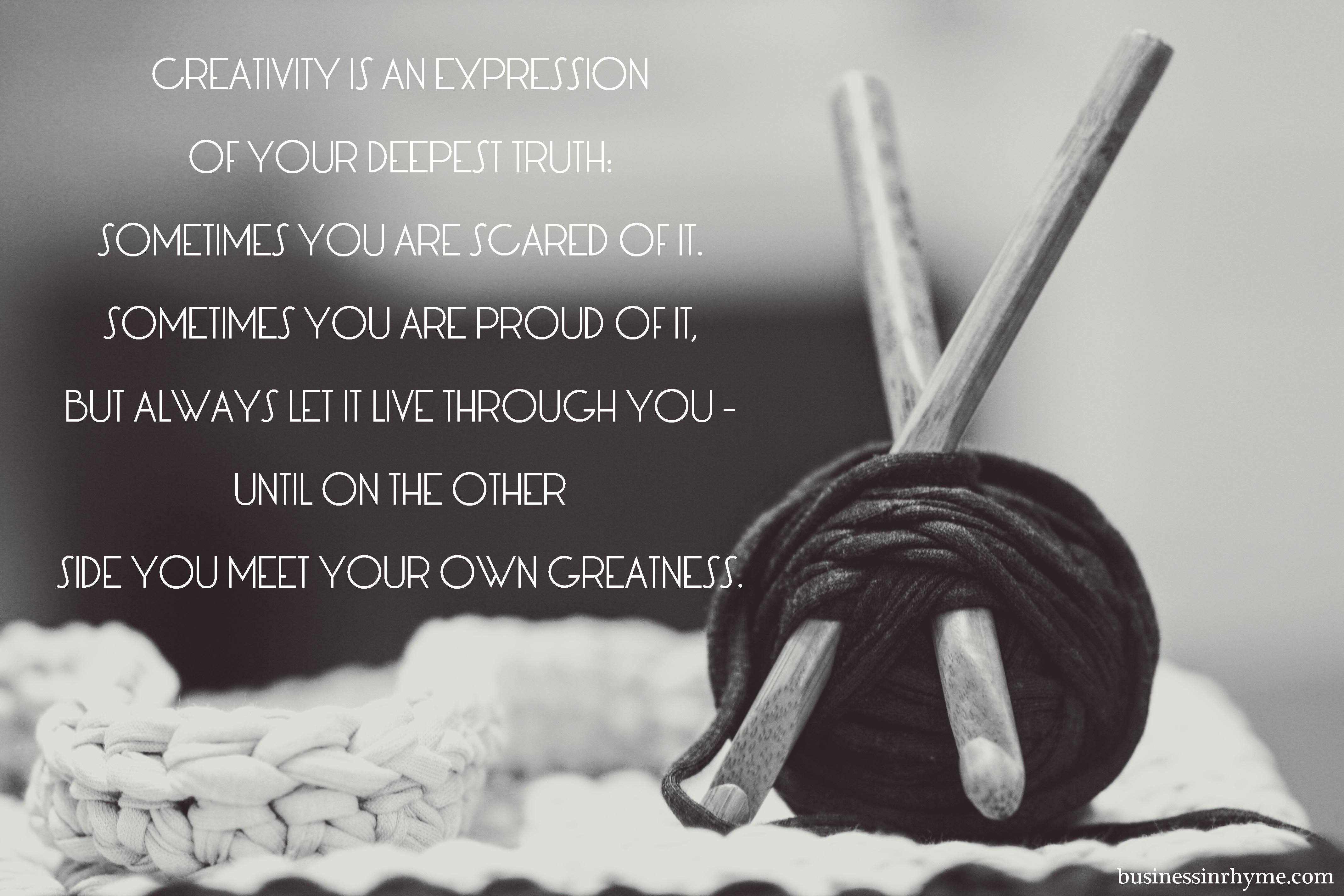
This is a quick, weekend reminder that you are creative person and writing is one of the simplest, yet powerful ways to express it.

It’s an inseparable part of you and never reject it – you might be surprised where it takes you.


If you liked this post, please share. And, if you are interested in getting more inspiration for your creativity, sign up for our free monthly newsletter.
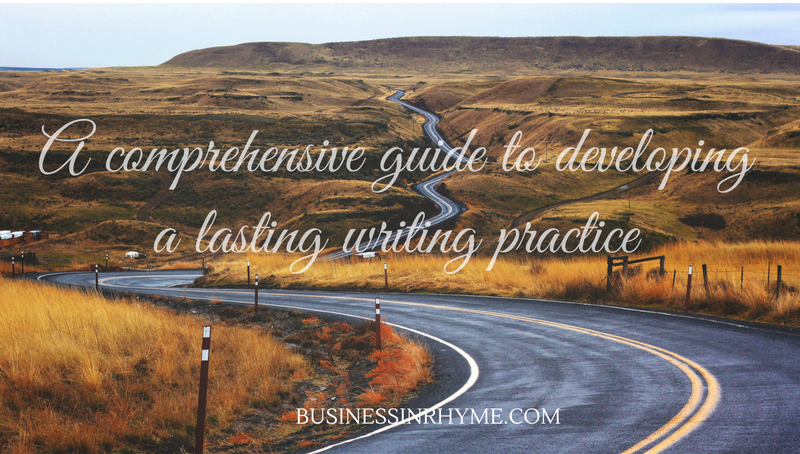
A comprehensive guide to developing a lasting writing practice

writing_guide_practice

We all in the beginning have a motivation to start a new habit: we are pumped up, ready to take on that challenge we set for us and stick to it – being that healthier eating, exercise regime or writing habit. And then, after couple of days/weeks our motivation starts to wane, something comes up that distracts us or it takes more of our investment than we anticipated and what happens next? We are back, indulging in social media and TV instead of working on ourselves.

Having a lasting writing habit is like any other habit. Once it becomes ingrained in your subconsciousness there are lesser chances for you to skip it.

Here are my favorite tips on  making writing a regular practice:

  1. First, make room for your writing.

It means that you have to mercilessly evaluate and edit your schedule and maybe lifestyle in order to see where is your time and probably energy leaking. Writing requires you to focus, to devote your whole being to it, to find that sacred creative moments. If you start writing while you are preoccupied with other things, probably it won’t work – and you’ll end up being even more stressed because you are unsatisfied with your writing.

  1. Always have clear mind: why do you write?

What’s the driving force behind that urge to sit and record your thoughts? Whenever I feel doubt I ask myself this question and it helps me recenter my initial intention. Once you have that clear goal you will have that important thought to cling on, each time you feel discouraged. I even think this the most important part of developing a lasting writing habit: it’s almost like brushing your teeth: you are doing it because you want your teeth to be healthy and it makes you more confident. Treat writing the same way – find your best reasons and you can even place them as a reminder on spots where you will frequently read them. It will always give you the boost you need.

  1. Don’t think about the product, it will come as a natural result of your enjoyment of the process.

What I mean by this, many times in writing and other forms of creative actions we might be driven by fear (of reaching a deadline, being rejected, ext.). But look at it from this angle: you are going to do it anyway, so why just simply don’t let yourself surrender to creativity and stop worrying? Some of you might not agree with me on this one, but let me share with you part of my writing and research journey. When I was writing my master’s degree thesis, at that moment I was employed at the faculty as a postgraduate researcher. At some point my one-year contract expired, it couldn’t be prolonged (the funds were cut off due to political situation in the country) and I was on my own – searching for another job. New opportunity presented itself very soon, at the Institute where I was performing research, but the colleague I was supposed to replace was to be retired very soon -which meant I needed to start working very soon. As it was a government institution, it required for me to already have a master’s degree. So in the next few months I was working 20 hours a day to get that research done, written, defended in order to secure that position for me. I did succeed, but I think I could’ve enjoyed my writing more, instead of worrying all the time. And who knows, my thesis would’ve come even better as a result of that. I remember, it was exactly 15 years ago, I pushed myself so hard to a point I got ill. And it didn’t have to be that way. My most honest advice I can give you is to celebrate and enjoy each page you write, that’s what counts – achievements and awards come and go. Experience is what lasts.

  1. Connect writing action to some other trigger – make a ritual.

I like to write while I drink my smoothie in the morning – having that big mug is like a sure sign -writing is due right after – if I skip that, chances I will skip writing all together. Many famous writers are known for having that action, telling him it’s time to write. For instance, Stephen King each time had breakfast or drank tea used this as reminder to sit and write.

  1. Make yourself accountable – find a writing buddy.

This can be fun and interesting way for you to enjoy writing more. You can join some online community, meetups face to face or make a pact with an old friend and develop some rules on how, what, how much you will write and then share and discuss your writings. Many writing schools, like Writer’s studio that I attended use this technique where each week there is a different writing topic and later we would discuss our writings and get feedback. It’s a proven method that seems to work.

I hope this will help you to develop your own writing habit, one that is enjoyable, fun and productive. Do you have any tips? Please share in the comments below.


If you liked this post, please share. And, if you are interested in getting more inspiration for your creativity, sign up for our free monthly newsletter.
 

3 reasons why anything you write has value

quote_writingvalue

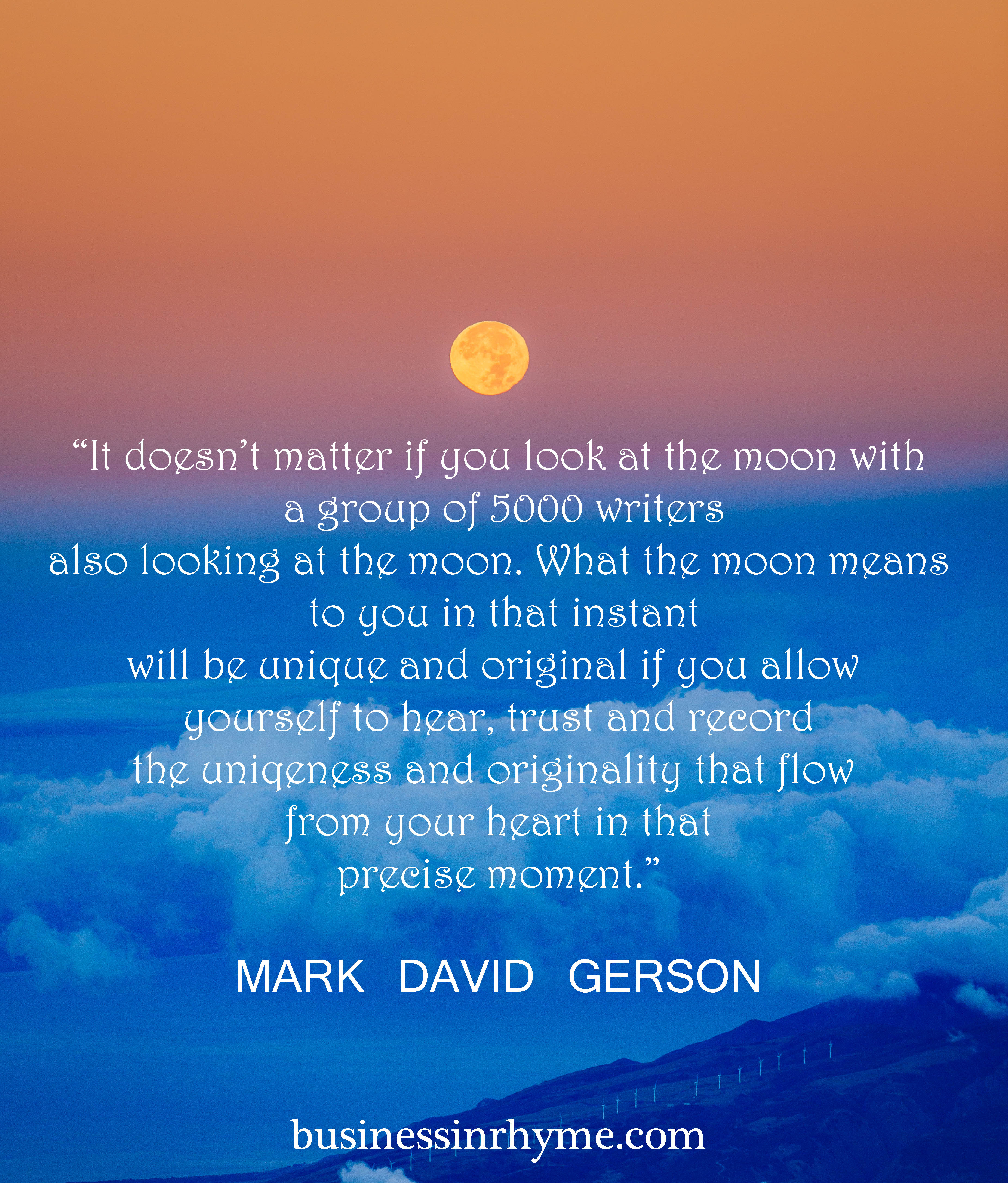
Probably you have encountered yourself thinking that what you wrote was not good enough, that nobody would like to read it, ext. And as writers we all have that moments. It’s so easy to let that moment overpower us – just let it flood us with self-loathing about our own skills and capabilities. But today I want to offer you a different perspective on your writing and tell that anything, any word you write has value and it’s not your waste of time.

I so immensely believe in the power of written words, our own words we spill on pages that I’m quite confident in the following statements I’m about to make:

  1. Your writing has value because it’s inevitable part of your own self-exploration and the way to know yourself better.

Each writing session is actually part of something much bigger, a pattern, a recorded reflection of you in particular moment in time. It doesn’t matter do you write a novel, an article, or purely stating your opinion and commenting on someone else’s work – it’s part of you. And anything that is coming from your own sincerity and open heart has value.

What you write at this moment doesn’t have to be perfect. Probably this exact information you are reading can be written in better style, using better words (especially concerning that English is not my mother tongue), but still you can understand the encouragement I want to give you here. And that is what counts, the message and intention behind it.

But this moment me writing this, leads to another writing moment, another blog post, another poem and inevitably we become more comfortable and confident in our writing, which reveals my second reason:

  1. Your writing has value because it’s part of the process where you improve your writing skill and you ‘calibrate’ your writing voice.

As long as you trust your authenticity your writing is original. The way you select and arrange words – especially in poetic writing which is so sophisticated, each time you write poem you are discovering your specific writing expression. It’s unique just as your finger print – you learn to use the words to best express your nature, personality, opinions, belief system and anything you stand for.

  1. Your writing has value as it teaches you to be more mindful of your thinking and stay present in the writing moment.

Each poem or paragraph you write doesn’t have to be approved by editors, experts or published in high impact journals in order to be of value. You write what is true and real for you in that exact moment. While we progress with writing, as it changes so do we. At the beginning of my writing practice I used to write long prose-poems, where I needed a lot of space and words to express myself. As mindfulness begins to dominate my writing lines, so my writing becomes simple and clear. You probably also can relate to this: compare your early works with something you recently wrote and you will see how your poems/writing is more coherent, straight to the point and purposeful.

These are my top 3 reasons why you should keep writing, each time you start to doubt and feel discouraged. There is no word, minute or paper wasted.

And probably the 4th and most obvious (and important) reason that I didn’t list above it’s because it simply brings you joy and fulfillment. Yet, I focused on another crucial elements that most people don’t recognize and easily overlook. These are my three reasons giving me that push I sometimes need to write and commit myself to get the words out there.

Trust your yourself – your writing has value.

The time will come
when, with elation
you will greet yourself arriving
at your own door, in your own mirror
and each will smile at the other’s welcome,

and say, sit here. Eat.
You will love again the stranger who was your self.
Give wine. Give bread. Give back your heart
to itself, to the stranger who has loved you

all your life, whom you ignored
for another, who knows you by heart.
Take down the love letters from the bookshelf,

the photographs, the desperate notes,
peel your own image from the mirror.
Sit. Feast on your life.

Derek Walcott


If you liked this post, please share! And if you are interested in getting more inspiration for your creativity, sign up for our free monthly newsletter.

Poetic inspiration: Silent messenger

writing_messenger

Your writing is a silent messenger

of who you are.

Use it to accept, love and share

your true self,

because sky has an immense space

for another shining star, your star.

Don’t let that corner stay cold and unreached far,

trapped and forgotten in dark.

Maja S. Todorovic


If you liked this post, please share! And if you are interested in getting more inspiration for your creativity, sign up for our free monthly newsletter.
7 most powerful ways to regain time for writing in the midst of chaos

productivity_writing_chaos

The more I write and search for inspiration for blog posts, the more I come across analogy of how certain natural laws that govern universe actually can be very well applied to our everyday life. If we fast rewind our memory to a high-school years we might recall the 2nd law of thermodynamics that basically  says: the universe tends to go from present order to bigger disorder. And does that apply to your everyday life? Well imagine: you can spend all day cleaning your messy room and within couple of working hours, you are practically at square one – like you didn’t tidied it up at all.

Sounds familiar?

We all live our lives chaotic to some degree. We cannot control every circumstance but we can put some effort and take charge to at least try make some order. And making that order can mean finding more time to write.

My first recommendation is to:

1.Have a clear writing goal

If you write for a blog or a book, have clear mind about what you want to accomplish. For a blog having in advanced prepared editorial calendar with defined frequency of your posting can be handy in overall estimate on what you need to write, does it require research and ext. Pretty much the same comes with a book. That writing goal can be a number of pages, chapters or developing your story concept.

2.Prioritize and reschedule

Squeeze writing  in your schedule like you plan other activities: your meals, working out, household chores. Once it becomes that ingrained part of your everyday life, the lesser are chances for you to skip it in favor of some other activity.

 That can also mean:

3.Getting up an hour earlier 

and writing during that peaceful time where dreams and reality collide.

4. Trading your evening TV hours for some quality writing time

Instead of being hypnotized in front of a glowing screen, indulge in your imagination and focus on your writing.

5.Using your commuting and travel time efficiently

If you travel by bus or train to work, this is an excellent opportunity to use this (almost wasted) time to think about our writing, jot some ideas down or brainstorm new poem/story.

6. Sparing some treasure time during weekends

Organize your weekends in such way that part of your relaxing routine be writing.It could be as simple as sitting down to enjoy  cup of coffee or if you go for a walk: use these breaks to elaborate your writing ideas or finish previous writing tasks.

7.Making space for writing

Putting physical order in your everyday environment can be helpful in terms it will motivate you to write instead of dealing with stressful petty things. Having that special, inspiring place you dedicate to your writing can help you in making writing  a priority – being that small gesture like  clearing out a counter to write down your new idea. Such small acts of generosity towards our passions and creativity can be a triggering point to transform our writing into a regular practice.

How do you deal with chaos and find time for writing?


If you liked this post, please share! And if you are interested in getting more inspiration for your creativity, sign up for our free monthly newsletter.


Monetize your writing: 4 publishing contests you shouldn’t miss (no fees)

writing_contests_poetry

About year ago I published this post where I emphasized three creative, more alternative ways you can earn money as a poet. Well, what I left out are writing contests as they are more of a traditional way of monetizing your writing. Nevertheless, they are a great way for emerging poets/writers to get more recognition and practice working under deadlines with focus on a specific topic.

Below is list of 4 competitions/paying publishing opportunities that I think are worth your attention. Now, I haven’t included contests that require fees, as I don’t see them as much motivating. Also, many of the competitions have specific accent on age, gender, location and ext. so I tried to exclude those which are very restrictive.

Here’s my list:

Wergle Flomp Humor Poetry Contest

This is 16th year that this contest exists. There are no fees required for you to enter – only to make them laugh 🙂 If you like poetry and humor, this is the perfect combination for you. From August 15, 2016 until April 1, 2017 you can submit your published or unpublished work and enter run for one of the prizes:

“a first prize of $1,000 and a second prize of $250. Ten Honorable Mentions will receive $100 each. The top 12 entries will be published online. Length limit: 250 lines. No restrictions on age or country.”

Here’s the link where to submit: https://winningwriters.com/our-contests/wergle-flomp-humor-poetry-contest-free

Blue Mountain Arts hosts its twenty-ninth Biannual Poetry Card Contest

Deadline: December 31, 2016
1st prize: $300, 2nd prize: $150, 3rd prize: $50

In addition, the winning poems will be displayed on their website sps.com.

Here are the rules and guidelines:

“Poems can be rhyming or non-rhyming, although we find that non-rhyming poetry reads better.

We suggest that you write about real emotions and feelings and that you have some special person or occasion in mind as you write.

Poems are judged on the basis of originality and uniqueness.

English-language entries only, please.

Enter as often as you like!

Poetry Contest Rules

All entries must be the original creation of the submitting author. All rights to the entries must be owned by the author and shall remain the property of the author. The author gives permission to Blue Mountain Arts, Inc. to publish and display the entry on the Web (in electronic form only) if the entry is selected as a winner or finalist. Winners will be contacted within 45 days of the deadline date. Contest is open to everyone except employees of Blue Mountain Arts and their families. Void where prohibited.”

Complete the contest form here at http://www.sps.com/poetry/index.html

Platypus Press offers an opportunity for publishing contract

Here are the guidelines:

“For poetry, please send at least half of the complete manuscript.

For short story / essay collections, please send at least five stories.

For novels, please send the first three chapters.

We ask that no more than fifty percent of the manuscript be previously published.

Simultaneous submissions are fine, but please let us know if your manuscript is accepted elsewhere.

Authors will receive ongoing royalties whilst the book is in print, but we do not currently offer an advance.

Attach your manuscript as a PDF and include a short third-person bio with your submission (e.g. who you are, any other publications, etc.).

Please note:

For poetry, please don’t send rhyming poetry or translations.

For fiction and essays, we do not accept erotica, horror, religious material or fan fiction.

We are a very small company, but we aim to give you a response within a month. Please query if it has been longer.”

You can submit via email to: submissions@platypuspress.co.uk

The last but not least is a competition for best short stories. I know that many of us flirt and experiment with different writing genres, so some of you, poets, can find this appealing too.

Short Story Competition 2017

“For published and aspiring writers alike – enter our free annual short story competition and be in with a chance of winning a place on an Arvon residential writing course of your choice (worth £1,000), as well as seeing your story published on www.writersandartists.co.uk.

To enter, all you have to do is submit a short story (for adults) of no more than 2,000 words. And that’s it. Unlike previous years, there’s no theme for you to base your story on; all you have to do is make sure you’re registered with the website, the subject line of your email reads ‘W&A Short Story Competition 2017‘ and you send it to competition@bloomsbury.com.

The closing date for entries is midnight on Monday 13th February, 2017. The winner of the competition – along with two runners-up – will be announced on the blog pages of this site in March 2017.

Arvon run three historic writing houses in the UK, where published writers lead week-long residential courses. Covering a diverse range of genres, from poetry and fiction to screenwriting and comedy, Arvon courses have provided inspiration to thousands of people at all stages of their writing lives. Find out more and book a course online at www.arvon.org

Full details, terms and conditions for this contest you can find here.

So there you go, think of these competitions and give it a try – at least it will stir up your writing and keep your creative juices flowing.


If you liked this post, please share! And if you are interested in getting more inspiration for your creativity, sign up for our free monthly newsletter.

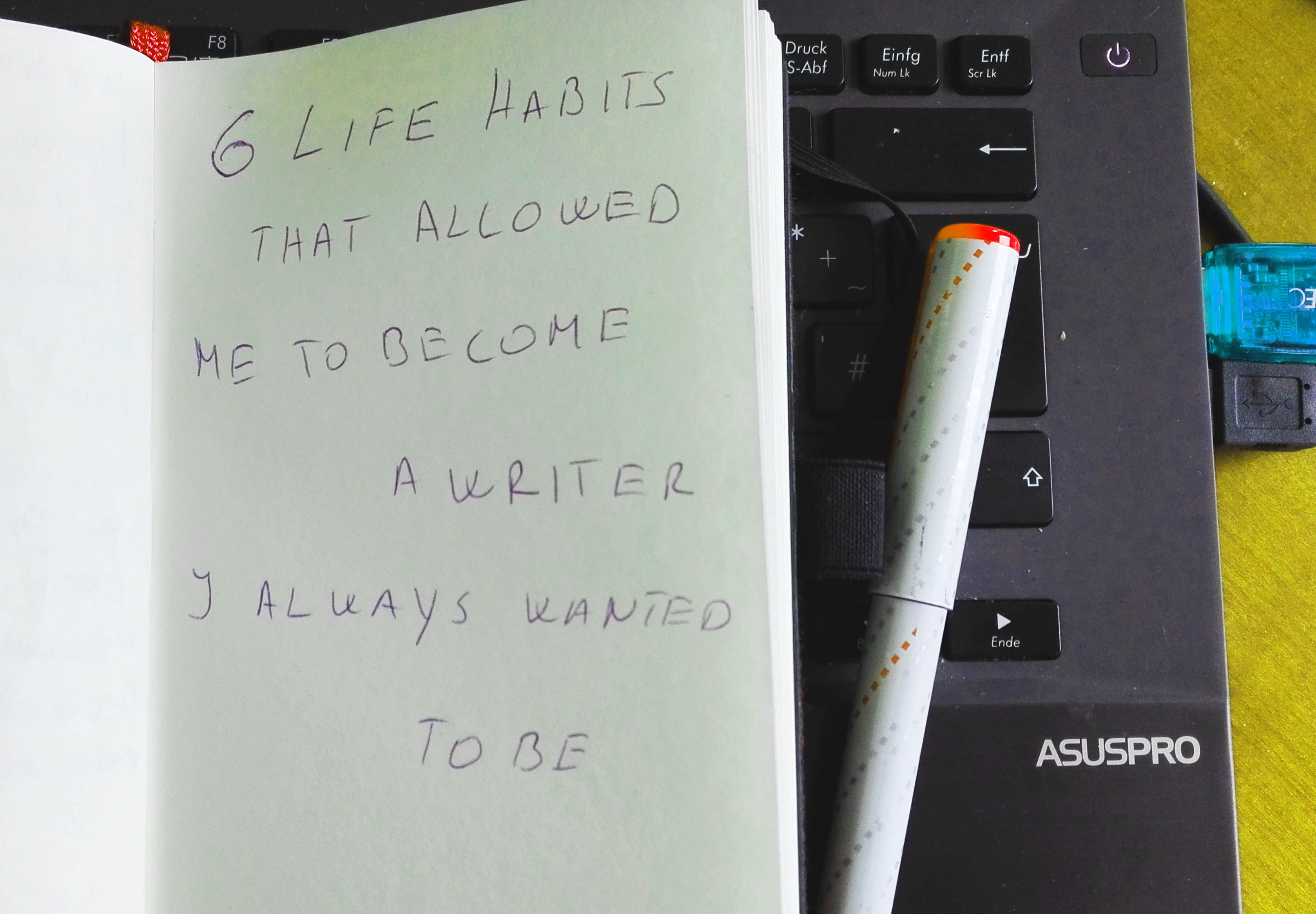
6 life habits that allowed me to become a writer I always wanted to be

lifehabits_writing

I guess, ever since I entered my graduate studies, I was involved in some sort of writing: assignments, seminars – later came academic papers, books and presentations. But all that writing was somehow constrained – I had to obey certain rules, to follow procedures and satisfy requirements I was asked to. As all that can be fun and is a learning path – it lacked freedom. For me, becoming a writer I always wanted to be, means writing what I want, when I want, under my own terms – to share my experiences and have opportunity to contribute to larger community. And blogging is a fabulous way of doing that. Business in Rhyme really allowed me to explore topics I previously didn’t have time for or I didn’t know how to communicate. Finally I think I’m on the right track of becoming a writer I always strove to be deep in side with needed courage and strength to endure.

In the last seven yeas a lot of things changed in my life. Previously, in my home country I worked as University professor, and a business consultant, which led to being ‘stretched’ between my work with students, writing textbooks and doing research for projects.

Coming to the Netherlands brought a lot of challenges, meaning I didn’t know what I really wanted:  to teach, to do research or something else. In the meantime I kept my ongoing projects at the University. Along the way with my move and adjustments in the new country, first health issues appeared in the form of thyroid dysfunction and peripheral neuropathy as a side effect. I knew something has to change: to take life much easily, pay more attention to myself and what I really needed.

So my first change and habit I developed is

1.Always assessing my needs

When you from very active and vibrant person become someone who lacks energy, has a lot of pain and struggle with everyday activities, you start to ask yourself questions like:

How did I get here?

What went wrong?

What is it that I actually need?

In that process I started to remove anything that didn’t serve me anymore: clutter, habits, ‘stale’ relationships… I started to meditate, devote most of time to myself and nurturing my peace. I realized I didn’t want to live a hectic academic life I so ‘adored’ and was proud of. But there is so much more to life than being busy – like learning about your real needs, writing and reading poetry that earlier I didn’t have time for. And all those realizations culminated in this blog. Here I’m finally a writer always wanted to be: with no degrees, grades, awards – it’s just me,  pure me translated in words.

The second one is:

2. Cleaning my diet

The process of simplification I embarked on meant also evaluation of what I was putting in my system and how that has contributed to my conditions. I now eat so simply that my friends usually laugh at me 🙂 But it means I’m pain free, medication free, and it takes less time to prepare my meals. Eating more fruits and leafy greens (in their raw state) brings clarity and patience you need in order for your creativity to flourish. Improving your digestion, sleep, energy levels – all that is vital to exploit your real creative potential.

3.Creating meaningful morning routine

I was always a morning person. I use that time to start my day with setting right attentions, with loose schedule so I can achieve desired outcome without stress. Doing some short exercises, meditation or yoga helps me refocus my thoughts and concentrate on the tasks ahead of me.

4.Reading more poetry

This is a habit I wish so many people acquire. Benefits of reading poetry are numerous, but fulfillment it brings to my inner self is immeasurable. Having that another lens to look at world is enjoyment and amazement I now need every day.

5.Enjoying solitude

I am quite individualistic when it comes to work and I’ve always enjoyed hours in solitude to sort my thoughts and figure things out. The same applies to my writing. Spending time ‘alone with myself’ enables me to have that internal conversation and dive deep in search for both answers and questions I explore further on paper.

6.Change of scenery

Whenever I’m confused or I don’t know how to articulate what I want to say, changing my environment helps a lot – being that going for a walk, short travels or vacations. All that contributes to inflow of fresh ideas, creative opportunities and stirs your imagination. Changing environment brings inevitably change of our perspective on things. Sometimes that is all you need to start/continue writing.

So this is my list of habits that helped me improve and devote more time to writing. I wholeheartedly encourage you to assess your needs and habits – look for space where you can devote more of your energy to writing and become a writer you always dreamed of.


If you liked this post, please share! For getting more inspiration for your creativity, sign up for our free monthly newsletter.