
We are fast approaching the end of December and here, in the Netherlands is one of the warmest winter months ever recorded – so global warming is becoming a “hot topic” in every possible sense! The video bellow points out to a bit different look at climate change. It’s fun and entertaining and I hope you’ll enjoy it is as much as I did 🙂
Category: Business in Rhyme
3 little secrets of Shakespeare’s huge success

William Shakespeare is one of the most famous British poets and writers. He had quite turbulent and dynamic professional life and all those conditions did influence the quality and trajectory of his work. He was probably already working as an actor and writer in London when in 1593 theaters become closed due to severe outbreak of the plague.
We can note that as a turning point in his work when he diverts from the business of scriptwriting to the pursuit of art and patronage. Aware that at the moment he can’t pursue his career in theatrical marketplace, he devotes his writings to the eighteen-year-old Henry Wriothesley, third Earl of Southampton. Venus and Adonis, and later published Lucrece opens the door for him to position himself as a professional author and to reap wider attention of aristocracy.
These facts reveal Shakespeare’s ability to seize the opportunity and employ his talents and skills in such way that he didn’t let his current conditions limit him in his work – so that’s the first secret of his success: we should always seek and explore different ways to express ourselves – which can ultimately take us to something even greater.
Documents also witness that William Shakespear was in partnership in an acting company in London, the Lord Chamberlain’s Men, which after the crowning of King James I, in 1603, changes its name to the King’s Men. Shakespear was aware that ‘two heads are smarter than one’ and joint force can lead to much bigger success. From all accounts, the King’s Men company was very popular and the second secret to Shakespear success was his appreciation and awareness of the power of co-creation: that we shouldn’t try always to do everything on our own but rather strive to make meaningful connections and partnerships – which is beneficial for each side involved.
William Shakespeare’s early plays were written in the traditional style for that time – nevertheless he is also very well known for the innovative moments in his writings. Sometimes he would adapt the traditional style to his own needs, using metaphors and rhetorical phrases that didn’t always naturally follow the story plot. He didn’t fear using new words in front of the audience like ‘captious’, ‘intenible’, ‘multitudinous’ and ‘incarnadine’ which quickly found their place in the English vocabulary. This explains his third little secret: he didn’t stride from experimentation and innovation. In order to survive in the business world we need to be brave, try new things and take risks.
Surely, even nowadays we can learn a lot from Shakespeare’s entrepreneurial approach to doing business – being that art, management or writing.
(Biography resources: Poetry Foundation and biography.com)
I’ve just stolen your best idea!

“How come?” You might ask. “Is it even possible, simultaneously, but independently come to a pretty much same idea?”
It’s a tough question. Yet through history there are many evidences of multiple discoveries, especially in science, where researchers independently came to same conclusions and results. For example, the case of electromagnetism: Joseph Henry, lesser known American scientist and engineer, discovered the electromagnetic phenomenon of self-inductance. He also discovered mutual inductance, independently of Michael Faraday, but Faraday was the first to publish his results. In later years, two scientists did meet and collaborated but in the scientific world Faraday reaped all credits and praise.
Oxygen, chemical element was discovered independently by Carl Wilhelm Scheele, in Uppsala, in 1773 or earlier, and Joseph Priestley in Wiltshire – yet the Priestley took the credits since he managed to publish his work first. Antoine Lavoisier, a French chemist, also discovered oxygen in 1775, was the first to recognize it as an element, and coined its name “oxygen” – which comes from a Greek word – meaning “acid-former”.
But this kind of phenomena is not limited to scientific work only. In her newly published book, Elizabeth Gilbert shares her own experience – when two people come to pretty much same idea – even when it comes to writing a novel. She had an amazing story for a novel and she wanted to write it for years. During that time a lot of personal and family changes happened in her life and it simply kept her from completely devoting to writing. And all the time she struggled. One day she accidentally finds out that a friend of hers and a fellow writer, Ann Patchett, came to pretty much same idea about the novel (the plot and geographical location just resembled too much). Her friend manages to publish the story with noticeable success and at that particular moment she new that somehow it wasn’t ‘her novel’ and that idea simply found other and better conditions to flourish. She further notes:
The worst and most destructive conclusion I could’ve drawn was that Ann Patchett had stolen my idea. That would have been absurd, because Ann had never even heard of my idea…People convince themselves that they have been robbed, when they have not, in fact been robbed. Such thinking comes from scarcity – from a belief that the world is a place of dearth and that there will never be enough of anything to go around.
And I completely agree with this point of view. We do live in the ocean of ideas. Especially in the Internet era we have almost limitless access to acquired knowledge and information resources. And every one of us is a fishermen. Each day, each minute we try to catch new ideas and make them work for us. But like with every fishing process:
- are we patient enough to wait for the right catch?
- is our ‘fishing rod’ strong enough to sustain even the biggest catch?
- and do we have a developed plan what shall we do with our catch – if we are not fast enough it might just jump over the deck back to the sea!
In other words – even coming to a good idea is usually the easy part. But the conditions, our skills, our determination and devotion to a process will ultimately determine if our idea is going to fruition into something valuable or maybe somewhere, in the other part of the world, someone else has invested more energy, time and other resources to implement similar idea. Each idea has to be welcomed, nourished in such conditions that it has all that it needs to grow.
What I truly believe is that the idea cannot be stolen. Actually that exact fear that we might not be the first is keeping us from our ‘best creative self’. What we can do is to try strategically to position ourselves and our idea and prepare in advance for the work ahead: along the way reexamine our objectives – it will help us stay on the course with our creative project and make important decisions.
9 traits successful entrepreneurs and authors have in common

Many times we get involved in a writing and publishing – just by accident; with first no intention of doing it and often as a side effect of our other activities. First book I ever published was a textbook for University needs. It was developed with purpose to help students who were following my courses, and really, except writing it – I didn’t have much else to do: printing, publishing, distribution..everything was taken care of. And I didn’t have to go too deep into the details of the publishing process.
My second book, was more a commercial one, with specific focus on small and micro-enterprises. I got a deal with one very small publisher in Belgrade, but the hardest part of the work was on me: networking, marketing, speaking engagements, ext. In a way as a published non-fiction writer I became an entrepreneur, since my book became a product that needed to be marketed and eventually sold. It was for first time I was doing something like that on my own – of course I made a lot mistakes, but I also learned a few things (mostly about myself and how it is hard to be an entrepreneur in the writing business).
To be a successful published author (both traditionally and self-published) you need some skills that are characteristics of a successful entrepreneurs. Your book is your product, and you want to take advantage of every little thing that can help you spread the word about your latest written gem.
What can an author learn form a successful entrepreneur?
Do your research.
Like with any other product, you need to do your homework and research how much of the similar is out there: being your fiction story or a ‘practical guide’ your are developing. How is it relevant for your market? Do you even know your market? Probably you won’t figure out everything at once, but even before starting to write a book, you need to be well informed.
Be prepared first to test the waters before taking a deep dive.
As much knowledge you might already have, what I mean by this is that there are going to be many trials and errors taking turns in your publishing attempts, since rarely first book becomes a huge success (or a bestseller) -just as entrepreneurs at the beginning have many ideas, but often one or two become feasible and economically viable. It takes time, and the first book, like a first idea, can often be just a step towards something much bigger, with higher impact.
Be persistent and focused.
Like in any business, an author needs to be focused and resilient in his attempts to make his book a high selling product. These abilities enable both the entrepreneur and author to keep going when the outlook is not favorable. The first book from Jack Canfield, a well known self-help guru, was originally rejected by 144 publishers. When he finally did get a publishing contract, a publisher wasn’t very optimistic: he said he’d be lucky to sell 20 000 books. Yet, a book sold in over 400 000 copies and became a bestseller. That’s the power of persistence at work!
Be persuasive.
As an entrepreneur, if you are in search for an investment funds, no matter how the great idea is, investors are far more interested in an already running company with developed business model and well defined products. They need to know they are investing in something worth while. The same comes with your publishing efforts: If you want to publish a traditional way, why would a publisher offer you a contract? You have to give publishers a reason to sign you, and just having a good book idea is not always enough. You need to be persuasive and convincing, develop a persuasive author bio and book presentation. In self-publishing is even harder: you need to convince the whole world in your idea. And just as any entrepreneur you bite the bullet, go out and do it.
Conquer ‘the marketing’ mountain.
Most people, being artists, writers or engineers are simply horrified by the term marketing (I’m the first in the line!) and I do believe that developing a high quality product (book), that is focused on contribution and purpose, that offers people a way to experience something new and different is the best promotional aspect – product speaks for itself. Yet, for people to try (read) your product first have to know it even exists! That’s the toughest job of the entrepreneur and author: to spread the word. Marketing creates demand for the product. Even before the product (book) launch. Later, the quality of the product will do the rest.
Develop your support system.
You can’t do everything on your own. It’s simple as that. You need someone who is already knowledgeable of the business in question, that can guide you and offer assistance. Someone who is trustworthy. Mostly that falls into marketing arena, because as I said it’s the hardest part of any business venture.
Think in terms of revenue streams.
Every business has a business model. So does a writer. Not only does writer can sell book, but there are other forms to translate a book into a different type of product: an online course, webinars, some type of coaching ext. Or delivering the existing product in a different format (audio book) or dividing it into a series of smaller products. This topic will be in detail addressed in one of the future posts. Here you can learn about alternative ways to earn money as a poet.
Building meaningful relationships.
In this post I go in length on the importance of community and how to develop one.
Here community are not only your readers, but any contact in the value chain of getting your book out there: from booksellers who will recommend your book, editors and illustrators that will dress your book and your readers who will impatiently absorb in every word you’ve written and come back asking for more. Once you build your community, it is an ongoing process maintaining it and growing it further, because in the long run the more you invest in your relationships, the more it will pay off later – especially when other products come in.
Be prepared to learn.
Along the way you will be amazed of how much you learn about yourself and how you are improving yourself in general. Every contact you make, sales pitch or presentation your are improving your communication skills, you are meeting new people and you are becoming a member of a whole new world: publishing world. Juts being part of the writing and publishing process is gratifying enough because you are creating, developing, contributing and you are leaving something behind you, as a fruit of your creative efforts.
Restorative power of poetry: remembering your own truth

We can find many connections between poetry and its transformative influence on human lives – especially its healing power. Going back as far as mythology takes us, it is very well known fact that the Greek God Apollo, the son of Zeus and Titan Leto, was the God of music, poetry but also the God of healing, transferring the knowledge of medicine to humans and the God of truth.
In Chinese language, for instance the word poem is comprised of two characters – one meaning word, the other meaning temple. So poem is something that is sacred, the ultimate truth.
In many indigenous cultures, illness is viewed as a state in which an individual is distancing himself from his true nature – both physically and emotionally. If we observe a healing as a process coming back to harmony, to wholeness, poetry can be seen as a healing tool, with a restorative component.
Traditional worship practices in many tribal structures are gatherings, accompanied with dance, rhythm, songs and trance. Sacred narratives and beliefs are deeply based in Nature and are rich with the symbolism of seasons, weather, plants, animals, earth, water, sky and fire. The mode of prayer, a poetic narrative is seen as coming back to Nature, reinforcing the feelings of love and acceptance.
Many poets, emerging in our newer history were trained physicians: John Keats, Oliver Wendell Holmes Sr. and William Carlos Williams who wrote:
It is difficult
to get the news from poems
yet men die miserably every day
for lack
of what is found there.
Today, poetry is accepted as a proven healing method and there are many associations that train and accredit poetry therapists. In particular, the American Poetry Therapy Association has approach that they use a set of poems that their patients discuss and then those poems become a model — even a template — for individuals to write their own poems.
Poet, author and retired university professor David B. Axelrod further notes:
The process helps people get their feelings out and into words. Generally, I don’t worry about the form the writing takes at the outset. I will help someone find the poem within the words they first write. Whatever the methodology, yes, poetry, and story writing, can be a healthy outlet. The results of poetry therapy, if not forced into any specific form, can also trigger marvelously original creations.
No matter which poetry you prefer: spiritual words by Rumi, mythological expression of W. B. Yeats or modern linguistic experimentation of E. E. Cummings, words can pave a path to your own wisdom; help you find that missing puzzle inside that you need to feel whole again and hear your wakeup call for inspired action in the world.
When I am asked
how I began writing poems,
I talk about the indifference of nature.
It was soon after my mother died,
a brilliant June day,
everything blooming.
I sat on a gray stone bench
in a lovingly planted garden,
but the day lilies were as deaf
as the ears of drunken sleepers
and the roses curved inward.
Nothing was black or broken
and not a leaf fell
and the sun blared endless commercials
for summer holidays.
I sat on a gray stone bench
ringed with the ingenue faces
of pink and white impatiens
and placed my grief
in the mouth of language,
the only thing that would grieve with me.
Lisel Mueller
What would you like to read on “Business in Rhyme”?
This blog has been existing almost 6 months and it’s turning into a great community.But of course, no matter how much it gives me space to learn and share my experience – it’s not only about me. So here I created a simple poll that gives you the opportunity to vote which topic of your interest you would like to read more or know about more. You can add your own answers as well. Poetry will stay the central focus of the blog, but I’m interested to see your opinion in which direction this influence of poetry we can further explore.
We are soon approaching New Year and there are some additional novelties that will enrich Business in Rhyme and make it more interactive. I hope you’ll find them attractive as well.
For now, thanks for taking time to vote.
Maja
Are you ready to enter a new relationship? 9 luscious ways to seduce your reader with your writing!

You as a writer and author, while building your audience are becoming a brand. And your writing is your best branding and marketing tool that exists. Words, emotions, message you transcend through your writing is that magnet that attract readers who share your values and point of view. But once they jump into your writing boat, you and your readers began to interact and build certain relationships; things become different, and a little bit complicated. But you as a writer, don’t want the status: It’s complicated. You want the status: Engaged.
Think about it for a second:
When you are in a relationship with someone and you enjoy it:
- it is a person you are looking forward to see;
- it someone you care about and like spending time with;
- it’s probably someone who shares your values as well;
- you interact on the basis of mutual trust.
Even classical marketing is moving from brand oriented marketing to marketing that is oriented towards building relationships.
To truly understand what kind of impact is your writing having on your readers you can ask yourself these questions:
Did my writing enabled me to build meaningful connections with my readers?
If not, what can I do to emulate the positive dynamics of such relationships?
- It has to be a content your reader likes spending time reading;
- It has to offer something of interest that makes your reader want to expect fresh content and read it again;
- That content deals with topics your reader cares about and shares his values.
In order to achieve these objectives you can apply certain tactics through your content:
- Offer your readers opportunity to know about you and don’t be afraid to show your vulnerability. In that way you are engraving that human component in your writing and building foundation for future relationship.
- Offer understanding, compassion; be helpful through your writing.
- Use catchy anecdotes and funny stories that are amusing and captivating.
- Show you’re interested in their perspective on things, even if it doesn’t agree with your own.
- Don’t be afraid to repeat yourself. What I mean is that pretty much the same message you deliver you can say in different ways and modes of expressing. People digest information differently. I remember while I was working with students, the more graphics I used, the students at the class were more ‘tuned in’ with the information, absorbing it in with wide open eyes, not wanting anything to miss. So use visuals as well, audio features, retell what you have to say in different ways.
- Be chatty. Start a conversation by asking questions.
- Always spice up everything with your quirkiness, with something that makes you different and that can enrich your content to the level it is worth remembering and sharing.
- Let your readers know that you are accountable and professional, but throw some ball once in a while. Add some playfulness in your writing because too much of serious approach can be sobering and counter effective.
- But never go across the line of NOT being you. What ever you write, be true to yourself because dishonesty leads to mistrust and deceit and like in any relationship, your reader might just break up with you and your writing (remember: rebound can be painful 😉 ).
Why does this written doe bound through these written woods?
For a drink of written water from a spring
whose surface will xerox her soft muzzle?
Why does she lift her head; does she hear something?
Perched on four slim legs borrowed from the truth,
she pricks up her ears beneath my fingertips.
Silence – this word also rustles across the page
and parts the boughs
that have sprouted from the word ‘woods.’
Lying in wait, set to pounce on the blank page,
are letters up to no good,
clutches of clauses so subordinate
they’ll never let her get away.
Wislawa Szymborska
3 steps to tap into your intuitive inspiration

Creativity is sometimes hard to grasp: an undefined, unfathomable idea that drives action to make something, introduce change or solve problem. I believe there is a lot of correlation between intuition and creativity. Intuition is also that unexplainable part of us, the “knowing” that goes beyond our rational mind, and is rather deeply rooted in the subconsciousness. It’s sort of a guidance system.
For a normal functioning in our societal organized life we need both: instinct and reason to make the best possible decisions for ourselves, our businesses, and our families.
Hence for a creative part of us, empowering our intuitive nature can be a great advantage.
Here, I propose 3 steps to get more acquainted with your intuition and how to use it for improving your creativity skills:
- Spend more time with your best friend (you) and learn more about him/her.
What I mean by this, in reality the only person you can really rely on in this life is you! Our busy and noisy environment can disguise our true needs, values and purpose. By living a life set on autopilot we forget that we are the ones who can fly the plane. Take time to be alone with yourself and listen what your body and mind tells you. Self-exploration can be easily translated through any kind of self-expression. It can be dancing, writing, painting, singing, or any kind of playing or sports..you are tapping into “your spirit” (inspiration). Life and joy speaks through you and leads you directly to your own unexplored creative possibilities.
The very act of expressing yourself connects you with your true creative being. That sacred moments of alignment with who you really are, it’s invigorating, improves your health, decreases stress levels – which is prerequisite of any productive creative action.
- You are part of nature -what it has to tell you?
Now, I have a confession to make: I’m a tree hugger 🙂 It sounds silly (to some of you maybe even stupid) but I like spending time in nature, especially near water and in the woods. I grew up by the Danube river where is a huge park, overpopulated with birches and willows, and this is like I have that engraved need for green surroundings. And every year, in May (now has become a sort of ritual) I like to go to my home country and visit my parents’ weekend cottage, where they have a small orchard and my favorite cherry tree is waiting for me. Still like a kid many years ago, I like to climb it, swing on one of its branches and enjoy the taste of first cherries in the year: sweet, sour, vibrant with life and color. That kind of silence offers me a chance to ‘reset’ my brain, to take a different perspective on life. And also, my geology studies taught me to even more respect nature and value it hold for us. For me is a habitual thing to spend some time during the day in some natural environment. Even here in the Hague, just a stroll through the park during windy and rainy day can do wonders. It helps me in my clear thinking, and offers connection with life on more subtle levels. Spending time in nature can help you sharpen your instincts and keep you grounded. We relate instincts to animal behavior, but in a way we are “more sophisticated animals”. I suggest you try to find some green oase that can help you ‘calibrate’ your senses to better perceive natural sounds, scents, fresh air, and rest your eyes from artificial colors. It awakens an intuitive part of you.
- Make it a meaningful daily practice
To be receptive of creative energy, you have to make it a regular part of your daily life. Along the way, you will discover so much about yourself, how to be more open and aligned. And gaining inspiration you need with time will become easier and more frequent. It’s like an unhoned diamond that with each day you polish, your inner genius shines and sparkle with more intensity.
Become your own most precious gem – an initiator of creative life force within you.
If with light head erect I sing,
Though all the Muses lend their force,
From my poor love of anything,
The verse is weak and shallow as its source.
Making my soul accomplice there
Unto the flame my heart hath lit,
Then will the verse forever wear–
Time cannot bend the line which God hath writ.
But now there comes unsought, unseen,
Some clear divine electuary,
And I, who had but sensual been,
Grow sensible, and as God is, am wary.
It comes in summer’s broadest noon,
By a grey wall or some chance place,
Unseasoning Time, insulting June,
And vexing day with its presuming face.
Such fragrance round my couch it makes,
More rich than are Arabian drugs,
That my soul scents its life and wakes
The body up beneath its perfumed rugs.
Such is the Muse, the heavenly maid,
The star that guides our mortal course,
Which shows where life’s true kernel’s laid,
Its wheat’s fine flour, and its undying force.
Inspiration by Henry David Thoreau (an excerpt)
How to ‘stage’ your environment for a productive creativity
There are two essential elements in every creative process: time and space. Considering time – we all have the same amount of time in one day. And I couldn’t agree more with the saying: “We manage activities, not time.” When it comes to creative process, as described in some of my previous articles, the moment when a creative outburst will happen is sometimes unpredictable: it’s up to us to be responsive and adaptive to it; turn on our antennas and pick up the signals of creativity as it comes along.
This second element, is one that we have even more control over: space. We make or clutter our space – for anything we do. In this article I go in length about the importance of simplicity for a productive usage of time and executing our tasks. Clean, minimalistic space is a prerequisite in my opinion for developing a fertile conditions for a productive creativity. Removing distractions: visual, acoustic and physical clutter is often an overlooked reason why we procrastinate, don’t react upon given creative urge.
You know the situation: you have an interesting idea, but you have some chores to do, you can’t find paper and pencil to write it down, then you think like “OK, I’ll get to it later”…but later never comes and the creative impulse is gone. Decluttered space gives us the chance to be proactive with our ideas, ready like an alert athlete on the start line to “run” our creative race with best results.
There is an intrinsic relationship between what you do and the place you work. Room that is stuffed with unnecessary things, desk with piles of paper, books, gadgets that we don’t need for our momentary work can bring tension and anxiety and in times acts as an obstacle to our creativity.
But that’s not all. Cleaning your desk and purging stuff is the easy part. Emotional baggage that we all carry and our psychological clutter is also something we need to “clean” from time to time.
Zen masters often refer to something that’s called “a beginner’s mind”. A beginner’s mind is open to many possibilities while expert mind recognizes only few. Now, I try to approach this philosophy from two angles. One, is to be open-minded as much as possible and try somehow to avoid previous experiences to block our view of possible creative processes:
“I’ve tried this one, it didn’t work!”
“It’s out of my reach!”
“I don’t have the skills to do this”…
That kind of internal dialogue should be turned off and we need to detach from previous experiences – especially the bad ones. In a way is a “de-conditiong” the psyche, which allows you to reconnect with your true nature. The second angle of tackling this topic is living in the present moment, without dwelling on the past and future which can distract you from your direction in the creative process.
It’s interesting to note that many writers and creatives have faced creativity block throughout their life. During the most of the 1910s, Rilke had suffered from a severe depression. In the early 1920’s he moved to Switzerland, where he meets Werner Reinhart, a merchant that acted as his patron. He purchased Château de Muzot in Veyras, a thirteenth-century manor, (no gas or electricity) to support Rilke to live there rent-free and focus on his work. Rilke closed himself for days, where without any distractions coming from the outer world, he wrote Sonnets to Orpheus and completed the Duino Elegies in “a savage creative storm” as he used to say, during three weeks in February 1922.
Starting form scratch with your creative work, you need open, clear, bright space (both physically and in your mind) to focus on your raw elements and possible arrangement patterns. Your attention needs to be hostage-free from any distraction, noise, stuff intruders and information pollution. This will increase your chances for innovative thinking, your ability to recognize the opportunity that will not hide behind the curtain of unnecessary things. Being adaptive in dealing with surprise is being able to take advantage of serendipitous, potentially valuable ideas.
The Sonnets To Orpheus: Xix by Rainer Maria Rilke
Though the world keeps changing its form
as fast as a cloud, still
what is accomplished falls home
to the Primeval.
Over the change and the passing,
larger and freer,
soars your eternal song,
god with the lyre.
Never has grief been possesed,
never has love been learned,
and what removes us in death
is not revealed.
Only the song through the land
hallows and heals.
You need these 6 skills to improve your strategic thinking
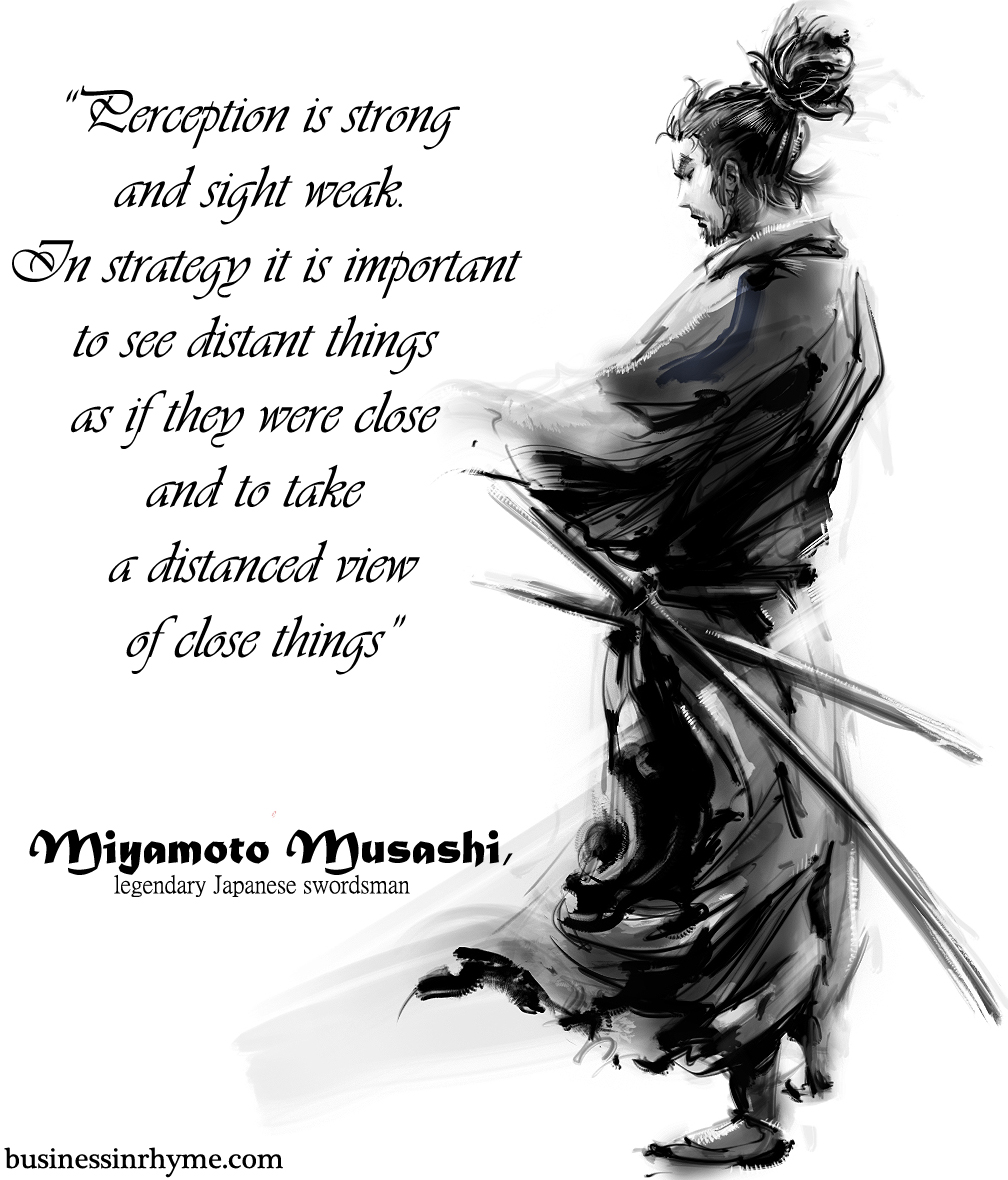
On a few occasions, I have already written about the strategic thinking and the impact it can have in our everyday life. Today I will try in more detail to break down, which are the skills that comprise strategic thinking. In my own experience I focus on implementing certain steps in my analysis of situation before I make any decision or take a stand in dealing with a problem. These steps can help us work on certain skills that in the long run can improve our strategic thinking and the ability of decision making.
- The foremost critical skill I identified to think strategically is to have a clear vision of what you want to achieve. That includes both business and personal goals with sharp focus on what you really want. I would say that this is a prerequisite in almost any life situation because unclear motivation opens door to insecurity, fear of failure and at the end it leads to indecisiveness.
- The second skill I like to call is thinking in reverse. What I mean by that is once you have the end goal in mind it’s easier to design actionable tasks and objectives that will structure your strategic approach. Each objective needs to have a timeline for execution as well defined needed resources. In business situations is not an uncommon thing to have even different scenarios brainstormed, according to the variability of conditions and environment where by tackling the problem from different angles, we are still able to achieve desired goal.
- Being able to achieve desired milestones a strategic thinkers need to have a high level of responsiveness and adaptability. It requires just letting enough room for flexibility into their plans, where they can review progress and revise the course of action once the conditions change. It’s somehow an innate ability to be proactive and allow intuition to be receptive to anticipate change – which is better approach then responding to change once it occurs. They listen, observe, interact with their environment in such manner that they identify subtle signals that raises the awareness and helps in tailoring the best solutions to a given problem.
- They are lifelong learners, oriented towards growth and are never afraid to ask questions. One of the drivers in developing a better strategic thinking is the desire for new experiences and trying something new. For them is never too late to learn a new language, dance or ride a horse! This avid hunger for life enables them to think better on strategic issues.
- They measure 3 times before they cut. What I mean by that is that the creative part they have, they don’t shut down because some solution is ‘too risky’, ‘too costly’, but rather they have a specific notion how to balance out the surges of creativity with a sense of what is achievable and what will bring the greatest benefit in the long run. It’s a sort of cautious optimism entwined with honest desire to make the best of what’s given to them.
- They make room for ‘me’ time. The best and greatest strategic thinkers take time out for themselves: To relax, to release any tension in their body, to slow down their fast pace thoughts. It allows them to find inner stability and prepare for future tasks.
We can work on improving our skills by challenging our conventional thinking patterns, brainstorm different scenarios for a given a problem and recognizing weaknesses and strengths of any situation or business condition.
Whose woods these are I think I know.
His house is in the village, though;
He will not see me stopping here
To watch his woods fill up with snow.My little horse must think it queer
To stop without a farmhouse near
Between the woods and frozen lake
The darkest evening of the year.He gives his harness bells a shake
To ask if there is some mistake.
The only other sound’s the sweep
Of easy wind and downy flake.The woods are lovely, dark, and deep,
But I have promises to keep,
And miles to go before I sleep,
And miles to go before I sleep.
This poem by Robert Frost is an excellent example on how we make our choices in life. What variables are the most important in our question to which direction to turn? This poem stimulates constant reexamination of situation, “measuring before cutting” and instinctively is actually ‘training’ us to think more strategically.
While reading poetry you are challenging your thinking on more subtle levels. That kind of stimulation empowers both ability of visualization and gaining clarity which is vital in strategic thinking.
 Business in Rhyme