Will poetry make you any smarter or wiser?

dead-poets-society

Few nights ago, almost after 20 years I watched “Dead poets society” movie again. Having poetry as  my regular friend and companion sheds completely new light not only on the understanding of the movie itself, but on the distance I made from a person I used to be to a person I believe I am today.  When I first watched movie, it was more interesting from a teenage point of view – I was in high school and it was amusing to relate to main characters’ early adolescent ups and downs. I certainly don’t attempt to analyze the movie here, but two main messages stuck to my mind after the second watch: how poetry so beautifully offers that different perspective, seeing world from another angle, through different color of lenses, walk in the shoes that can be too tight and make blisters or two big that make us feel clumsy and insecure.

But that is the only truth that exists – there is not only one truth and one reality. You can taste life on many levels and interpret events in endless ways. Poetry acts here as kind of a shortcut to that realization. And once you become aware (which leads me to the second message) is that it somehow gives you a wind in a back, a reassurance that it is OK not to conform; it is OK step out of typical societal expectations.

Will poetry make you any smarter or wiser? It’s hard to say 🙂 But it will help you realize that there is something else, different. It will help you to seize the possibilities and easier to recognize your own capabilities. It’s like sampling life experiences and choosing what you want for yourself.

Each poem is a story, a snapshot of life in particular place and moment in time. You are that third variable, invaluable ingredient that transcends unique experience – both as a writer and reader. Being present with the poem is allowing it to really consume your whole being and from there magic happens – it does have the power to give you strength and courage to enter that different reality. All you need is to let yourself surrender.

I want to once more emphasize that this is not my analyzes and critique on poetic, artistic or emotional value of the movie – merely my thoughts on poetry inspired by it.

For the end of this post I would like to share with you poem by Wisława Szymborska where she so eloquently expresses the uncertainty of our perceived reality and human nature in general. As we are connected but individual, each experience is unique, but universal. Each life is special and so ordinary in the same time.

Could Have

It could have happened.
It had to happen.
It happened earlier. Later.
Nearer. Farther off.
It happened, but not to you.

You were saved because you were the first.
You were saved because you were the last.
Alone. With others.
On the right. The left.
Because it was raining. Because of the shade.
Because the day was sunny.

You were in luck—there was a forest.
You were in luck—there were no trees.
You were in luck—a rake, a hook, a beam, a brake,
a jamb, a turn, a quarter inch, an instant.
You were in luck—just then a straw went floating by.

As a result, because, although, despite.
What would have happened if a hand, a foot,
within an inch, a hairsbreadth from
an unfortunate coincidence.

So you’re here? Still dizzy from another dodge, close shave, reprieve?
One hole in the net and you slipped through?
I couldn’t be more shocked or speechless.
Listen,
how your heart pounds inside me.

Wisława Szymborska


If you liked this post, please share. And, if you are interested in getting more inspiration for your creativity, sign up for our free monthly newsletter.

6 savvy ways to fulfill your writing goals

 writing_goals

As we’ve already entered the nanowrimo writing month, many of you’ve probably committed to this writing goal which is not easy to achieve. There are many strategies you can employ in order to do that. I particularly in this article shared some of the tips how to stay on the top of your creativity during the day and how to find time for writing in our hectic lives. Today I will share some additional tricks that occasionally have helped me to sustain with my writing and get things done.

  1. Write down your goal

Instead of just thinking about your goal, write it down. Write in bold and strong letters what is it you want to achieve. Write it on a card that you can place in your wallet and see it frequently or make a screensaver for your phone and computer where would popup randomly as a reminder. Once you write your goal down and read it several times a day, you are stating and giving life to what you want to do. It becomes an ingrained part of your thinking and subconsciously you are already pushing things towards fulfilling your set intention.

  1. Set achievable benchmarks

If your goal is writing 50 000 words in 30 days, it does look and sound scary. But we must keep in  mind that most of our goals are comprised of smaller doable steps. We don’t have to know everything at the beginning of our writing journey. For us is important to break our desired milestone in daily benchmarks and work from there. In this case, you might set your writing goals to achieving writing 1500 and 1700 words a day. You can continue to cut it in even smaller chunks, like writing 500 words in the morning, afternoon and evening. Some days you will write more or less, but this benchmarks are a great way for you to follow your progress.

  1. Meditate towards writing

Besides having enough time, finding concentration and focus are additional factors that contribute to achieving our writing goals. We need to free our minds of cluttering thoughts and useless information in order to stimulate creativity. One good habit to practice is to set a side 5 to 10 minutes for peaceful meditation that will help you get in the writing mode. Sit comfortably, with your both feet placed firmly on the ground with spine, neck and head aligned and simply begin to breathe in rhythmical motions. Think of what you would like to write, what is that part of the story that simply needs to be to told, that has to get out of you.

In the beginning you might struggle and feel uncomfortable, but if you trust the process and continue to practice, you will find ideas coming easily to you, your writing will become more consistent and less stressful.

  1. Use writing prompts to stir up your imagination

Use writing prompts into your advantage to stir your thinking and help you get started with writing. It doesn’t matter if they have nothing to do with your writing theme – use them to break the initial barriers for writing and spark ideas for your story or other written assignment.

  1. Use available non-writing tools

This has become quite handy in my case. Many times, during walk, shopping or commute I get an idea which I can easily forget if I’m in distracting environment (like street or train). I don’t have always an opportunity to write them down, so than I try to use voice recorder (that I believe most of smart phones have today) to do the work for me. It can be just a phrase, or few words that will be my reminder for the initial idea, poem or story plot.

  1. Celebrate your achieved goals.

Think of interesting  and fun ways you will reward yourself after achieving desired goals. As you walk each step on your writing journey, remember your vision and how it will make you feel once you hit the biggest benchmark – like writing 50 000 words in 30 days. Sustain that emotion during the writing process and use it as motivational fuel each time you feel discouraged or lack inspiration. You are your best support and biggest writing fan. You deserve it.


If you liked this post and you are interested in getting more inspiration for your creativity, sign up for our free monthly newsletter.

Hidden poetry gem: using power of language for improving persuasion skills

rumi_poetry

Have you ever wondered how some people have like magical power to persuade others in their point of view, that they somehow win every argument?

It’s not they always have all the knowledge or the wittiest and most cunning answer. They say the right words in right moment. Not too much, not too less, but right words. It’s like they are carrying around some sort of charisma that is attractive and appealing to people, which for sure is a first step of getting someone on your side – they first have to notice you and what it is that you have to say.

I also think that we often underestimate and neglect the power of language. Spoken language, written language, body language – they all tell a specific story and influence what kind of impact in any given situation we will make. Language is what connects us but also the tool we can use to emphasize our differences, values and reasons – using the tone and voice, language can also dictate ‘the tempo and intensity’ of conversation.

To improve our persuasive skills our language needs to be memorable, distinct, inspiring and supportive. I’ve already written how poetry attributes to leadership, but there are additional benefits that I want to draw your attention to.

I do believe that in some form of another we are all born poets – as we all use, make and create language. The key point here is how we use our language and in what purposes we are putting it in. And this is where poetry brings so much beauty and creativity.

Spending time reading and writing poetry is like training, having an exercise of your brain mussels where you sharpen your senses and you learn to pay closer attention; you slow down fast-paced thoughts and you are reshaping your mind for finding greater meanings as your ability for deep listening grows. You become more aware of weaknesses and virtues of human kind and with that understating, your language reflects that. Great influencers are known for their ability to connect with people on many different levels and poetry acts as a bridge across those barriers – it becomes easier for you to accentuate your message and value.

But most importantly you see yourself and value yourself differently. You start to recognize the areas of language you can express with greater clarity:

  • you find the meaning in having more alternatives;
  • you find ways to communicate your cause more effectively, creatively like using metaphors and similes to explain your point view.

In any given conversation poetry can act as an ice-breaker to lessen the tension and approach the subject with more ease:

  • Using poetic language can instill courage in conversation which is a catalyst for implementing change.
  • In brainstorming sessions can open the doors to hidden creativity, which is essential to innovation.
  • Poetry and art, in general, appeal to senses – which makes us more perceptive to risk taking, but also to strategically value situation.

Poetry, like language is ever-evolving and different, as each time we can perceive it differently. So are we, ever-adapting, by having trust in the change and confidence in the present moment able to reconcile any contrast within ourselves and our authenticity  speakes for us – everyone around is already convinced.

Sometimes
if you move carefully
through the forest

breathing
like the ones
in the old stories

who could cross
a shimmering bed of dry leaves
without a sound,

you come
to a place
whose only task

is to trouble you
with tiny
but frightening requests

conceived out of nowhere
but in this place
beginning to lead everywhere.

Requests to stop what
you are doing right now,
and

to stop what you
are becoming
while you do it,

questions
that can make
or unmake
a life,

questions
that have patiently
waited for you,

questions
that have no right
to go away.

David Whyte


If you liked this post, please share. And, if you are interested in getting more inspiration for your creativity, sign up for our free monthly newsletter.

6 tips to make the most of your poetry practice

6-tips-to-make-the-most-of-poetry

Do you remember your first time writing a poem? That feeling of possibility of written word acting like a bridge between your ordinary world and other limitless realities?…We can revive those moments each time we commit to writing or reading poetry, to have that freshness we are looking for in sometimes routine and monotones practice.

Here I will share few tips that I’ve found to work for me, each time I start to lose that feeling of connectedness and intimate conversation I need in order to make ‘poetry work for me’.

While writing:

  1. Always bring intention forward

This is one of the ways to shut down that judgmental part of mind and simply surrender yourself to words. Be open to whatever comes up – no matter how silly or unfocused it might sound. Instead of trying to control your thoughts, bring your intention to poem – let your poem take over and simply capture that true moment of your life. That kind of release can give you an emotional upheaval and leave you feel lighter and regenerated.

  1. Engage all your senses

You have your senses for a reason and use them to adequately express what ever you are experiencing in that moment. Your eyes, your mouth, your ears, your nose and your skin can tell the story – let them help you in your writing practice. The more details you put in describing that moment, the more authenticity your poem gets and portraits better experience to your reader. Poem takes a life on its own and reader  becomes the part of your world. In this way you are practicing also your objectivity, focus and ability to stay mindful.

  1. Entwine emotion in your writing

Often we fall into trap of writing about emotion, describing feelings and sensations instead of letting out words to translate our immersion into emotion. To have that internal satisfaction with your writing you need to write while reliving that particular feeling. It will make presented experience believable for your reader. Writing good poem is not always about using better technique, fancy words and adjectives. Sometimes is quite the opposite. Turning off that analytical side of mind and simply  diving deep into your subconsciousness is a creation of poem where you’ve just found that raw, unpolished diamond – valuable but one that needs right words to shine through.

  1. Proactively read poetry

It is well known fact that writers must read in order to  grow. But you can take some simple steps to make more of your reading time. One of the things I like to do is to rewrite in separate notebook poems I particularly like. Instead of having them in separate poetry collections or computer files in this way I can refer to them in one place whenever I like. Writing down poems by hand has another benefit for me as it allows me to more easily follow the rhythm of poem and simply feel it through my hand. It helps me also to remember phrases and words I would like to incorporate in my writing. As it is suggested in this article you can make lists of words you like, your own ‘poetry stacks’ that you can refer to as a resource for inspiration and writing prompts. I’ve been entertaining this idea for some time now and I think is worth a try.

5. Support poetry

in different creative ways by listening to it, reciting it, buying it and most importantly by sharing your own work. Submit and publish whenever opportunity presents itself – it’s a sure way towards impact and contribution we want to make. And as plus you improve your writing skills!

6.Find other interesting ways to incorporate more poetry in your life

That can be through studying, journaling, mindfulness practice…you can use it for brainstorming creative solutions to problems or simply to create an intimate and sincere gift for your loved one. Possibilities are endless, but the more you engage in this practice the more world around you will start to match your new found perspectives – don’t miss that beauty.


If you liked this post, please share. And, if you are interested in getting more inspiration for your creativity, sign up for our free monthly newsletter.
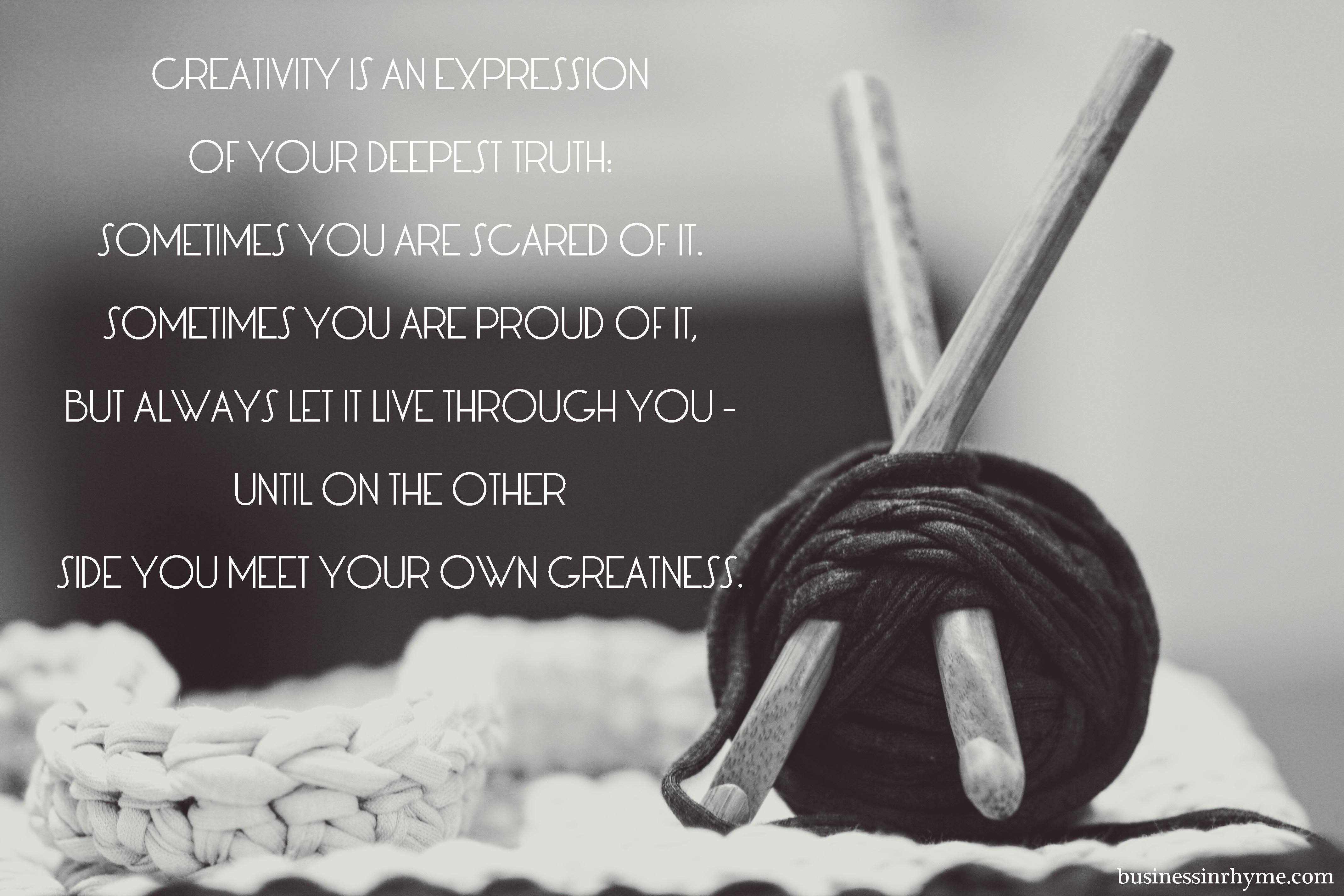
Poetic inspiration: Creative expression

creativity_expression

This is a quick, weekend reminder that you are creative person and writing is one of the simplest, yet powerful ways to express it.

It’s an inseparable part of you and never reject it – you might be surprised where it takes you.


If you liked this post, please share. And, if you are interested in getting more inspiration for your creativity, sign up for our free monthly newsletter.
A comprehensive guide to developing a lasting writing practice

writing_guide_practice

We all in the beginning have a motivation to start a new habit: we are pumped up, ready to take on that challenge we set for us and stick to it – being that healthier eating, exercise regime or writing habit. And then, after couple of days/weeks our motivation starts to wane, something comes up that distracts us or it takes more of our investment than we anticipated and what happens next? We are back, indulging in social media and TV instead of working on ourselves.

Having a lasting writing habit is like any other habit. Once it becomes ingrained in your subconsciousness there are lesser chances for you to skip it.

Here are my favorite tips on  making writing a regular practice:

  1. First, make room for your writing.

It means that you have to mercilessly evaluate and edit your schedule and maybe lifestyle in order to see where is your time and probably energy leaking. Writing requires you to focus, to devote your whole being to it, to find that sacred creative moments. If you start writing while you are preoccupied with other things, probably it won’t work – and you’ll end up being even more stressed because you are unsatisfied with your writing.

  1. Always have clear mind: why do you write?

What’s the driving force behind that urge to sit and record your thoughts? Whenever I feel doubt I ask myself this question and it helps me recenter my initial intention. Once you have that clear goal you will have that important thought to cling on, each time you feel discouraged. I even think this the most important part of developing a lasting writing habit: it’s almost like brushing your teeth: you are doing it because you want your teeth to be healthy and it makes you more confident. Treat writing the same way – find your best reasons and you can even place them as a reminder on spots where you will frequently read them. It will always give you the boost you need.

  1. Don’t think about the product, it will come as a natural result of your enjoyment of the process.

What I mean by this, many times in writing and other forms of creative actions we might be driven by fear (of reaching a deadline, being rejected, ext.). But look at it from this angle: you are going to do it anyway, so why just simply don’t let yourself surrender to creativity and stop worrying? Some of you might not agree with me on this one, but let me share with you part of my writing and research journey. When I was writing my master’s degree thesis, at that moment I was employed at the faculty as a postgraduate researcher. At some point my one-year contract expired, it couldn’t be prolonged (the funds were cut off due to political situation in the country) and I was on my own – searching for another job. New opportunity presented itself very soon, at the Institute where I was performing research, but the colleague I was supposed to replace was to be retired very soon -which meant I needed to start working very soon. As it was a government institution, it required for me to already have a master’s degree. So in the next few months I was working 20 hours a day to get that research done, written, defended in order to secure that position for me. I did succeed, but I think I could’ve enjoyed my writing more, instead of worrying all the time. And who knows, my thesis would’ve come even better as a result of that. I remember, it was exactly 15 years ago, I pushed myself so hard to a point I got ill. And it didn’t have to be that way. My most honest advice I can give you is to celebrate and enjoy each page you write, that’s what counts – achievements and awards come and go. Experience is what lasts.

  1. Connect writing action to some other trigger – make a ritual.

I like to write while I drink my smoothie in the morning – having that big mug is like a sure sign -writing is due right after – if I skip that, chances I will skip writing all together. Many famous writers are known for having that action, telling him it’s time to write. For instance, Stephen King each time had breakfast or drank tea used this as reminder to sit and write.

  1. Make yourself accountable – find a writing buddy.

This can be fun and interesting way for you to enjoy writing more. You can join some online community, meetups face to face or make a pact with an old friend and develop some rules on how, what, how much you will write and then share and discuss your writings. Many writing schools, like Writer’s studio that I attended use this technique where each week there is a different writing topic and later we would discuss our writings and get feedback. It’s a proven method that seems to work.

I hope this will help you to develop your own writing habit, one that is enjoyable, fun and productive. Do you have any tips? Please share in the comments below.


If you liked this post, please share. And, if you are interested in getting more inspiration for your creativity, sign up for our free monthly newsletter.


Spirituality, poetry and inner growth – how they are connected?

gita_poetry

Did you know that we can trace origins of word ‘spiritual’ back to the ancient times and it comes from latin word spirare which means to breath and in larger sense it can relate to life itself and living energy force? Taking from these meanings, than anything connected to the pure act of breathing has a spiritual connection, and so does poetry.

A self-actualized spirituality in the most broaden sense might be an acquired integrity, a Self that is truly aware of here and now, and takes actions with compassion and kindness.

For me personally, spirituality also means accepting life and the change that comes with it, learning to navigate with the flow and with the given resources and knowledge make the best of any given moment. It also means dropping the guards of ego-driven principles and having trust in uncertainty, unpredictability of life. Instead of I there is also we and they; there is no scarcity – only abundance for each uniqueness we represent; experience and appreciation for any moment and emotion instead of burdening myself with material stuff.

And finally it is also about connectedness, being true and open to yourself and learning to trust your own honesty.

All these integral parts can be experienced through poetry and let it be our vehicle for learning and growth. Starting from that vantage point of how life should be we work through all that is happening to us – we observe and feel, until we get to an understanding that our perceived reality is as it is.

This whole process of spiritual awakening, poetess Jane Hirshfield so finely portrayed in this essay:

The moon in Japanese poetry is always the moon; often it is also the image of Buddhist awakening.

Although the wind
blows terribly here,
the moonlight also leaks
between the roof planks
of this ruined house.

Izumi Shikibu (Japan, 974?-1034?) [translated by Jane Hirshfield with Mariko Aratani]
This poem reminds that if a house is walled so tightly that it lets in no wind or rain, if a life is walled so tightly that it lets in no pain, grief, anger, or longing, it will also be closed to the entrance of what is most wanted.

Ant that openness to life is our first gate and allowing we give ourselves to enter the spiritual growth.

On a branch
floating downriver
a cricket, singing.

Issa (Japan, 1763-1827) [translated by Jane Hirshfield]
Issa’s singing cricket is Cavafy’s “great Yes” in action. The haiku offers a portrait of the circumstances of all our lives. Carried by capricious currents, certain to die, we nonetheless fully live.

Nature always knows the best way to express itself and in the most difficult circumstances finds a tiny sun beam and a drop of water to carry on life. We all have that knowing in ourselves, but in the process of making a living we forgot to live.

And what I most like about poetry is it reminds me, teaches me and supports me in this process of learning to live again.


If you liked this post, please share! And if you are interested in getting more inspiration for your creativity, sign up for our free monthly newsletter.

Making sense of life: putting your memoir in poetic discourse (writing prompt)

Dent Blanche im Nebel, 4000er im Kanton Wallis, Schweiz. Alps of Switzerland

Following this post published few weeks ago, it occurred to me: there is always something we haven’t told yet. A story, an event or memory that we shy from for some reason, that we avoid thinking about, talking about. And I don’t mean talking to others, but to ourselves. That internal conversation (or lack of it), has a subtle impact on our day to day life governing our decisions and choices in ways we are not even aware of. Our subconsciousness is like a vast ocean where we can drown deep with our feelings or we can strive for the surface to enjoy the sun and blue sky.

Each emotion and memory from the past has hidden opportunity for growth and healing. And these are the main reasons why people engage in writing memoirs. It’s a path of self-exploration, where time, the main ingredient offers different perspectives and lays a platform for us to embrace and accept our past. Not simply to remember but to celebrate each moment in life as these moments are the foundation for our future self. It can be painful and cathartic, but most importantly – freeing! In this interesting interview, Samantha M. White the author of  Someone to Talk To: Finding Peace, Purpose, and Joy After Tragedy and Loss explains that in your memoir writing  – the results can go beyond your initial intention.

Writing my memoir transformed my life. Not only my day-to-day present, and my future, but even the past about which I had written!

Transformation was not my goal. I wrote it because I had a story pent up inside me, pressing to be told – to share what had happened to me, and how I had found my way out of pain. I wanted to assure readers of the universality of suffering, and the reality of healing and finding new joy. I felt driven, and afraid that if I died before publishing the book, an important message wouldn’t be heard”.

So today I want to propose a bit different writing exercise. Think of any event or situation in your life that you would like to understand better, to explore, analyze or that just needs to be ‘poured’ on your paper and write a poem about it. Tell your story using poetry. And you might ask, why just don”t write about it? I think that poetry goes beyond prose writing and it allows you more freedom to express your feelings in different ways. Often we can’t find the right plain, straightforward words to say something but it needs metaphoric guidance that offers us strengths to deeply dive into the ocean of our subconsciousness. Take your time and write your way through it.

Narrative form of poetry and memoir complements each other to open the door of that internal conversation – you might be surprised what ‘s on the other side.

I personally often use this technique to simply sort my feelings and make a sense of life. These confessional poems are often highly emotionally charged and there’s the beauty: being able to feel is for me a proof that I’m alive. Accept every emotion that comes your way, because that’s human – to be vulnerable and celebrate your flaws, mistakes and successes as you navigate through life – the best you can.


If you liked this post, please share! And if you are interested in getting more inspiration for your creativity, sign up for our free monthly newsletter.
6 life habits that allowed me to become a writer I always wanted to be

lifehabits_writing

I guess, ever since I entered my graduate studies, I was involved in some sort of writing: assignments, seminars – later came academic papers, books and presentations. But all that writing was somehow constrained – I had to obey certain rules, to follow procedures and satisfy requirements I was asked to. As all that can be fun and is a learning path – it lacked freedom. For me, becoming a writer I always wanted to be, means writing what I want, when I want, under my own terms – to share my experiences and have opportunity to contribute to larger community. And blogging is a fabulous way of doing that. Business in Rhyme really allowed me to explore topics I previously didn’t have time for or I didn’t know how to communicate. Finally I think I’m on the right track of becoming a writer I always strove to be deep in side with needed courage and strength to endure.

In the last seven yeas a lot of things changed in my life. Previously, in my home country I worked as University professor, and a business consultant, which led to being ‘stretched’ between my work with students, writing textbooks and doing research for projects.

Coming to the Netherlands brought a lot of challenges, meaning I didn’t know what I really wanted:  to teach, to do research or something else. In the meantime I kept my ongoing projects at the University. Along the way with my move and adjustments in the new country, first health issues appeared in the form of thyroid dysfunction and peripheral neuropathy as a side effect. I knew something has to change: to take life much easily, pay more attention to myself and what I really needed.

So my first change and habit I developed is

1.Always assessing my needs

When you from very active and vibrant person become someone who lacks energy, has a lot of pain and struggle with everyday activities, you start to ask yourself questions like:

How did I get here?

What went wrong?

What is it that I actually need?

In that process I started to remove anything that didn’t serve me anymore: clutter, habits, ‘stale’ relationships… I started to meditate, devote most of time to myself and nurturing my peace. I realized I didn’t want to live a hectic academic life I so ‘adored’ and was proud of. But there is so much more to life than being busy – like learning about your real needs, writing and reading poetry that earlier I didn’t have time for. And all those realizations culminated in this blog. Here I’m finally a writer always wanted to be: with no degrees, grades, awards – it’s just me,  pure me translated in words.

The second one is:

2. Cleaning my diet

The process of simplification I embarked on meant also evaluation of what I was putting in my system and how that has contributed to my conditions. I now eat so simply that my friends usually laugh at me 🙂 But it means I’m pain free, medication free, and it takes less time to prepare my meals. Eating more fruits and leafy greens (in their raw state) brings clarity and patience you need in order for your creativity to flourish. Improving your digestion, sleep, energy levels – all that is vital to exploit your real creative potential.

3.Creating meaningful morning routine

I was always a morning person. I use that time to start my day with setting right attentions, with loose schedule so I can achieve desired outcome without stress. Doing some short exercises, meditation or yoga helps me refocus my thoughts and concentrate on the tasks ahead of me.

4.Reading more poetry

This is a habit I wish so many people acquire. Benefits of reading poetry are numerous, but fulfillment it brings to my inner self is immeasurable. Having that another lens to look at world is enjoyment and amazement I now need every day.

5.Enjoying solitude

I am quite individualistic when it comes to work and I’ve always enjoyed hours in solitude to sort my thoughts and figure things out. The same applies to my writing. Spending time ‘alone with myself’ enables me to have that internal conversation and dive deep in search for both answers and questions I explore further on paper.

6.Change of scenery

Whenever I’m confused or I don’t know how to articulate what I want to say, changing my environment helps a lot – being that going for a walk, short travels or vacations. All that contributes to inflow of fresh ideas, creative opportunities and stirs your imagination. Changing environment brings inevitably change of our perspective on things. Sometimes that is all you need to start/continue writing.

So this is my list of habits that helped me improve and devote more time to writing. I wholeheartedly encourage you to assess your needs and habits – look for space where you can devote more of your energy to writing and become a writer you always dreamed of.


If you liked this post, please share! For getting more inspiration for your creativity, sign up for our free monthly newsletter.

4 simple ways to make your poetry blog stand out

4 simple ways to make your poetry blog stand out

We all know that writing and reading poetry is a unique experience. Words are our tool we use to portrait emotional journey where we want to take our reader. But do we always succeed in that? I pose this question not that much from the writing point of view, but more how do we select and arrange environment where we display our poems. In our blogging space we need to offer an opportunity for that experience to become alive and ‘consume’ our reader.

There are certain ways you can improve your blog to represent who you are and let your writing really stand out.

Chose a theme that allows your words to be the focus.

We do live in the digital era where is emphasis on photographic beauty and memory. But here what matters are your words. Simple, elegant themes that reinforce the power of your words and enable your poems to pop-up are more pleasant to your reader. It should support your writing voice and emotion it transcends.

I always prefer minimalist aesthetics as it sheds all the unimportant stuff away. So if you write a poem, or a quote, story and use just one or two images, that is much more appealing to your reader than scrolling through the crowded screen of unnecessary information. Playing around with different typography can help you accentuate what you think is crucial for reader to notice.

Do you really need all that widgets ‘lingering’ around?

In past few months I’ve experimented with sveral themes and widgets and decided to keep those that I think are beneficial to the reader. The same comes with the menu and header information. I’m usually interested to browse what general topics blog has to offer, and maybe archive. A shortcut for people to follow blog by email, RSS and social media buttons is also good to keep.

I do follow and read a lot of blogs and often I come across those that have duplicate widgets which is quite unappealing (you don’t need to display the same information in sidebar and footer, right?). It doesn’t matter do you blog just for hobby, to fill up your spare time or you are a professional writer: neat looking blog is what invites people in to read your writing. With a tiny effort you can really make your blog clean and easy approachable for reader.

Yes, about page is important.

So you do have a blog. And you share your work. Guess what, people will often like to know more about you –  there is nothing inherently wrong with that. You control what information you put but I think having that about page and few sentences where you give bits of yourself can be beneficial. Even better, as a poet why don’t write interesting poem about your blog/your writing?

I, for example in the beginning had a short version of my CV, which is not that much related to what I’m doing here (except from the creativity part) and I realized it was too heavy. Than I completely rewrote it. Now my about page in more humorous and fun way accentuates just few really important facts about me and my blogging.

For more professional author biography here I share best tips on how to write it.

Offer different formats of your work.

As a writer/poet this is an area you can further explore. Many people prefer audio formats. You can record reading of your poems and use sound cloud services to share your readings. It might be your work or poems from other popular poets. It’s good to know that we all differently digest information and we need to use technology to our advantage – in a way it will support our work, not hinder it.

In a nutshell, your content is your branding. Let it shine. We are here for love of writing and reading, and that’s where all the magic happens. With these given tips, “shower” your faithful readers with regular writing and you will see how your community will grow.


If you liked this post and you are interested in getting more inspiration for your creativity, sign up for our free monthly newsletter.