
small, bluish sinews branch into
letter M.
One side of the trunk is darker
due to Sun exposure, with amorph
golden-yellow spots.
As it breathes blood, exhales warmth
to feed small hill above its flesh.
It’s like a map, containing my life line
trimmed at several places.
It used to go all the way around the hill.
Bark is depleted, almost erased.
I cannot count to see how many rings of heart
have left me?
Humming bird’s song
echoes my soul
in the upcoming dawn.
Maja S. Todorovic
Tag: creative writing
Expressing our ideas (creativity exercise)

On a few occasions I wrote here on the blog, about the importance of using our own voice and our own words to deliver authenticity in writing. Well, quite the same comes when we want to express, define or articulate our ideas. In my last post I emphasized that the best originality and authenticity comes from our own interpretation of an idea and that can determine its creative potential and inventiveness.
So, today I’m proposing a little bit different approach: instead of working on your own ideas, let’s take one idea you heard about or read about in the last 72 hours, but one that you really liked and admired.
Now, try to express that idea in your own words, but use something that Ken Macrorie defined as a ‘kitchen language’: the language you would use while you are comfy on a Sunday morning, being lazy in your pajamas, when you don’t think about anything – you are just you, being relaxed at home with your coffee, simple and uncensored. You don’t have to impress anyone, or watch your words. It’s your language but not something you would usually use to make your point about something.
Once you have set your ‘comfy’ mood, using your ‘kitchen language’ write a poem about that idea you heard. It’s interesting what might come up, but that’s the point – for you to get comfortable in your own skin and your language while expressing and discussing something you really care about.
Of course being comfy and accustomed to ordinary can have its own hinders. Our everyday life can make our thoughts and words too ordinary, repetitive, and actually can reduce our richness of language and vocabulary. For the second exercise I suggest you do something quite the opposite: imagine you are 5. And you might still don’t know how to pronounce all the words – invent new ones and express that beautiful idea that captured your attention. Wake up that sleepy child inside of you and tell your story about that idea like a 5 year old would – in a form of a cute poem. We know at times children make memorable, funny statements. But as we all progress to school sometimes our language become emptier and lifeless. Well, this exercise is an attempt to fight this and experience that unforgettable writing, with all the giggles it might carry.
These exercises can dramatically shift our thinking patterns, but what will emerge with time is your unique view and interpretation of the world: one that you want to fully accept, embrace and enjoy.
Give it a try and share your thoughts in the comments below.
Be glad your nose is on your face,
not pasted on some other place,
for if it were where it is not,
you might dislike your nose a lot.
Imagine if your precious nose
were sandwiched in between your toes,
that clearly would not be a treat,
for you’d be forced to smell your feet.
Your nose would be a source of dread
were it attached atop your head,
it soon would drive you to despair,
forever tickled by your hair.
Within your ear, your nose would be
an absolute catastrophe,
for when you were obliged to sneeze,
your brain would rattle from the breeze.
Your nose, instead, through thick and thin,
remains between your eyes and chin,
not pasted on some other place–
be glad your nose is on your face!
Jack Prelutsky
Original vs. authentic writing: what are the differences and similarities?
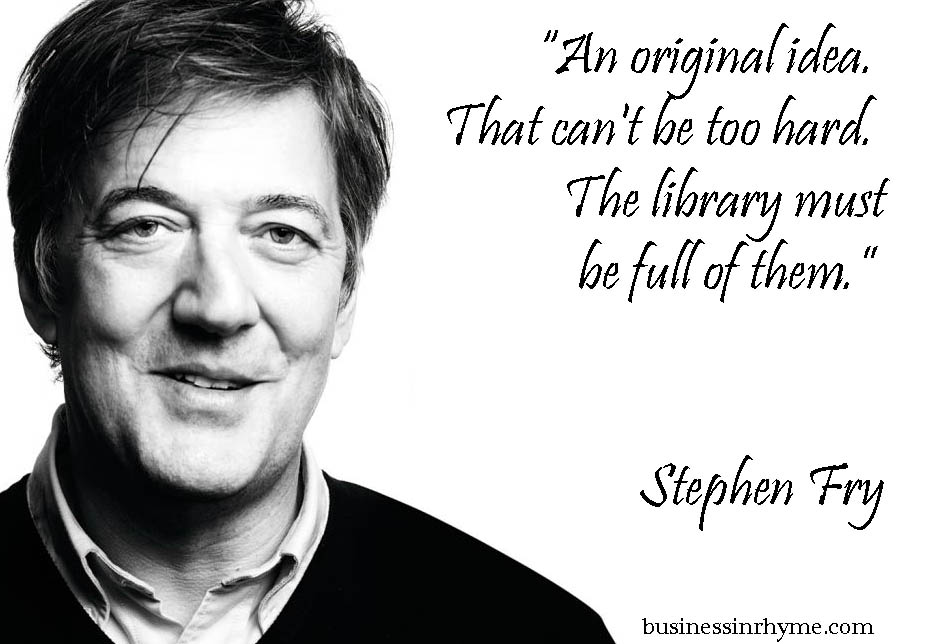
This is one of my favorite topics I’d liked to discuss with my students. With emerging IT technology, inevitably came a ‘cut and paste’ revolution and for many students just wanting to finish their essays and seminars looked as an easy way out.
But here we are not talking only about lower grades for lack of motivation or not doing the assignment the right way: it’s a trap that many carelessly fall into and something like that can easily become a habit. And once something like that becomes a habit, we simply forget to write and discuss ideas in our way, to use our own words and interpretation.
So one of the things that my students taught me is to respect any authentic and honest writing; a writing that comes from an independent thought process – no matter how many mistakes or “wrong views” it might hold. It’s authentic.
Now, too many people often simply terrorize themselves that for something to be valuable and worth reading/hearing has to be original. And the truth is, in our contemporary world where the exchange of information is at such high rate, is very difficult to produce that completely original idea, that doesn’t resemble anything else.
I remember when I was doing my masters degree project. It was a huge task, where I had to mathematically process over 1, 5 million data. It took almost a year to do it (it was 15 years ago so computers were much slower :)). And I also knew at that time that as a young scientist my chances to discover something new or make a remarkable scientific breakthrough (that many scientists before me already did) are very close to zero. And I did get results very similar to already existing. But I did it anyway. And you might wonder why? Well, it was my scientific journey, which means I did it my way. During that process I learnt a lot not only about physics, geology and mathematics, but also about myself and my own expectations. At the end, I gave my own interpretation of results and it was just tiny contribution to already vast worldly resources and databases on the topic. But this one was performed by me and that made it authentic and original in the same time. It’s been years now that I’m out of solar-terrestrial physics, but my work is still cited by many scientists.
And that’s what nowadays we need the most: more of a authenticity. Once you write something on any topic in your own words, the way you talk in your everyday life – it makes it authentic and original in the same time. So I encourage you, when ever you write, write from the heart; when you allow yourself just to be you, discarding any worry are you original, innovative, interesting, attractive enough – you become all of that. You are an original.
Writing
by Howard Nemerov
The cursive crawl, the squared-off characters
these by themselves delight, even without
a meaning, in a foreign language, in
Chinese, for instance, or when skaters curve
all day across the lake, scoring their white
records in ice. Being intelligible,
these winding ways with their audacities
and delicate hesitations, they become
miraculous, so intimately, out there
at the pen’s point or brush’s tip, do world
and spirit wed. The small bones of the wrist
balance against great skeletons of stars
exactly; the blind bat surveys his way
by echo alone. Still, the point of style
is character. The universe induces
a different tremor in every hand, from the
check-forger’s to that of the Emperor
Hui Tsung, who called his own calligraphy
the ‘Slender Gold.’ A nervous man
writes nervously of a nervous world, and so on.
Miraculous. It is as though the world
were a great writing. Having said so much,
let us allow there is more to the world
than writing: continental faults are not
bare convoluted fissures in the brain.
Not only must the skaters soon go home;
also the hard inscription of their skates
is scored across the open water, which long
remembers nothing, neither wind nor wake.
(source: poetryfoundation.org)
If you liked this post and you are interested in getting more inspiration for your creativity, sign up for our free bimonthly newsletter.
Can poetry help us resolve social issues?
When I first started this blog, my intention was to explore the benefits that poetry can bring to the world of business; how can we become better in what we do, by improving our creativity, leadership skills, cognitive and strategic thinking, communication, tacit knowledge and ext. With time, blog evolved into something much more and deeper and on a few occasions I’ve also wrote about the transformative power of poetry.
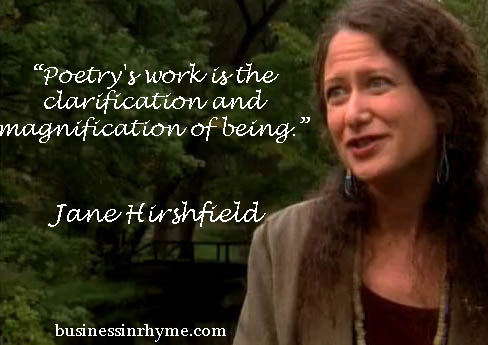
Recently, I came a cross an article, an interview with poet Jane Hirshfield where she shares her view on how poetry can help us move forward in dealing with even bigger social problems:
I think we know the world needs changing. Things are going awry left and right. I firmly believe that in our very practical, technological, and scientific age, the values of all the arts, but of poetry in particular, are necessary for moving the world forward. I’m talking about things like compassion, empathy, permeability, interconnection, and the recognition of how important it is to allow uncertainty in our lives.
One of the current great problems in the world is fundamentalism of every kind – political, spiritual — and poetry is an antidote to fundamentalism. Poetry is about the clarities that you find when you don’t simplify. They’re about complexity, nuance, subtlety. Poems also create larger fields of possibilities. The imagination is limitless, so even when a person is confronted with an unchangeable outer circumstance, one thing poems give you is there is always a changeability, a malleability, of inner circumstance. That’s the beginning of freedom.
With these beautiful words, I think she captured the true essence of poetry; its purpose and reason for existence: every poem is like taking a journey to a different world where everything is possible and we can truly chose our experiences and taste liberation in every sense.
In her wonderful book “Ten Windows: How Great Poems Transform the World.” Jane Hirshfield, further explores hidden strength that poetry holds and especially focuses on the beauty of uncertainty, not knowing everything – just enjoying to be.
And today, I invite you when you write, at least for a minute stop asking yourself questions on how, where, why – liberate yourself from any false predicaments and just be present, sink into your own being and feel your inner world; connect with your own subtle energies, where self-acceptance and self-trust takes place – you might be surprised how your reality change.
By allowing ourselves to transform our inner world, we are transforming the world around us as well.
Some stories last many centuries,
others only a moment.
All alter over that lifetime like beach-glass,
grow distant and more beautiful with salt.
Yet even today, to look at a tree
and ask the story Who are you? is to be transformed.
There is a stage in us where each being, each thing, is a mirror.
Then the bees of self pour from the hive-door,
ravenous to enter the sweetness of flowering nettles and thistle.
Next comes the ringing a stone or violin or empty bucket
gives off –
the immeasurable’s continuous singing,
before it goes back into story and feeling.
In Borneo, there are palm trees that walk on their high roots.
Slowly, with effort, they lift one leg then another.
I would like to join that stilted transmigration,
to feel my own skin vertical as theirs:
an ant-road, a highway for beetles.
I would like not minding, whatever travels my heart.
To follow it all the way into leaf-form, bark-furl, root-touch,
and then keep walking, unimaginably further.
Jane Hirshfield
If you liked this post and you are interested in getting more inspiration for your creativity, sign up for our free bimonthly newsletter.
Just listen (creativity exercise)

What triggers and inspires creativity in one person is quite individually. There are a lot of factors influencing this process, but usually it is something that catches our attention, (like curiosity) and initiates that idea from which everything else begins. So today I want to invite you to pay attention to your surroundings. We all tend to sink into our own minds, thoughts drifting on their own…But focusing and paying attention to our surrounding is of great importance since it reflects our abilities to spot opportunities, and act upon them; turn that inspirational thought into something viable and move forward with our creativity.
I propose two exercises:
- Listen to everything and everywhere. ‘Blend and tune in’ with your environment and listen to the sounds, conversations (I’m not suggesting you spy on anyone!) and notice what randomly catches your attention: a word, song, laughter, baby cry.. and write a poem about it. Let that be the initial spark of something you absorbed from your environment and you are creating further. Don’t censure yourself, just write your poem and what ever comes – let it surface.
- Hear what you don’t like listen to. I particularly don’t like the news and don’t listen/read them but for the sake of this exercise give it a try: pick one news headline and that can be something you really dislike; now write your own news that are quite the opposite, news you would like to hear or read in the newspaper, news in the form of poem. I know, it can feel a bit strange – first writing news (and you are probably not a news reporter, just like I’m not) and second – making a poem out of it. But that’s the purpose of this exercise: to stretch our minds and look for solutions and possibilities where we are unlikely to find them.
By following the steps and doing the exercises I propose here on the blog, you may find your creativity increase dramatically. We create and develop opportunities, but we also need to be able to recognize something that might work for us – we can train our minds to get better at this; to be more responsive to an external stimulant. It’s a sort of getting into habit to cultivate inspiration and is a sure way towards leading an inspirational life.
‘T is you that are the music, not your song.
The song is but a door which, opening wide,
Lets forth the pent-up melody inside,
Your spirit’s harmony, which clear and strong
Sings but of you. Throughout your whole life long
Your songs, your thoughts, your doings, each divide
This perfect beauty; waves within a tide,
Or single notes amid a glorious throng.
The song of earth has many different chords;
Ocean has many moods and many tones
Yet always ocean. In the damp Spring woods
The painted trillium smiles, while crisp pine cones
Autumn alone can ripen. So is this
One music with a thousand cadences.
Amy Lowell
If you liked this post and you are interested in getting more inspiration for your creativity, sign up for our free bimonthly newsletter.
7 alternative business models that every writer should consider
Once you have written your book, promoted and eventually got some satisfactory sales – is not the place where job around your book is finished. No, no 🙂 actually, this is an opening opportunity for you further to establish and build a credible business around your book. You might also think that this is applicable only to non-fiction authors, but it doesn’t have to be. Even as a fiction writer, there is a lot you can share with people and teach what you know. And you can translate that in multiple revenues of income. Mostly this falls into category of product-service-system business models, where around the product you offer, your clients/customers can enjoy variety of related services.
Here is the list of interesting business model variations that I think every published author should consider:
- Speaking opportunities. Published book in your area of interest gives you the opportunity to position yourself as an expert in the given field. Through established and growing relationships, networks and community you can gain speaking opportunities and expand your writing business.
- Coaching. Are you good at your writing? Or you published a book about something else you are good at? Well there are other people who could benefit from your knowledge. This is an excellent way of starting an online coaching business – you can easily and effectively do your coaching using skype (facetime, ext.) and help people from all around the world.
- Online courses, webinars, training sessions. This is quite similar to coaching, but you have a bit larger audience: you can use your book as the foundation for an online training session or workshop. This is an excellent opportunity to virtually deliver educational programs and gain international clients.
- Subscription/membership program. Your book can be a foundation for a membership program where you offer additional exclusive content only to subscribers (on a monthly basis for example). Being your content “in the how to” category or short stories series, this is an excellent chance to secure steady stream of passive income.
- Information products. Every book can be easily upgraded/transformed in a workbook, mobile app, podcast..
- Certification. If you have developed your own techniques and methodologies that are effective in some way, you can offer certification programs to consultants/writers/coaches who want to teach your methods. In a way they are becoming your ambassadors, promoting further your business and brand.
- Online portal/journal. If you like to couple your love of writing with research you can start your own portal or journal, related to topics you are interested in. It is seen as an excellent opportunity to engage with other writers and generate valuable and interesting content. It can vary from poetry to retail or politics. Nevertheless, depending on the traffic your site generates you can ‘sell’ space on your website to interested third parties for advertisements.
Each of these models is a way that writer can deeper explore real entrepreneurial possibilities. Each of them require further time and investment. Yet the purpose of this article is to emphasize that inclination and affection for writing doesn’t have to end there: it can further fuel our creativity and combined with other talents (being that ours or other’s people) can lead to results with much broader impact.
Play with words (creativity exercise)

I’ve always been criticized by my family members and friends, that I’m at times childish and how everything I want to turn into a game. Well, in my opinion life can be dull enough and by adding some playfulness into it – is my way of getting a sun shine in my dark days: which of course doesn’t mean that I take life lightheartedly and that I’m not serious when situation requires. On the contrary! I just think that through gamification and playfulness we can learn with ease, soften the tension when some problems arise and is actually a great tool for brainstorming (about which I will write in some of my future posts).
But for today’s exercise let’s just play with words. I will suggest couple of ways – you can add your own or alter this suggestions according to your preference. Below are written couple of words:
sky table spice medicine
hope flesh doing escape
inevitable immense minuscule golden-brown
chew pull face inhale
in between cryptic soft people
Now these are random words I picked and we can use them in variety of ways in different brainstorming sessions.
Version 1:
You can circle and chose around 5 words from the list above and write your poem including those words. But here’s the catch: you also have to include 5 key words related to your project you are working on and incorporate them in the poem too. Now, don’t get bothered with the logic and form, just write your poem – no matter how silly it may sound: the purpose is to get your creativity pumping.
For example:
My words from the list: medicine, cryptic, inhale, flesh, chew.
My key words: business, entrepreneurship, art, creativity, purpose
This medicine is a cryptic business.
As I inhale stagnant air
I chew with purpose
while creativity floods my flesh;
I’m the captain of my entrepreneur-ship:
It’s an art and courage to sail alone
so far and deep.
This poem turned out to be quite funny, but this unexpected relation between unpairable verbs and nouns can spark unexpected views on problem and reveal hidden solutions. This poem, produced in the form of free writing, no matter how funny, does speak of courage and risks I need to take; that I’m in charge of the outcome and for me is quite empowering. Just let your inner being play – it already knows what you need.
Version 2:
Write three haikus or very short poems, using in each poem one noun and one adjective from the list above. Also include your own key words: Let’s say:
1.
Immense sky covered in blue.
A joy spread with purpose.
2.
Minuscule face enters home.
Love, a life’s art.
3.
Wind gives wings to golden-brown spice.
Split second of nature’s creativity.
If I would go in deep analysis of every and each of these sentences – what do they have in common (as how I interpret them ) is that I always first have to look at nature as it is the inexhaustible source of inspiration where I will find new ideas and solutions.
Version 3:
Take one key word and all the verbs in the list. Make a poem out if it.
I inhale and breath as my business goes so well!
With joy and smile I chew this small chocolate
as I pull this feeling deep inside, hoping never to escape.
Now this example turned almost into an affirmation and self-encouragement; being present in the moment; taking one step at the time and enjoying life’s little things.
This is fun and interesting way for us to stimulate our subconsciousness and it’s like having a conversation with our true self. Language and words are that wonderful tool (every time available to us) that can help us move from stagnant thoughts in the direction of creativity, inspiration and hope.
So what do you think, ready to play with words? 🙂
Discarded grief
Look at this leaf.
Where did it come from?
Stuck in a mud, like a
discarded grief from a weeping willow.
I like its shape.
Follows my hand. Pair it
in two and you can make a glove
or a puppet doll that says “I love you!”
It’s full of wavy hurdles,
a catepillar’s slalom track.
Can be frozen, curled or wet,
wears all season’s colors like a traffic light.
Enjoys to float, especially in waters of Hoogvliet
rushes to meet other leaves,
while gives a ride to marsh fleas.
Once it went disguised,
I couldn’t recognize it.
Dressed in the lost feathers of
floating white hearts and undived “quack, quack”
pretends to be a Sioux Holy Man.
It may come in different sounds too.
Like a bandmaster, it orchestrates winter winds in dramatic
symphonies.
Or, when a thickening fog occupies city parks
still dark and tainted from night,
you hear a crunchy, cranky sound as it get’s
crushed under lover’s heels or
sporadic brave joggers,
in short sleeves.
Dissipated in the air
it’ll wait for its turn,
to blossom proudly again and stare
how spring Sun in the west burns.
Hey little leaf
you would like to crawl into my pocket
like a sneaky thief?
I’m lonely too,
keep me company
in my autumn view.
Maja S. Todorovic
3 R (creativity exercise)
In many years of environmental practice what I learned is that everything revolves around resources: how you use them, manage or generate them.
Well, this same notion we can apply in different ways in order to get our creativity flowing – especially when it comes to writing. Rewriting, revising our own or somebody else’s work helps us not only to become better writers, but also it helps us develop our reading and analytical skills. You learn to question ideas, statements and arguments. You learn to notice and search for new relations, discover weaknesses and come up with new ways to improve what’s already there. So, this is what I propose:
1.Reuse
your old books, magazines or even shopping receipts and try to create new poem. It can be similar to collage, but this time try to focus specifically on words and create your poem out of them. Cut out your favorite words and phrases or circle them on the given page and make them the constituent part of your new writing venture. Play with the words. Try different arrangements. Pick words that somehow inspire you or relate to a project/problem you are working on. Once you found an arrangement you like, you’ve created a found poem. What kind of emotions or reaction words trigger? Read them, play with them and they just might offer some new, fresh perspective on the questions you have.
2. Reduce
Now, this one I believe is going to be fun – at least was for me and can really help you in you writer’s block. Try to find a poem that you dislike, that you feel negative about and simply wreck it! That’s right: tear it apart! I don’t mean tearing the physical paper, but omit, reduce, erase, everything from the poem you don’t like and use it as the basis for writing a new one – in a way that feels and sounds right to you. This little, simple exercise can be really helpful later in your own writing.
3. Recycle
This one is similar to the previous but it refers to your own writing. Find something that you wrote long time ago, when you were in a different mood, influenced by other circumstances and give your writing a make-over. Use your own writing as an inspiration for your new poem, dress it in new words, develop stanzas out of sentences and see where it takes you. Our past experiences are our best teachers and what we’ve learned we can use to adequately manage our creativity and direct future actions. Take the knowledge you acquired into your own advantage and just let your free writing do the rest.
If you liked this post and you are interested in getting more inspiration for your creativity, sign up for our free bimonthly newsletter.
3 simple truths about your online presence
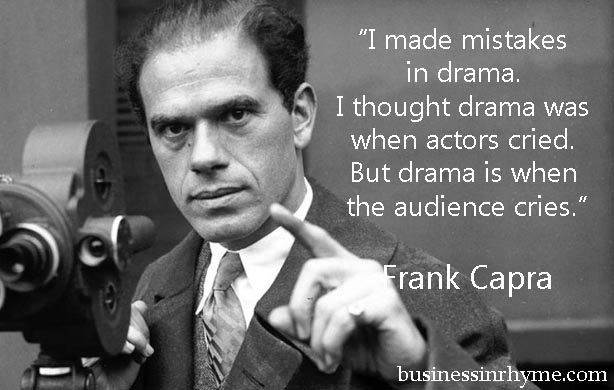
In one of my previous posts I talked about the importance of building your community of supporters, people who share your view of the world and values –your tribe as some refer to it.
And when I think of community, I think in every aspect of it: people in physical community are organized and engaged in certain activities and mostly are oriented towards shared goals, values and trust.
Well, much of that we can apply to our online community as well:
- Engagement. For fostering mutual trust we need interaction, honest exchange of information and responsiveness to inflow of new ideas, opinions and views. In every community, communication is a two-direction street, a beating heart of your online presence. No matter how large community you might think you have, empty number without discussion and healthy exchange of ideas is like living in an empty, cold, dark cave when from time to time you stumble upon some living creature, and the only sound returning to you is your echo … I always encourage even having smaller group, but the one that is your real audience, ready to complement your every victory and comfort you in your small omissions…that is warm and feisty; that in the same time can understand you and guide you. One simple way to improve engagement is a call for action. Invite your audience to share their experiences, their views, problems… by honoring them in this way your empty and cold cave is transforming into a warm home, filled with real emotions.
- Sharing is caring. In old times, before the internet era, companies were in charge of disseminating information, which means they had better control of what kind of information went into the ether. Now we have a different problem: we are facing the challenge of getting the right information. People are turning to internet and social media to dig up what they need to know. In order for your content to be noticed, It has to be relevant to your audience, that is helpful and contributes to improving their lives in some way; entertaining or provides different experience. That’s why sharing is important. It’s your ritual of giving pieces of your time, knowledge and energy and this type of investment that adds value, is building even stronger connections of trust – among you and your target audience.
- Make your message clear and focused as much as possible. In other words, find your writing niche. I like to read poetry, for example. But even in poetry I have preferences: I like long, prose poems, with lot of mythology even Gothic atmosphere entwined. So the writings of Margaret Atwood, W. B. Yeats and Kelly Boyker appeal to me very much. Or surrealist approach to poetry.
So, even in your writing, when you try to be narrow as much as possible, you attract right people. If you write to be liked by everyone-chances are you hardly get noticed. People like to feel special, like you are writing specifically for them or referring to their specific experience. When people identify with the message you are sharing, they like to talk about it, share it further: in simple words – your community is growing.
And of me say the fools:
With my poetry
I violated the sky’s commands.
Said who
Love is
The honor-ravager of the sky?
The sky is my intimate.
It cries if I cry,
Laughs if I laugh
And its stars
Greatens their brilliance
If
One day I fall in love.
What so
If in the name of my beloved I chant,
And like a chestnut tree
In every capital I, her, plant.Fondness will remain my calling,
Like all prophets.
And infancy, innocence
And purity.
I will write of my beloved’s matters
Till I melt her golden hair
In the sky’s gold.
I am,
And I hope I change not,
A child
Scribbling on the stars’ walls
The way he pleases,
Till the worth of love
In my homeland
Matches that of the air,
And to love dreamers I become
A diction-ary,
And over their lips I become
An A
And a B.
Nizar Qabbani
If you liked this post and you are interested in getting more inspiration for your creativity, sign up for our free bimonthly newsletter.
 Business in Rhyme