
Tag: writing
When you write, let your content be your branding
In one of my previous posts I wrote about the importance of creating your personal brand and how to “fine tune” your own writing voice. The issue of branding, marketing, self-promotion can put an additional pressure in any creative work. For many is still a dilemma: do we follow the mainstream market currents and compromise our creative integrity or we follow our creative dream – even if it’s not reliable source of income?
With the rise of digital era and social media, the expansion of creative entrepreneurs is still on the growing rate. And especially if you are a writer, because what ever you write – being that related to your work or not – it sends the message out to the world who you are; what are your values; what do you strive for. With every word we write we literally paint an image about ourselves.
So in a way we can treat our writing as a branding tool. Our writing should communicate our creative vision, in accordance with our professional credibility. In time, it might be hard, to achieve the level of objectivity we desire, but with focus on intentional writing, having aligned our purpose and values, our writing will more reflect of who we are, and how we want to be perceived by the world around us.
Writing (not just as an act of writing), but about our creative endeavors, sharing our creative vision – doesn’t necessarily has to be seen as a try to convince someone into something or selling anything, but rather as a creating an experience where we can share our talents at broader scope; building a firm foundation for a contribution we can make with our work. It’s a natural way of attracting like-minded people and fostering community.
I believe that expressing creative action in any way that will find its course to the hearts of people who want to engage in that kind of experience, doesn’t have to be seen as crude, soulless marketing. Actually, once you create something and let it be seen by the public-it takes the life of its own: to inspire and motivate someone else, to bring enjoyment, purpose or improve someone’s life. That’s the moment when the loop of creativity cycle is closed and it becomes the source of something more beautiful: world can benefit from fruits of your work.
Following some of the rules of poetic expression can be very helpful. Using the words that have a rhythm can amplify your message to the level it resonates with your audience; to become more memorable and make that human connection we need in sharing our creativity. They say: “Content is the king” – then how do you present is it’s throne: how you say something is as important as what you say. It’s a basic a foundation on which you will further build your message to be embraced by your readers. “Wooden” language, with no emotion, no personal perspective, “flat” narrative without promise of adventure and surprise cannot cut through the noise of ordinary information into the hearts and minds of target audiences.
What constitutes good writing? A content, but also concise and well organized information, wrapped in your unique writing style. Now, unmerciful editing will get us closer to more understandable information, but the style is what one remembers. Enriching our writing with poetic tones can add that distinctive melody to our writing. And I’m not talking about metaphors and adorning your writing with useless attributes: I’m talking about the structure, rhythm and balance, skillful art of the phrasing right. It can give the strength to your writing, expressing your creative outlet in right way – the way it will stuck to the hearts and minds of your audience. That’s why I stress out the importance of what you write to read out loud. If you are ensured that what you wrote communicates your personality, in comprehensive manner, then it will have the desired impact.
How These Words Happened by William Stafford
In winter, in the dark hours, when others
were asleep, I found these words and put them
together by their appetites and respect for
each other. In stillness, they jostled. They traded
meaning while pretending to have only one.
Monstrous alliances never dreamed of before
began. Sometimes they last. Never again
do they separate in this world. They die
together. They have a fidelity that no
purpose or pretense can ever break.
And all of this happens like magic to the words
in those dark hours when others sleep.
3 tips to recognize your authentic writing voice

Your writing has a color, sound, feel…just as your natural voice. It translates who you are and is your tool for communication. Making some effort into “crafting and fine tuning” your writing voice is worth your time and energy. It doesn’t matter are you a content developer, fiction writer or you blog just for a hobby, it is essential for you to find that uniqueness inside of you – express it and let it live.
There are some tricks you can employ and that can guide you towards your better writing – better you writing.
Some of the first things you need to ask yourself is who is reading your stuff? Who is your audience? When you are writing, try to imagine your ideal reader and write according to that feeling. What would your reader interest? What would make them smile? What would make them think deeper? What kind of value you can bring to your reader?
The next important thing is to pay attention to how do you feel while writing. Does it exhaust you or it invigorates you? Is it like something you MUST do or is something playful, enjoyable for you to do?
How honest and open are you while writing? Are you always finely wrapped in your security blanket or you explore topics and genre that are out of your comfort zone? That’s good. People can sense in your writing when you are open or you are playing on the safe side. It can be a huge motivation to make your writing worth attention and reading. Being you and being vulnerable is OK – people can more relate to you in such way. We all know that our stories are governed by our subconscious mind. We all have unresolved inner conflicts, doubts, insecurities. Give yourself permission to say things in your own way. You need to own your writing and don’t hide behind other people’s opinions and words. That’s being authentic and unique.
And finally, ask yourself is this something I would like to read? Your answer is the best guidance in which direction your writing is going.
Do you think you have found your authentic writing voice? Tell us about it in the comments.
5 tips to make the most of your creative project

When we are facing an important project ahead (especially creative one), with lot of distractions around us, it might be hard to achieve desired goals. Hence, with a little bit of effort and better planning, prospects on finishing our project in time with desired outcome are more realistic.
These are my 5 top tips on getting the most out of your creative project:
1.Get your priorities straight
For the time you plan to be involved in the project, try to clear up your schedule as much as possible. You will definitely need some breathing space for setting the right mood for work, relaxation and creative action! So think of any activities that for time being you can let go, delegate, postpone in order to give yourself enough room to just be yourself: not having the obligation to keep so many things on your mind (+ doing them) will keep you less distracted and more open for creative flow of ideas.
2. Plan ahead for your creative needs
What I mean by this is try to plan in advance anything you might need for your creative project: supplies, materials, books, tools. In this category can also fall your “basic physiology”: simplify your cooking and shopping routine, stock up your cupboards and pantries so you don’t get overwhelmed with usual questions ”What’s for dinner, mom?” while you are in the middle of executing your crazy and phenomenal idea!
3.Pamper yourself
Don’t forget to allow yourself little pleasures during your creative rush: remember to spare quality time for your friends, family, for a hot bath and a warm cocoa with your favorite book. It’s a wonderful way for you to “recharge your batteries” once you feel your creative inspiration slows down. These daily candid intersections are also irreplaceable sources of energy you need.
4.Find a group of like minded creatives that can cheer you up along the way
These can be very beneficial – having someone to talk to about what you are going through, that can appreciate your needs, answer some of your questions and share your doubts and fears. It can be our helping hand in moments when we hit creative block and lack confidence to move forward. This group doesn’t even have to be in person: joining online forums and chat groups where we can share our ideas and progress can give us a creative boost in times we need the most.
And the last and maybe the most important:
5. Get enough ‘Zzzzzzz’
Sleep. Essential and simple as it sounds, in my personal experience is the prerequisite for any work I want to be delivered with quality and on time. It energizes you, keeps you fit mentally and physically. It can be of special importance for people who like to work early in the morning (like me), because then the mind is at its clearest state and highly focused.
Do you have any special rituals to keep your creativity at working level? Please, share in the comments bellow.
To Imagination – by Emily Jane Bronte
When weary with the long day’s care,
And earthly change from pain to pain,
And lost and ready to despair,
Thy kind voice calls me back again:
Oh, my true friend! I am not lone,
While thou canst speak with such a tone!
So hopeless is the world without;
The world within I doubly prize;
Thy world, where guile, and hate, and doubt,
And cold suspicion never rise;
Where thou, and I, and Liberty,
Have undisputed sovereignty.
What matters it, that, all around,
Danger, and guilt, and darkness lie,
If but within our bosom’s bound
We hold a bright, untroubled sky,
Warm with ten thousand mingled rays
Of suns that know no winter days?
Reason, indeed, may oft complain
For Nature’s sad reality,
And tell the suffering heart, how vain
Its cherished dreams must always be;
And Truth may rudely trample down
The flowers of Fancy, newly-blown:
But, thou art ever there, to bring
The hovering vision back, and breathe
New glories o’er the blighted spring,
And call a lovelier Life from Death,
And whisper, with a voice divine,
Of real worlds, as bright as thine.
I trust not to thy phantom bliss,
Yet, still, in evening’s quiet hour,
With never-failing thankfulness,
I welcome thee, Benignant Power;
Sure solacer of human cares,
And sweeter hope, when hope despairs!
8 tips for writing a killer author bio (even if you haven’t published anything yet)

Couple of years ago, a good friend of mine, an artist, came with a request to help her write a resume for an upcoming exhibition she wanted to apply for. Now, writing a resume is not such a big deal, but when you have somebody at the beginning of their artistic career (with only 1 exhibition) and this exhibition she was applying for, was supposed to be held in Louvre, then it is a big deal – at least for artists. And it has to be remarkably written, just as her masterpiece. It was quite a challenge, but I knew her for a long time (we grew up together) and we had to start from somewhere. Certain approaches we applied, eventually paid off (her bio was very much praised as her art) and these approaches can work for any type of biography – including that of a writer.
Beside some minor details about education and study field, I was not left with much to work with: only one exhibition behind her, so what do you write about then?
My first tip is:
- Mention the most relevant professional, educational, travel, or personal experiences: what is special about you.
It has to resonate with your audience and the occasion for which you are writing your resume (you can adjust and rewrite your bio according to the current needs). My friend, she used to travel a lot, was great admirer of history and architecture, so we included that. Same applies to writers. If you are writing non-fiction about health issues, than include your personal story. If you are writing a novel, give some juicy details what inspired the idea – you get the picture. Your biography has to look and sound both human and professional and the trick is to find the balance between the two. Once again, it’s about pulling in the details which will resonate with your readers/editors and which fit adequately with the topics you’re writing about.
- Always ask someone who knows you very well about your qualities, skills, what distincts you from other people and include that in your bio.
We tend to be very subjective and overly critical. Observations from other people can be very helpful.I knew that my friend is very skilled with hands, for example (she could make anything you imagine), so I emphasized her knowledge of work with materials, tools, experimenting with textures and colors. Around that we carefully crafted a short story that was about the work she was submitting. And at the end it turned out very well.
Also, she had a lot of pieces that she developed in free time, but never seen the eyes of the public. So, the second thing we did, we developed a basic website where we published the pictures of her other work as well. We included the link in the biography so she could showcase the spectrum of her work – not only sculptures, but sketches, oil paintings, everything that represented her and her work. That contributed to her uniqueness and artistic individuality.
The same can apply to writers:
- If you are not already a published writer, build a basic website or blog where you can showcase excerpts of your writings (you reading this probably already have a blog) so try to reorganize your blog to showcase your best work and include the link in your bio.
Also, if you haven’t published anything yet, it’s hard to get reviews and testimonials. What you can do:
- Use the comments that people leave you on your website and social media as a testimonial. I’ve seen many writers – entrepreneurs doing exactly that, and it’s paying off.
- If you are part of any writing/literally organization, group (even forum) – list that in your bio, as it adds to your credentials. Another plus in an editor’s eyes is your affiliation with writers’ organizations. If you are not, join one! My friend was a member of national artistic network and that detail added to her professionalism.
Now, some technical stuff:
- Always write in third person. It kind of makes it easier to talk about yourself and your achievements. You should give it a try.
- Keep it short.
Editors, committees, even your readers don’t have much time to read a novel in your biography. Try to be concise, yet informative.
- The opening line should be straightforward and meaningful (in simple words telling who you are): if your degree is relevant, then note it.
This is where you captivate your reader (editor). You have to introduce yourself and this is usually the turning point. Never start with personal details – it will just make you look unprofessional.
For the end, apply this trick: read your bio out loud. How does it sounds, feel? You will know you nailed it, when it simply feels right!
A simple thing you can do to make your storytelling more engaging
No matter are you a writer, a business owner or you just want to improve your presentation skills, effective storytelling is like having an ace in your sleeve that you can pull out just in time when you have to make your point or become more persuasive. In my previous posts about storytelling I discussed the power of narrative and today I shell go more deeply into how to harness that power to keep your audience active, engaged and responsive. Now, structuring your story, speech or even website content can be hard with distractions coming all over the place. In order to pass your ideas across and stuck to the memory of your audience you have to use all tricks and tools available to you. And avoid little mistakes along the way.
Here is what I mean:
Don’t begin with unattractive facts and figures (unless you are dealing with science and research, but even that kind of story we can make more compelling).
Frankly speaking, nobody cares about that! Stats are boring. We are addicted to stories, actions, emotions, adventures. Humans like a hero that’s on a journey, capable of mastering endless obstacles in order to fulfill his duty and purpose. So give your audience a hero, a story with purpose that delivers message, leaving them motivated and inspired.
One simple thing you can implement in your story telling is to incorporate the technique of a mythological narrative.
It’s a story structure that is found in many folk tales, myths, poems and religious texts from around the world.
In a mono-myth, the narrative goes like this: something happens that provokes our hero to leave his home; hero has (usually) a difficult journey ahead, where the destination and conditions are uncertain; after completing a series of challenges, hero returns with some kind of a reward, wisdom – some kind of benefit that he brings to his community.Think of Gilgamesh or Iliad. These were very long, epic and spoken word poems, that portrait the journey of a hero, all of his struggles, tragedies, misfortunes or little victories.
This is an excellent strategy when you want to accentuate the information you have and how that can benefit your audience. It also shows the pros and cons of taking risks and how we grow while learning something new.
In this article you will find three beautiful examples of using storytelling for small business purpose. The one I would like to share is about company Stio that introduced the outdoor apparel brand with a blog called The Town Hill Chronicles. The blog, by a team of professional writers, profiled people living in mountain communities across the U.S. In doing so, it helped Stio tell its brand story, how ordinary people experience outdoor life and activities (making them heroes of their brand), which eventually turned an audience into real a community that promotes and shares value of living in accordance with nature.
For the end I will leave with some thoughts by John M. Ford:
Against Entropy
The worm drives helically through the wood
And does not know the dust left in the bore
Once made the table integral and good;
And suddenly the crystal hits the floor.
Electrons find their paths in subtle ways,
A massless eddy in a trail of smoke;
The names of lovers, light of other days
Perhaps you will not miss them. That’s the joke.
The universe winds down. That’s how it’s made.
But memory is everything to lose;
Although some of the colors have to fade,
Do not believe you’ll get the chance to choose.
Regret, by definition, comes too late;
Say what you mean. Bear witness. Iterate.
The Go-getters guide to building your personal author brand
Branding for sometime now has been a buzz word. We instinctively recognize branding as a purposeful creating of authentic image, identity and most importantly the “feeling” that companies want their consumers to experience – about different products and services. Yet you are a writer, not a company or a product. How that applies to you? Do you really need a brand?
Let us put it this way: Your personal author brand can be seen as a purposeful creating of unique and distinct theme in your marketing approach that you want your audience to remember you by.
How do you that?
Well, there are few questions that can lead you along the way discovering your brand personality. I would start with:
How do you want to be remembered? Think in terms of senses, feelings, experiences, words, language, ideas, concepts that you want to be associated with. That can also depend on the field and focus of your writing: if you are in area of business writing do you want to be remembered as a tough authority or compassionate leader? Do you want to teach or inspire? As a fiction writer what mood do you want to evoke?
Once you define these primarily goals, you will be more clear on your purpose, message that you want to deliver and who are you trying to reach. That one simple message around which will revolve your whole branding theme is of pivotal importance, since it will communicate your philosophy and your values: what are you bringing to your readership.
Be open, honest, tell your story, since people like to connect on the personal level. This will also help you communicate who you really are and what distincts you from others. You are your brand, but also your readers are your brand – who you attract and what impressions you make.
Follow your distinct writing voice!
The tone and style of your communication should naturally reflect your expertise, brand promise, and core belief.
By consistently building your author brand, you can broaden the areas of your influence and involvement.
You can:
- get offer for guest blog posts which will increase your readership;
- get advertising requests for your website;
- position yourself as an expert in your field;
- increase probability for future book deals;
- get broader exposure in media;
- even get the opportunity for product/service endorsement.
Think about it and start building you brand now!
Daily verse with purpose
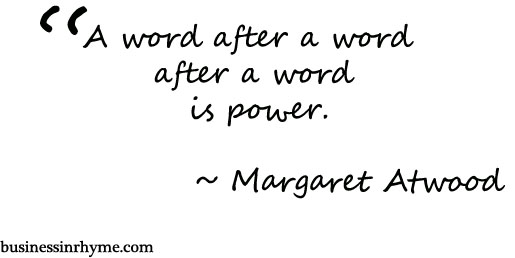
For every poet who wants to get published

In times when we are all overloaded with information, coming from all sorts of media sources, it is hard to be noticed and keep someone’s interest. I think that this is the biggest problem that most writers struggle with, especially poets. It’s true, poetry always had its devoted fans, yet is less popular than other forms of art. As it is easy to start your own blog and publish your work, it is hard to get through among other writers and get published in literary journal or anthology. Not to mention earning from your own writings – some people think it equals science-fiction!
“Poetryhasvalue” is a fabulous resource for all aspiring poets as Jessica Piazza documents her journey on submitting her poems to paying literally journals. Getting to know her experiences can help you avoid certain pitfalls and direct you towards choosing the most appropriate journal according to your genre, writing style and of course, your goals. Is your goal to make a living from your writings or you are on the quest to gain more popularity and get people acquainted with your work? It will determine which literally journal and magazines suit you best. For more about the author of this project visit www.jessicapiazza.com
Daily verse with purpose
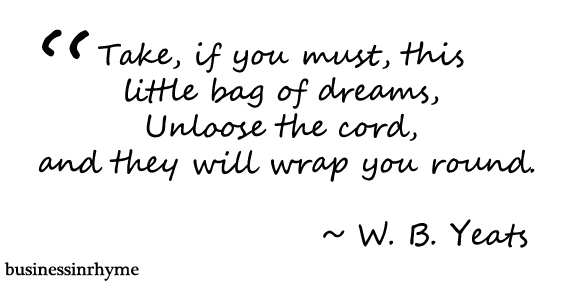
 Business in Rhyme