3 step-process to curb fear of creative self-expression

Marie Curie

We are creative beings. Even while only sitting and thinking – you are actually creating, but some people need that final nudge – to translate their idea into a physical reality. They are afraid of expressing themselves creatively, and sources of this fear can be numerous: fear of other’s people approval, not being original enough or not meeting some type of criteria (deadline, aesthetic or functional purpose) for what they want to produce.

Most self-help teachings will tell that you need to face your fear, “take the bull by the horns”. But it can be counterproductive – and you can  end up being chased by the angry bull, not trained and fast enough to escape this seething fury.

And I believe that there is the key – before facing your fear, prepare and arm yourself with any additional weapon that can help you fight this raging animal.

  1. Acknowledge your fear. By this I mean that you should be frank with yourself and admit you are somehow scared to publicly express your creativity. As mentioned above, fear is an angry and hungry beast that craves your self-doubt, pessimism, lack of clarity and unreachable perfectionism. Your fear can endlessly haunt you, wanting more, but you don’t have to be the one to feed it: once you accept its existence – it’s much easier to equip yourself and prepare a battle field into your advantage.
  1. Turn your fear into curiosity. Examine your thoughts carefully: what are you actually afraid of? Right down your thoughts. Is there any credible truth behind those statements? After all these are just thoughts. Thoughts can be changed. And what would happen if you begin to enjoy your creativity? People will think and talk, no matter what you do. But how would your life improve if you give your creativity a chance? Like writing a book or painting? You create for the sake of your own life experience, passion and joy: replace your negative thoughts with more empowering affirmations that will open the door to more inspiration and creative outlet.
  1. Take meaningful action. If you are still lingering on the edge of insecurity, think of ways you can improve your creativity: what else you need to know? What  additional information would help you? Do your research, ask questions, observe other people who did similar things – what actions they have taken..do you need any skill? Educate yourself, take classes, go to workshops…Instead of feeding your fear, feed your creativity, enable it grow, flourish and materialize into something you will enjoy. That’s the sure way for your environment to enjoy your work as well.

I hold it true that thoughts are things
Endowed with bodies, breath, and wings,
And that we send them forth to fill
The world with good results – or ill.

That which we call our secret thought
Speeds to the earth’s remotest spot,
And leaves its blessings or its woes
Like tracks behind it as it goes.

It is God’s law. Remember it
In your still chamber as you sit
With thoughts you would not dare have known,
And yet made comrades when alone.

These thoughts have life; and they will fly
And leave their impress by-and-by,
Like some marsh breeze, whose poisoned breath
Breathes into homes its fevered breath.

And after you have quite forgot
Or all outgrown some vanished thought,
Back to your mind to make its home,
A dove or raven, it will come.

Then let your secret thoughts be fair;
They have a vital part and share
In shaping worlds and moulding fate —
God’s system is so intricate.

Ella Wheeler Wilcox
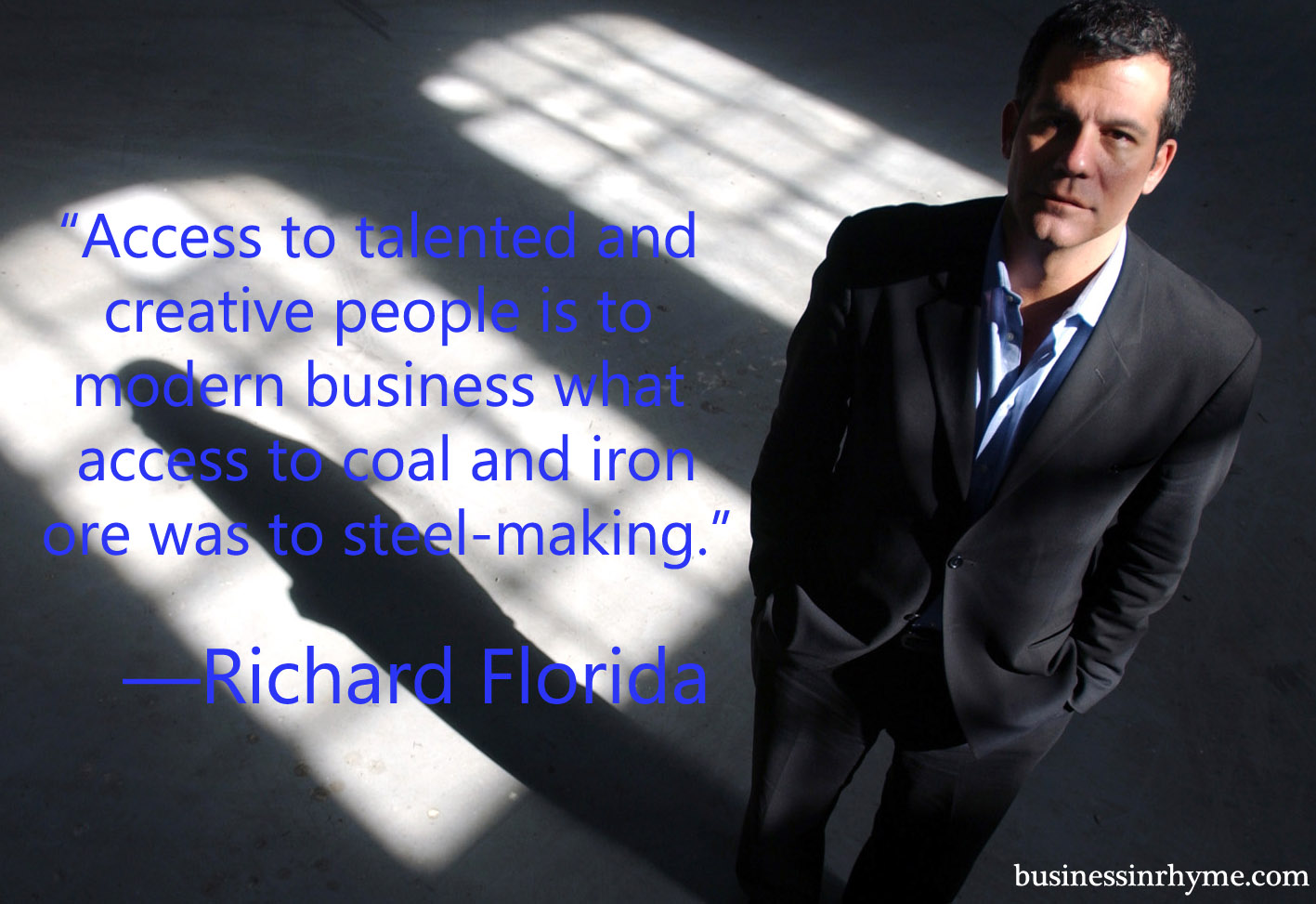
 

4 reasons why creativity is good for your business


Richard_Florida

During my research I came a cross interesting study from 2014. It was delivered by independent Forrester Consulting group and focuses on the impact that creativity can have on business results. Now, when we think of business performance and innovation first things that come into our mind are productivity and technology, but what about the most important part of human resources – creativity? Well, this study tries to answer some of these questions.

During the study, many senior managers that come from corporations across a diverse set of industries were surveyed and interviewed  to give their quantitative and  qualitative overview of how creativity impacts business results (you can read the report here).

In general, the study confirms what I always truly believed: creativity is a resource and skill that can be nurtured in organizations with aim to recharge business performance in terms of  key business indicators, like innovation rate, revenue growth, market share and talent acquisition.

Key findings in this study also include that:

  • Despite the perceived benefits of creativity, 61% of companies do not see their companies as creative.
  • More companies that foster creativity achieve exceptional revenue growth comparing to their peers.
  • More creative companies enjoy greater market share and competitive leadership.
  • More creative companies win recognition as a best place to work.
  • Companies put creativity on the business agenda.
  • Creativity thrives with leadership support.

What also we can learn from these conclusions is:

  1. In any kind of work and entrepreneurship creativity is becoming a vital currency for us to monetize our competitive advantage.
  1. Creativity can help us moves forward on the leadership ladder in our industry.
  1. Business that encourages creativity is a healthier working place.
  1. Business that encourages creativity is more attractive both to customers and potential coworkers.

How creativity is treated in your work place? Please share in the comments bellow. And as an inspiration for your creativity at work I’ve included a poem to keep you motivated and on track:

Team Work by Edgar A. Guest

It’s all very well to have courage and skill

And it’s fine to be counted a star,

But the single deed with its touch of thrill

Doesn’t tell the man you are;

For there’s no lone hand in the game we play,

We must work to a bigger scheme,

And the thing that counts in the world to-day

Is, How do you pull with the team?

They may sound your praise and call you great,

They may single you out for fame,

But you must work with your running mate

Or you’ll never win the game;

Oh, never the work of life is done

By the man with a selfish dream,

For the battle is lost or the battle is won

By the spirit of the team.

You may think it fine to be praised for skill,

But a greater thing to do

Is to set your mind and set your will

On the goal that’s just in view;

It’s helping your fellowman to score

When his chances hopeless seem;

Its forgetting self till the game is o’re

And fighting for the team.

5 components of the winning productivity

Voltaire - best philosopher in austere times notes and queries

Simplifying our schedule and work environment are first steps in gaining our productivity back. Hence, staying productive and turning it into a habit, requires also a work from our side. Here, I propose few approaches that can help you become and stay productive.

Prioritize three main tasks.

In this digital age, when technology is conquering every inch and second of our life, many people use to-do lists to stay organized. What really counts is the intention we put behind our planning. No to-do list or planning is effective unless we act upon it: strategically and efficiently. In other words, pile of things you schedule yourself to do with a reminder  that will beep somewhere in the background can only make you more nervous and anxious.

First thing you can do to increase your productivity at work is two prioritize three main tasks you need to do for the next day. The best thing is to write them down, before sleep. In that sense you are putting yourself forward, intentionally preparing your mind for the things that need to be done next day. Late dr Wayne Dyer used to call that “let your ideas marinate over night”.

Become an early riser.

If there are any parts of your life you would like to improve – squeezing in some time for exercising, eating healthier or simply stop being late all the time, you need to start building your morning routine, one that focuses around your needs.

Do less important and repetitive tasks when your productivity is low.

Observe yourself: note at which times your attention and concentration levels are not at their best and do tasks that don’t require that much of your energy.

Kill that nagging perfectionist inside.

No matter how good we are at our work, efficient and reliable, many people simply are never satisfied we the work they produce. But this not affecting only them, but also the people they work with. I had a colleague that what ever she was doing, she did it at such slow pace, the rest of us would always need to wait for her to finish report, to come at the meeting on time and ext. Her work was good, yet she was never satisfied, always in need to correct, add, erase…you get the picture. Now, I’m not the proponent of sloppy work, but at some point you need to put the limits and say “This is good enough – for the conditions, resources, time given – I produced a hell of good job!” – Instead of  terrorizing yourself inside with achieving unreachable perfection for never-ending goal!

Take meaningful breaks.

Take enough rest during your working hours since it can help you feel energized during the day. Instead of stressing about the things you still need to do, try to reflect upon the things you’ve already done: that sense of relief and gratitude for the things you already did, will set you on the right foot for other things ahead of you.

Why sit ye idly dreaming all the day,
While the golden, precious hours flit away?
See you not the day is waning, waning fast?
That the morn’s already vanished in the past?

When the glowing noon approaches, we will rest
Who have worked through all the morning; but at best,
If you work with zeal and ardor till the night,
You can only make the wasted moments right.

Think you life was made for dreaming, nothing more,
When God’s work lies all unfinished at your door?
Souls to save and hearts to strengthen–ah! such work,
Such a richly freighted labor, who would shirk?

Then arise, O idle dreamer! Dreams are sweet,
But better flowers are growing at your feet.
If you crush, or pass unheeding, idle friend,
You shall answer for their ruin in the end.

Ella Wheeler Wilcox

Are you ready to enter a new relationship? 9 luscious ways to seduce your reader with your writing!

John Cheever

You as a writer and author, while building your audience are becoming a brand. And your writing is your best branding and marketing tool that exists. Words, emotions, message you transcend through your writing is that magnet that attract readers who share your values and point of view. But once they jump into your writing boat, you and your readers began to interact and build certain relationships; things become different, and a little bit complicated. But you as a writer, don’t want the status: It’s complicated. You want the status: Engaged.

Think about it for a second:

When you are in a relationship with someone and you enjoy it:

  • it is a person you are looking forward to see;
  • it someone you care about and like spending time with;
  • it’s probably someone who shares your values as well;
  • you interact on the basis of mutual trust.

Even classical marketing is moving from brand oriented marketing to marketing that is oriented towards building relationships.

To truly understand what kind of impact is your writing having on your readers you can ask yourself these questions:

Did my writing enabled me to build meaningful connections with my readers?

If not, what can I do to emulate the positive dynamics of such relationships?

  • It has to be a content your reader likes spending time reading;
  • It has to offer something of interest that makes your reader want to  expect fresh content and read it again;
  • That content deals with topics your reader cares about and shares his values.

In order to achieve these objectives you can apply certain tactics through your content:

  1. Offer your readers opportunity to know about you and don’t be afraid to show your vulnerability. In that way you are engraving that human component in your writing and building foundation for future relationship.
  2. Offer understanding, compassion; be helpful through your writing.
  3. Use catchy anecdotes and funny stories that are amusing and captivating.
  4. Show you’re interested in their perspective on things, even if it doesn’t agree with your own.
  5. Don’t be afraid to repeat yourself. What I mean is that pretty much the same message you deliver you can say in different ways and modes of expressing. People digest information differently. I remember while I was working with students, the more graphics I used, the students at the class were more ‘tuned in’ with the information, absorbing it in with wide open eyes, not wanting anything to miss. So use visuals as well, audio features, retell what you have to say in different ways.
  6. Be chatty. Start a conversation by asking questions.
  7. Always spice up everything with your quirkiness, with something that makes you different and that can enrich your content to the level it is worth remembering and sharing.
  8. Let your readers know that you are accountable and professional, but throw some ball once in a while. Add some playfulness in your writing because too much of serious approach can be sobering and counter effective.
  9. But never go across the line of NOT being you. What ever you write, be true to yourself because dishonesty leads to mistrust and deceit and like in any relationship, your reader might just break up with you and your writing (remember: rebound can be painful 😉 ).

Why does this written doe bound through these written woods?
For a drink of written water from a spring
whose surface will xerox her soft muzzle?
Why does she lift her head; does she hear something?
Perched on four slim legs borrowed from the truth,
she pricks up her ears beneath my fingertips.
Silence – this word also rustles across the page
and parts the boughs
that have sprouted from the word ‘woods.’
Lying in wait, set to pounce on the blank page,
are letters up to no good,
clutches of clauses so subordinate
they’ll never let her get away.

Wislawa Szymborska

3 steps to tap into your intuitive inspiration

Dean-Koontz

Creativity is sometimes hard to grasp: an undefined, unfathomable idea that drives action to make something, introduce change or solve problem. I believe there is a lot of correlation between intuition and creativity. Intuition is also that unexplainable part of us, the “knowing” that goes beyond our rational mind, and is rather deeply rooted in the subconsciousness. It’s sort of a guidance system.

For a normal functioning in our societal organized life we need both: instinct and reason to make the best possible decisions for ourselves, our businesses, and our families.

Hence for a creative part of us, empowering our intuitive nature can be a great advantage.

Here, I propose 3 steps to get more acquainted with your intuition and how to use it for improving your creativity skills:

  1. Spend more time with your best friend (you) and learn more about him/her.

What I mean by this, in reality the only person you can really rely on in this life is you! Our busy and noisy environment  can disguise our true needs, values and purpose. By living a life set on autopilot we forget that we are the ones who can fly the plane. Take time to be alone with yourself and listen what your body and mind tells you. Self-exploration can be easily translated through any kind of self-expression. It can be dancing, writing, painting, singing, or any kind of playing or sports..you are tapping into “your spirit” (inspiration). Life and joy speaks through you and leads you directly to your own unexplored creative possibilities.

The very act of expressing yourself connects you with your true creative being. That sacred moments of alignment with who you really are, it’s invigorating, improves your health, decreases stress levels – which is prerequisite of any productive creative action.

  1. You are part of nature -what it has to tell you?

Now, I have a confession to make: I’m a tree hugger 🙂 It sounds silly (to some of you maybe even stupid) but I like spending time in nature, especially near water and in the woods. I grew up by the Danube river where is a huge park, overpopulated with birches and willows, and this is like I have that engraved need for green surroundings. And every year, in May (now has become a sort of ritual) I like to go to my home country and visit my parents’ weekend cottage, where they have a small orchard and my favorite cherry tree is waiting for me. Still like a kid many years ago, I like to climb it, swing on one of its branches and enjoy the taste of first cherries in the year: sweet, sour, vibrant with life and color. That kind of silence offers me a chance to ‘reset’ my brain, to take a different perspective on life. And also, my geology  studies taught me to even more respect nature and value it hold for us. For me is a habitual thing to spend some time during the day in some natural environment. Even here in the Hague, just a stroll through the park during windy and rainy day can do wonders. It helps me in my clear thinking, and offers connection with life on more subtle levels. Spending time in nature can help you sharpen your instincts and keep you grounded. We relate instincts to animal behavior, but in a way we are “more sophisticated animals”. I suggest you try to find some green oase that can help you ‘calibrate’ your senses to better perceive natural sounds, scents, fresh air, and rest your eyes from artificial colors. It awakens an intuitive part of you.

  1. Make it a meaningful daily practice

To be receptive of creative energy, you have to make it a regular part of your daily life. Along the way, you will discover so much about yourself, how to be more open and aligned. And gaining inspiration you need with time will become easier and more frequent. It’s like an unhoned diamond that with each day you polish, your inner genius shines and sparkle with more intensity.

Become your own most precious gem – an initiator of creative life force within you.

If with light head erect I sing, 
Though all the Muses lend their force, 
From my poor love of anything, 
The verse is weak and shallow as its source.  

Making my soul accomplice there 
Unto the flame my heart hath lit, 
Then will the verse forever wear– 
Time cannot bend the line which God hath writ. 

But now there comes unsought, unseen, 
Some clear divine electuary, 
And I, who had but sensual been, 
Grow sensible, and as God is, am wary. 

It comes in summer’s broadest noon, 
By a grey wall or some chance place, 
Unseasoning Time, insulting June, 
And vexing day with its presuming face. 

Such fragrance round my couch it makes, 
More rich than are Arabian drugs, 
That my soul scents its life and wakes 
The body up beneath its perfumed rugs. 

Such is the Muse, the heavenly maid, 
The star that guides our mortal course, 
Which shows where life’s true kernel’s laid, 
Its wheat’s fine flour, and its undying force. 

Inspiration by Henry David Thoreau (an excerpt)

How to ‘stage’ your environment for a productive creativity

richard bach

There are two essential elements in every creative process: time and space. Considering time – we all have the same amount of time in one day. And I couldn’t agree more with the saying: “We manage activities, not time.” When it comes to creative process, as described in some of my previous articles, the moment when a creative outburst will happen is sometimes unpredictable: it’s up to us to be responsive and adaptive to it; turn on our antennas and pick up the signals of creativity as it comes along.

This second element, is one that we have even more control over: space. We make or clutter our space – for anything we do. In this article I go in length about the importance of simplicity for a productive usage of time and executing our tasks. Clean, minimalistic space is a prerequisite in my opinion for developing a fertile conditions for a productive creativity. Removing distractions: visual, acoustic and physical clutter is often an overlooked reason why we procrastinate, don’t react upon given creative urge.

You know the situation: you have an interesting idea, but you have some chores to do, you can’t find paper and pencil to write it down, then you think like “OK, I’ll get to it later”…but later never comes and the creative impulse is gone. Decluttered space gives us the chance to be proactive with our ideas, ready like an alert athlete on the start line to “run” our creative race with best results.

There is an intrinsic relationship between what you do and the place you work. Room that is stuffed with unnecessary things, desk with piles of paper, books, gadgets that we don’t need for our momentary work can bring tension and anxiety and in times acts as an obstacle to our creativity.

But that’s not all. Cleaning your desk and purging stuff is the easy part. Emotional baggage that we all carry and our psychological clutter is also something we need to “clean” from time to time.

Zen masters often refer to something that’s called “a beginner’s mind”. A beginner’s mind is open to many possibilities while expert mind recognizes only few. Now, I try to approach this philosophy from two angles. One, is to be open-minded as much as possible and try somehow to avoid previous experiences to block our view of possible creative processes:

“I’ve tried this one, it didn’t work!”

“It’s out of my reach!”

“I don’t have the skills to do this”…

That kind of internal dialogue should be turned off and we need to detach from previous experiences – especially the bad ones. In a way is a “de-conditiong” the psyche, which allows you to reconnect with your true nature. The second angle of tackling this topic is living in the present moment, without dwelling on the past and future which can distract you from your direction in the creative process.

It’s interesting to note that many writers and creatives have faced creativity block throughout their life. During the most of the 1910s, Rilke had suffered from a severe depression. In the early 1920’s he moved to  Switzerland, where he meets Werner Reinhart, a merchant that acted as his patron.  He purchased Château de Muzot in Veyras, a thirteenth-century manor, (no gas or electricity) to support Rilke to live there rent-free and focus on his work. Rilke closed himself for days, where without any distractions coming from the outer world, he wrote Sonnets to Orpheus and completed the Duino Elegies in “a savage creative storm” as he used to say, during three weeks in February 1922.

Starting form scratch with your creative work, you need open, clear, bright space (both physically and in your mind) to focus on your raw elements and possible arrangement patterns. Your attention needs to be hostage-free from any distraction, noise, stuff intruders and information pollution. This will increase your chances for innovative thinking, your ability to recognize the opportunity that will not hide behind the curtain of unnecessary things. Being adaptive in dealing with surprise is being able to take advantage of serendipitous, potentially valuable ideas.

The Sonnets To Orpheus: Xix  by Rainer Maria Rilke

Though the world keeps changing its form
as fast as a cloud, still
what is accomplished falls home
to the Primeval.

Over the change and the passing,
larger and freer,
soars your eternal song,
god with the lyre.

Never has grief been possesed,
never has love been learned,
and what removes us in death

is not revealed.
Only the song through the land
hallows and heals.


9 questions to ask yourself to know if your creative flow is on the right track

chagall

The moment after you had your breakthrough idea, what happens? Sometimes, with steady persistence we continue on refining our creative solution, we try to implement our idea and sometimes the idea bulb turns on just in another minute to disappear in open air like a deflated balloon.

Why do we give up on some ideas?

In my experience, answer might be hidden among these statements:

  1. I lack discipline and persistence (which might be due to distractions, preoccupation with other things or even due to health reason – simply you don’t feel good).
  1. It requires more effort from my side than I thought. Certain things ask for constant investment of our time, money, energy.. it just seems too difficult, especially if it’s not ‘a one time thing’ but it needs some kind of repetition and maintenance.
  1. The end goal is not clear. What do I want to achieve? What’s the value of what I’m doing? If we don’t recognize an instant gratification, it’s a rather a creativity killer than inspirational flow of ideas.
  1. And the all time famous: fear of failure. “It will not work, I can’t do it, because…” endless reasons we find why we don’t keep up with implementing our idea. Self-doubt is also one of those thirsty worms that creeps into our mind and simply sucks out any creative optimism we might have!

I have found that once I manage to connect my creative pursuits with what I want to achieve goes beyond my own satisfaction and gratification, has meaning and contributes to something larger than myself, I’m more motivated and I manage to put aside all reasons why not to do something.

Now, to keep on track creative project I ask myself simple questions:

  1. Who else can benefit from my work (is it community or business oriented, for example)?
  2. What’s the purpose of my idea (solution, project..)?
  3. Do I have all the resources that I need?
  4. Is what I do, in alignment with who I am and my beliefs?
  5. How can I simplify the process (solution)?
  6. Am I focused enough, or are there any distractions I can remove in order to be more concentrated?
  7. What action I can implement to move forward with my project?
  8. Does it bring me joy and fun?
  9. Does my idea foster beauty and harmony (how does it appeal to senses, what kind of atmosphere it produces)?

You know, when I started this blog a few months ago, I was thinking: “You are crazy, you are starting a  blog about poetry, literature and writing and you don’t have a degree in literature or English language. English language is not even your mother tongue!” Yet I wanted to share my amazement about the benefits that poetry brought into my life. So I began to cheer myself: “But I do know about creativity. I do know about the business and management. I am a creative person. I tried many different things. People can learn from me. And I can learn from them.”

So, “Business in Rhyme” was born and I have even more passion to write about the connection of creativity and poetry than at the beginning. There is still much what I want to share, contribute and learn – it’s a journey I’m looking forward to.

How do you keep your creative flow on track?

”There is a voice inside of you
That whispers all day long,
‘I feel this is right for me,
I know that this is wrong.’
No teacher, preacher, parent, friend
Or wise man can decide
What’s right for you–just listen to
The voice that speaks inside.”  

~Shel Silverstein

A community: what it means for you and your (writing) business

community

Humans are social beings. No matter how we might enjoy solitude (for many reasons, like creativity, that’s already written throughout this blog), we want to satisfy that need for belonging to a group that shares our vision, interests; who can help us find and deliver our purpose. In this post I emphasized the importance of defining our message that will resonate with who we really are, what we stand for, what we believe and our true values. It’s a way we brand ourselves.

I would say that this is the first step in creating your community. Community is about interaction and engagement based on trust where reciprocity is the absolute law. The more value and contribution you put out there, the more like-minded people you will attract. How physically the exchange of information will go is of lesser importance. Being that blog, twitter, facebook, podcast … or a chit-chat with a friend over coffee – each time you communicate you build your community. Sure, some people come and go, but community is a live thing: it changes and evolves along with you. With your growth and your contribution,  your audience grows, matures,  breathe, dream, eat, sleep, just as you do! In other words, how much work and effort you put in your community, there is a higher probability for your message to be heard at broader scope. In return, your supporters will help you grow your business.

One of the vital ingredients that you need to provide while building your community is a personal touch. Most people best relate to struggles, little victories and specific experiences of their peers. They easily identify their own needs and wants, which is a force in building an audience. By sharing our story with them we give an opportunity to people to learn from us as well.

There is no one out there with your skills, your experiences, but you. And you bring that uniqueness to your community, that ‘quirkiness’ that differentiate you from other people. It’s a sure way to building your right audience.

And is also true that people easily get destracted, with life going too fast and information that is bombarding all our senses. What you deliver to your community has to be focused and relevant message and on the regular basis. Distraction leads to oblivion.

And your community has to be well pampered with all goodness you can provide, because at the end of the day how much you have been of service to your community, will show the real support you have.

As long as you stick to these rules, your community will start to manifest and yet you will never have to impose any self-promotion and marketing. Your behavior, communication and contribution, in my opinion is the best marketing tool you can apply.

Good we must love, and must hate ill,
For ill is ill, and good good still ;
But there are things indifferent,
Which wee may neither hate, nor love,
But one, and then another prove,
As we shall find our fancy bent.

If then at first wise Nature had
Made women either good or bad,
Then some wee might hate, and some choose ;
But since she did them so create,
That we may neither love, nor hate,
Only this rests, all all may use.

If they were good it would be seen ;
Good is as visible as green,
And to all eyes itself betrays.
If they were bad, they could not last ;
Bad doth itself, and others waste ;
So they deserve nor blame, nor praise.

But they are ours as fruits are ours ;
He that but tastes, he that devours,
And he that leaves all, doth as well ;
Changed loves are but changed sorts of meat ;
And when he hath the kernel eat,
Who doth not fling away the shell?

John Donne


4 things nobody tells you about managing creativity

burnett

Often when I think of poetry I find many similarities with the way we induce innovative thinking. Language and words are our main tools. In innovation practice, ideas and knowledge are our tools that bring forth an idea into life. But not any idea: it has to be the right idea. Just as much as the poem has to use the right words to translate an emotion; an experience. The order of words, their flow and rhythm need to be comprised in the best possible way – in the same fashion, an innovative idea needs to solve the problem, improve function or usage.

Poets need a large vocabulary to ‘play’ with; arrange and disarrange words (even invent new ones) to precisely convey their meaning, simulate tone and voice: so does innovators and design thinkers need a deep knowledge of science, engineering, management and business processes to deliver an innovative product.

Yet, doesn’t everything happen in desired moment when we need it. A lot of factors and conditions influence the process of innovative thinking, no matter how much we try to take the control of situation (having the tools and skills we need, time and space, and other resources).

We too much dwell on the speed of innovation, becoming to much obsessed with competition, costs, who delivers innovation.

Questions about what creativity really is, how to harness creative potential that every employee carries and fostering creative spirit for the higher good (contribution and purpose) are neglected and overlooked. In between those moments, real creative solutions somehow slip through the cracks of management rules, policies, principles. In the end, many organizations experience product saturation and volatile stagnation.

There is poem by Ted Hughes: The Thought Fox

I imagine this midnight moment’s forest: 
Something else is alive 
Beside the clock’s loneliness 
And this blank page where my fingers move.  

Through the window I see no star: 
Something more near

Though deeper within darkness 
Is entering the loneliness: 

Cold, delicately as the dark snow, 
A fox’s nose touches twig, leaf; 
Two eyes serve a movement, that now
And again now, and now, and now 

Sets neat prints into the snow 
Between trees, and warily a lame 
Shadow lags by stump and in hollow 
Of a body that is bold to come

Across clearings, an eye,

A widening deepening greenness, 
Brilliantly, concentratedly, 
Coming about its own business

Till, with a sudden sharp hot stink of fox

It enters the dark hole of the head.

The window is starless still; the clock ticks,

The page is printed. 

After reading the poem, it is obvious that he tells a story about the struggle poet has while writing. But it can have a much deeper meaning: we can put an analogy in this poem to a struggle we face while in any type of creating. It poses questions: what generates creative idea, can we ‘catch’ it on time, how to make that ‘element of surprise’ part of our every day life and welcome it, open-handed? Is it even possible?

Creativity can be seen as something that is alive but hidden, mysterious. It looks for loneliness, isolation to show its face:

‘Though deeper within darkness 
Is entering the loneliness’

In the beginning is gentle and cautious. We have to observe it with care, not to scare our “fox” idea:

‘A fox’s nose touches twig, leaf; 

Sets neat prints into the snow’ 

And then, there is a breakthrough moment, powerful – even bombastic, when all gentleness is gone, when idea appears in its full dimension and brightness:

‘Till, with a sudden sharp hot stink of fox

It enters the dark hole of the head’

The poem suggests, to some extent creativity includes tactful and careful planning, a lot of brevity,  but we cannot always predict when exactly is going to ‘strike’. Can we prepare for the creativity “attack”? The best we can do is to be open and responsive to the signs it leaves for us; to awaken that childhood curios nature (even in business organizations) when we ‘spy with our little eye’ every spark, just ready to let it ignite our creative spirit.

Harnessing the power of mythology: 3 ways to enrich your storytelling

mythology

Myths are stories; stories narrated for a thousands of years, having life of their own in our minds and subconsciousness. They are reflection of our belief system, an eternal fight between evil and good, a struggle for achieving beyond perceived, understood and obvious. Mythology can relate to many religious rituals as well, where in the form of songs, poems and stories was used as a vehicle to explain to younger generations how people acquired speech, fire, grain, wine, oil, honey, agriculture, metalwork, and other skills and arts.

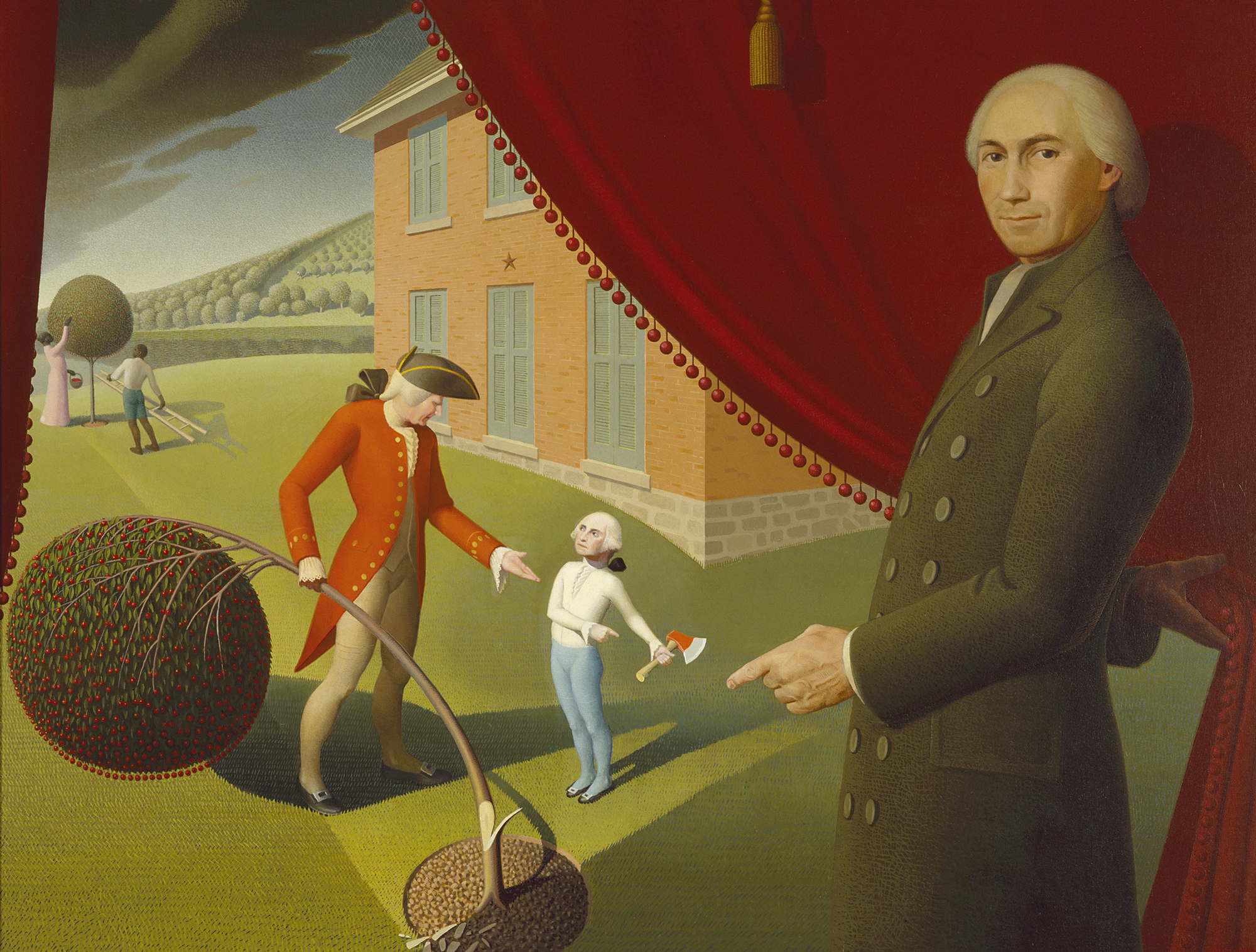
In mythology everything is possible: existence of Gods, Goddesses, beings with supernatural powers and humans taking traits that makes them larger than life and heroes in our minds. For example, Parson Weems created a myth about George Washington in the story of the cherry tree, describing an event that never took place, but used to illustrate the moral behavior of a young George.

parson-weemss-fable-amon-carter-museum-of-american-2

Parson Weem’s Fable (Amon Carter Museum of American Art)

Many crafts, like astrology use the power of mythological creatures and language of symbolism to emphasize the archetypes of human nature, where even the heavenly bodies take on the roles of Gods, and as they “dance” in the sky they “plot” the scenes of our life events.

Mythology was a communicating medium among indigenous people, as it can be found in ancient texts and it is foundation  upon which modern culture has been built.

But this is not where the power of mythology stops. It’s well established in the modern western cultures as classical scholar and professor Elizabeth Vandiver claims: Star Wars, Star Trek and other similar stories are myths as authentic as those found in Hesiod, Homer, and Ovid. They have the elements of classical mythological tales and are so engraved within our culture, that metaphors and psychological profiles defined, we often use in our everyday life as a reference.

And look at poetry:

Leda and the Swan by W. B. Yeats

A sudden blow: the great wings beating still

Above the staggering girl, her thighs caressed

By the dark webs, her nape caught in his bill,

He holds her helpless breast upon his breast.


How can those terrified vague fingers push

The feathered glory from her loosening thighs?

And how can body, laid in that white rush,

But feel the strange heart beating where it lies?


A shudder in the loins engenders there

The broken wall, the burning roof and tower

And Agamemnon dead.

Being so caught up,

So mastered by the brute blood of the air,

Did she put on his knowledge with his power

Before the indifferent beak could let her drop?

Yeats’s poem was inspired by a Greek myth about Zeus and Leda, the daughter of a king named Thestius. Zeus disguised as a swan seduces Leda and takes advantage of her. In the poem this event Yeats in every, tiny detail described very powerfully. And as we know how the myth continues, Leda gets pregnant and gives birth to Helen of Troy.

Many men were enchanted by the Helen’s beauty and she becomes abducted  by a young man named Paris that led to the Battle of Troy, the centerpiece of Homer’s Iliad. Yeats’s poem hides between the verses a drama that takes place in the tragic fall of Troy; it illustrates familiarity that Yeats had with artistic story of Leda and the swan, retold  by sculptors and painters like Michelangelo and Leonardo Da Vinci.

This poem was written in the same year Yeats was awarded the Nobel prize for literature in 1923. Here, he poses the question of predominant misuse of power and how an apocalyptic consequence that might have, beyond the possibility of what our mind can conceive.

So, in a nutshell, mythological approach to storytelling can help us:

  • convey the message on diversity, especially looked from the perspectives of cultural backgrounds;
  • argument the importance of ethical approach in business and other types of relationships;
  • make story more “alive”, entertaining as people like myths: it captivates their attention and ignites imagination, lifting their experience to the level of adventure and pleasant uncertainty.

Let your story become a myth.