Marionettes

Your bones trot after your flesh.

Mind tries to pull you together.

Motionless body waits to be plugged in

by one or two sips of dark, heavy coffee.


Caffeinated you crawl through the day.

Hours are smudged over your face of relentless hopes and tainted wishes.

As the dark sneaks in and the sun rushes west for a good night sleep,

you fold your skin, respectively, just to wait for another golden beam

to slap you.


Eyes, puffy and swelled search for the cold water to wipe the foggy lenses of

dreams that still cling above your head.

You call my name.

It echoes in the empty cave of our abandoned and never fulfilled desires.

I’m approaching, giving you your new paper cloths to try on.

“These clothes should fit you”, I say.

“Perfect, to tighten your bones and stitch to your soul,

You heart won’t jingle”.


Each of us now takes our positions in the Draw of life.

Waiting for the Destiny to take us out, and play with us.

We are just marionettes in her hands, praying that strings are strong enough:

not to break when in boredom she throws us on the floor.


Maja S. Todorovic

4 simple ways to make your poetry blog stand out

4 simple ways to make your poetry blog stand out

We all know that writing and reading poetry is a unique experience. Words are our tool we use to portrait emotional journey where we want to take our reader. But do we always succeed in that? I pose this question not that much from the writing point of view, but more how do we select and arrange environment where we display our poems. In our blogging space we need to offer an opportunity for that experience to become alive and ‘consume’ our reader.

There are certain ways you can improve your blog to represent who you are and let your writing really stand out.

Chose a theme that allows your words to be the focus.

We do live in the digital era where is emphasis on photographic beauty and memory. But here what matters are your words. Simple, elegant themes that reinforce the power of your words and enable your poems to pop-up are more pleasant to your reader. It should support your writing voice and emotion it transcends.

I always prefer minimalist aesthetics as it sheds all the unimportant stuff away. So if you write a poem, or a quote, story and use just one or two images, that is much more appealing to your reader than scrolling through the crowded screen of unnecessary information. Playing around with different typography can help you accentuate what you think is crucial for reader to notice.

Do you really need all that widgets ‘lingering’ around?

In past few months I’ve experimented with sveral themes and widgets and decided to keep those that I think are beneficial to the reader. The same comes with the menu and header information. I’m usually interested to browse what general topics blog has to offer, and maybe archive. A shortcut for people to follow blog by email, RSS and social media buttons is also good to keep.

I do follow and read a lot of blogs and often I come across those that have duplicate widgets which is quite unappealing (you don’t need to display the same information in sidebar and footer, right?). It doesn’t matter do you blog just for hobby, to fill up your spare time or you are a professional writer: neat looking blog is what invites people in to read your writing. With a tiny effort you can really make your blog clean and easy approachable for reader.

Yes, about page is important.

So you do have a blog. And you share your work. Guess what, people will often like to know more about you –  there is nothing inherently wrong with that. You control what information you put but I think having that about page and few sentences where you give bits of yourself can be beneficial. Even better, as a poet why don’t write interesting poem about your blog/your writing?

I, for example in the beginning had a short version of my CV, which is not that much related to what I’m doing here (except from the creativity part) and I realized it was too heavy. Than I completely rewrote it. Now my about page in more humorous and fun way accentuates just few really important facts about me and my blogging.

For more professional author biography here I share best tips on how to write it.

Offer different formats of your work.

As a writer/poet this is an area you can further explore. Many people prefer audio formats. You can record reading of your poems and use sound cloud services to share your readings. It might be your work or poems from other popular poets. It’s good to know that we all differently digest information and we need to use technology to our advantage – in a way it will support our work, not hinder it.

In a nutshell, your content is your branding. Let it shine. We are here for love of writing and reading, and that’s where all the magic happens. With these given tips, “shower” your faithful readers with regular writing and you will see how your community will grow.


If you liked this post and you are interested in getting more inspiration for your creativity, sign up for our free monthly newsletter.

Poetic inspiration: The Power of Poetry

poetry_dosage

Poetry comes in small packages,

because all you need is a tiny dosage

of concentrated emotion to

electrify your whole being.

Maja S. Todorovic


If you liked this post and you are interested in getting more inspiration for your creativity, sign up for our free monthly newsletter.

Poetic contemplation: William Stafford on writing, pursuing your life dreams and accepting your true nature

williamstafford_Quote_poetry

William Stafford is an American contemporary poet and writer. Born in 1914,  his early teenage and adult years were marked with effort to support  family by doing various seasonal jobs. As the eldest of five children he grew up appreciating books and nature.  He received a BA and an MA from the University of Kansas at Lawrence and, in 1954, a PhD from the University of Iowa.

As a registered pacifist, Stafford worked in camps and projects during the second world war. In 1948 he began to teach at Lewis and Clark College. His first poetry collection was published in his later years (when he was 48) and it won the National Book Award in 1963. For his lifetime he published more than 65 volumes of prose and poetry and won many literary prizes. His poetry at first glance looks simple, yet contains profound truth and revelation, if examined deeper (source)

He truly believed that everyone of us is a writer, a poet at heart, just people lack persistence and vision:

Everyone is born a poet – a person discovering the way words sound and work, caring and delighting in words. I just kept on doing what everyone starts out doing. The real question is: Why did other people stop?”

Writing is constant process of exploration and that’s what constitutes a good writer:

 You don’t need many words if you already know what you’re talking about. A writer is not so much someone who has something to say as he is someone who has found a process that will bring about new things he would not have thought of if he had not started to say them.”

Every  word has to find its own right time and place and nothing is more powerful than that:

In winter, in the dark hours, when others
were asleep, I found these words and put them
together by their appetites and respect for
each other. In stillness, they jostled. They traded
meaning while pretending to have only one.

Monstrous alliances never dreamed of before
began. Sometimes they last. Never again
do they separate in this world. They die
together. They have a fidelity that no
purpose or pretense can ever break

And all of this happens like magic to the words
in those dark hours when others sleep.

In Stafford’s work we can easily observe entwined topics of self-acceptance and belief in retaining one’s true nature. He writes:

I heard a bird congratulating itself
all day for being a jay.
Nobody cared. But it was glad
all over again, and said so, again.

Too many times we pay more attention on what others have to say about us, than what we think about ourselves. And these words by William Stafford are great reminder:

They miss the whisper that runs
any day in your mind,
“Who are you really, wanderer?”–
and the answer you have to give
no matter how dark and cold
the world around you is:
“Maybe I’m a king.

Everyone of us has its own path to follow. Our purpose in life is with our desires, goals and thriving for better to pave that path. Conditions and circumstances might change, but not our attentions, values and desire for contribution – fear should never interrupt the way you lead your life:

There’s a thread you follow. It goes among
things that change. But it doesn’t change.
People wonder about what you are pursuing.
You have to explain about the thread.
But it is hard for others to see.
While you hold it you can’t get lost.
Tragedies happen; people get hurt
or die; and you suffer and get old.
Nothing you do can stop time’s unfolding.
You don’t ever let go of the thread.

And whenever we have doubts we can return to nature, divine silence that contains all our questions and answers: our task is to search for ones that belong to us:

Some time when the river is ice ask me
mistakes I have made. Ask me whether
what I have done is my life. Others
have come in their slow way into
my thought, and some have tried to help
or to hurt: ask me what difference
their strongest love or hate has made.

I will listen to what you say.
You and I can turn and look
at the silent river and wait. We know
the current is there, hidden; and there
are comings and goings from miles away
that hold the stillness exactly before us.
What the river says, that is what I say.

Stafford’s contemplative poetry offers very deep and nurturing outlook on purpose in life. For further examining this topic, you can complement this reading with thoughts from other poets:

Kahlil Gibran’s timeless wisdom on the purpose of poetry and meaning of work

The poetic determination: Ella Wheeler Wilcox on positive thinking and how that impacts success in life


If you liked this post and you are interested in getting more inspiration for your creativity, sign up for our free bimonthly newsletter.

4-step process to achieving your creative goals every day

4-step process to achieving your

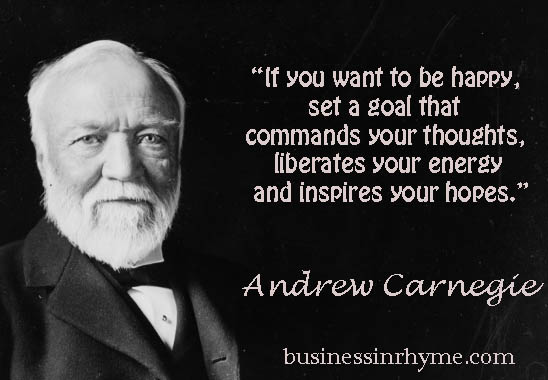
In our already very busy lives, the pressure to do more and perform better seems to grow, even though we stay with the same amount of hours in a day. The to-do lists are getting on popularity with all accompanying tools like apps, digital notebooks and ext. just for you to become more productive. Still, there is an underlying question: we might be able to do more, but with what quality? I am always for quality over quantity, since it is less stressful and you will be more satisfied with the work you’ve done.carnegie

So how you can organize your day, in order to meet all your desired creative goals?

Cut the long to-do list short.

So the first step in this process I would recommend for you to clearly and realistically go through your daily tasks/goals, make priorities and choose only those that are really important.

Define what’s really important to you.

In order to retain that initial drive for accomplishing our goals, it is crucial to focus ourselves on the tasks that serve our purpose, that will benefit us in the long run. Only when you divert your thinking to work on what really matters, you begin to more appreciate your time and what you do with it.

Notice when are your high energy levels.

As everything around us has its cyclic rhythm so do we. Life is made of cycles and seasons so we need to observe ourselves in what part of the day we are most productive. That’s the power we should harness as much as we can. Follow the flow of your own rhythms instead of pedaling against the stream. I’m for example a morning person and I build my daily routine around those pick energy levels to take the maximum advantage of it.

Focus only at one task at the time.

Multitasking is a myth busted long time ago. It’s a deceiving feeling you are getting more things done, while what it does it’s quite the opposite. You might initially do more, but the tiredness and stress that accumulates simply adds up to long-term exhaustion. For many years, I personally was very proud of my multitasking skills. Yes, I managed to do more things, but at the end of the day I was always left with some ’empty’ feeling, like something was missing. And that was strange, because the purpose of the multitasking is to do more things and get that feeling of accomplishment and satisfaction, right? Until several years ago I realized that key source of my stress was that endless try to get everything done, fast and in short period of time. Than I began to declutter my schedule and get more focus on what’s really important. The biggest lesson I learnt is when you approach your obligations, strategically, with end result in mind, your focus will sharpen and your energy won’t get dissipated on meaningless activities. While remaining on doing one thing at the time, completely present in the moment, actually our effectiveness with time can grow, since it allows you to enjoy your work, simply to be immersed in your creativity. In Buddhist traditions, the philosophy is to do everything slowly and deliberately, with complete concentration. Put your mind completely on the task and try to avoid distractions.

If you have big projects, then break them into small pieces and do segment by segment, one step at a time.

How do you spare time for your creativity? Please, share in the comments below.


If you liked this post and you are interested in getting more inspiration for your creativity, sign up for our free bimonthly newsletter.

9 best practices that can drive your editing process, part II

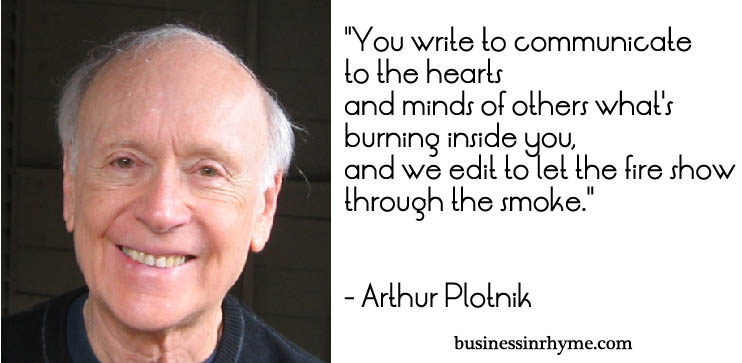
Art-Plotnik

In the first part of this blog post I shared some of my favorite practices that can help you become more efficient when it comes to editing. But there are more things you can do to become even more productive:

  • Track Your Bad Habits.  If you want to be better at your writing and editing, try to notice your typical mistakes and actions. Commonly misusing a word or phrase? Highlight that word or write it on a sticky note somewhere you will see it often. It will remind you not to use it and think of more creative ways to say something. One thing that really works for me is to write myself notes  for anything I need to correct. It’s a learning process in progress and how your writing improves, less things you will want to fix.
  • Try reading it backwards. This is a bit weird, but it helps you become more aware of what you wrote. Begin with the last sentence and move up from there. You can see does your writing builds momentum, some sort of positive tension of expectation: words play with your logic and your focus improves – you can better sense the fluency and rhythm of your writing
  • Don’t be hard on your self. The truth is there is no perfect writing. Your task is to do your best with given time-frame, conditions and knowledge you have. That has to be enough.

Now, my students often used  to ask me: “Can you over-edit your work and how that can harm your writing?” and I think it’s a good question to answer.

Over-editing can prevent you from sharing your knowledge and message with rest of the world. Your writing doesn’t have to be 100% perfect in order to help and inspire someone. When you you are tempted not to publish your work, that’s almost the same as you have erased all of your work – it can’t help anyone if it’s hidden in your computer folders. Instead of torturing yourself  over grammatical perfection, ask yourself does your writing brings any value to your readers? The next thing is, it simply kills your productivity. Over-editing wastes time and energy. It’s tiring, it sucks the inspiration out of your body and mind.

How to recognize you are over-editing?

  • you are endlessly rewriting what you already wrote, without moving on to write something new. That holds the danger of you losing your own writing voice and the purpose of your writing. When you edit your piece too many times, you can end up editing every drop of life out of it. A conversational style is becoming more popular and you shouldn’t shy from it. It helps you connect with your readers and express your won personality through words. Even in business communication you need to stir up your writing and avoid being too stiff;
  • you let fear command your editing and you start to doubt something you previously considered good.
  • you sense something is wrong or missing but you can’t figure it out and that keeps you stuck at one page.

So, what to do about it?

Our habit to over – edit is connected with critical side of our brain that seeks approval and strives for impossible perfectionism. One little trick that might help is to make notes for yourself what you want to accomplish in writing that day – bring intentionality to your writing.

Monitor your self-talk and tell yourself you’ll deal with it later. You might be saying to yourself something like “This is just too boring.” Or “I’m a really bad writer.” The trick is to be conscious of it. Then, answer to yourself in kind and gentle way–

“I’m writing right now the best I can;  I’ll deal with these concerns later.”

This kind of silent promise you give to yourself shuts down that resentful critic and allows more space for creativity.

Many of us spend more time editing than on the actual writing. Editing is a just a tool that helps us improve what we already wrote, but it doesn’t determine are you bad or good writer. What mostly matters is the idea and the purpose behind it.

Now, it’s your turn: do you have any editing tricks to share with us?


If you liked this post and you are interested in getting more inspiration for your creativity, sign up for our free bimonthly newsletter.

Who’s for cake and some sweet giveaway? :)

Apparently we have reached our first official anniversary. This week marks a year since Business in Rhyme has been launched and it has been a great experience.

happy birthday business in rhyme

With over 500 posts published, research, interesting articles, new friends…and poetry, it has become a real and inseparable part of my life. I know I haven’t  been very active on the blog lately, but there is a lot of work behind the scenes I’m doing. I’m thinking of getting blog more focused, mostly on creativity and writing oriented (which is where my inspiration is driving me) with more practical, action based advice. It’s also a great opportunity for me to learn, try new things and explore. Nevertheless, there is great content coming your way, I hope you’ll find enjoyable and useful.

As a reminder, here’s how it looked in the beginning:

How poetry can stimulate creativity?

Organize your own creativity workshop

3 lessons that writing haiku taught me about business

Aaaaand (do you hear drums too? :)) as a part of this celebration we’ll be having a small giveaway:

This book:accidental geniusAccidental Genius: Using Writing to Generate Your Best Ideas, Insight, and Content by Mark Levy, contains great tips on how to jump-start your writing and creativity. Full of practical prompts, entwined through personal experience of writer and his challenge to come up with new ideas can be yours: all you have to do is to fill in the form bellow (please give your full name and email address so we can contact you) and state in one sentence how this book can benefit you. One that I find most inspirational will be the lucky, new owner of this book, a ‘must have’ tool for any writer or creative. By signing up, you are automatically subscribed to our mailing list (you can opt any time) and in the August issue of the newsletter we will announce the winner (and if you are already subscribed to newsletter – don’t worry, you won’t be ‘double’ signed up 🙂 )

Go back

Your message has been sent

Warning
Warning
Warning
Warning

Warning.

Thank you in advance for participating, for being part of this community, for reading my scribbles and giving me the opportunity to enjoy your work as well. It’s really precious and unforgettable.

Maja

Getting ready for night out

They say it’s much better to use ceramic knife.

It doesn’t oxidize vegetable meat.

She first rolled the beet over the flat counter – to let

the juices stir. Than cut it in half. She needed only

few drops for a blusher.


On the shelf in front of her, beside his favorite tea cup she found cinnamon.

Just a pinch of this spicy heat will act as a bronzer.

The index-finger on her right hand she gently dipped in the ashtray –

to give it a soft grayish glimmer to her eyelashes.


And the final touch – carmine: dripping souse of red, succulent melted cherries

she mixed with three tears of her own blood she harvested earlier

from her left thumb.

Now, who can resist kissing these pulsating lips?


As she was waiting for him to pick her up, in the last minute she adorned her

right hand with this piece of baked clay – perfectly matching her makeup.

Maja S. Todorovic